Refrigerator and Freezer Temperature Settings: A Homeowner Guide
Discover safe, energy-efficient refrigerator and freezer temperature settings, how to verify temps with a thermometer, and a practical step-by-step plan to keep foods fresh and reduce waste.


Goal: set your refrigerator to about 37–40°F (3–4°C) and the freezer to 0°F (-18°C). Verify with a thermometer, adjust the thermostats in small increments, and recheck after 24 hours. This quick guide covers measuring temps, placing a thermometer, common drift causes, and practical tips for safety and efficiency.
Why temperature settings matter
Temperature is one of the most powerful levers you have for safety, freshness, and energy use in the kitchen. When a refrigerator or freezer runs too warm, perishable foods can enter the danger zone where bacteria multiply rapidly, increasing the risk of foodborne illness. Conversely, overly cold settings waste electricity and can cause textures to suffer, especially leafy greens and dairy. The How To Refrigerator team emphasizes that small, deliberate adjustments yield consistent results—temperature stability is the foundation of food safety, quality, and lower energy bills. In real-world terms, a stable fridge and freezer mean fewer spoiled ingredients, less waste, and less anxiety about whether leftovers are still safe to eat. This section shows how to translate a label-friendly range into actions you can take today.
Understanding the stakes
Food safety guidelines rely on keeping perishable foods below 40°F in the fridge and at 0°F in the freezer. When you’re within these ranges, you reduce the growth of common pathogens and preserve texture. Temperature stability also supports your appliance’s longevity by avoiding overworking the compressor. If your kitchen runs warm (hot summers, sunny south-facing cabinets), a slightly cooler setting may be necessary, but you should verify with a thermometer to avoid overshooting. Our guidance aligns with standard food-safety principles and is designed for homeowners who want practical, actionable steps rather than complicated theory.
How to verify temperatures with dedicated thermometers
Relying on built-in gauges can be misleading. Start by placing a good-quality fridge thermometer in the center of the main compartment, away from the door, and a freezer thermometer in the middle of the freezer. Readings should be taken after the unit has run for at least 24 hours to allow stabilization. If you’re measuring in Celsius, remember that 3–4°C in the fridge roughly corresponds to 37–40°F, and -18°C roughly equals 0°F. Keep both thermometers visible for easy monitoring and log readings to track drift over time.
Locating thermostat controls and choosing a setting
Most refrigerators offer either a dial or digital control panel. If you have a dial, turn it in small increments—1 notch can make a difference. For digital controls, use the up/down arrows or a numeric setting if available. If you enjoy your current setup but want to optimize, start with 1–2 degree changes and reassess after 24 hours. Special modes like ‘eco’ or ‘energy saver’ can influence temperatures; understand their impact on both compartments before leaving them on long-term.
Step-by-step plan to adjust temperatures safely
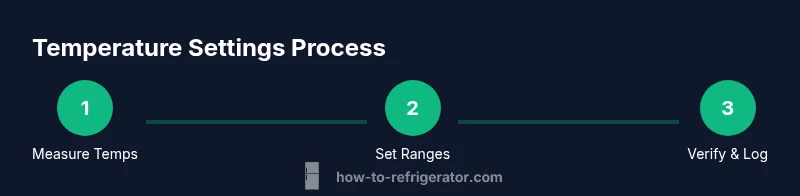
First, verify current temps in both compartments. Next, set fridge to 37–40°F (3–4°C) and freezer to 0°F (-18°C). Then wait at least 24 hours while minimizing door openings to avoid temperature swings. After stabilization, recheck both readings and adjust in single-notch steps if needed. Maintain a simple log and check monthly. If you observe persistent drift or unusual frost patterns, consider service inspection. This plan emphasizes small changes, patience, and data over guesswork.
Common issues and fixes you’ll encounter
Drift is common in busy households. Frequent door openings, placing hot food inside, or overfilling shelves can all push temps out of range. A dirty condenser coil, clogged vent, or a damaged door gasket can also cause inefficient cooling. If your unit runs constantly or you notice frost buildup in unexpected places, recheck door seals and airflow, then test temperatures again. In some cases, the culprit is a failing compressor or thermostat; when in doubt, contact a repair professional.
Maintenance habits that stabilize temperatures over time
Schedule regular coil cleaning (at least annually) and ensure adequate clearance around the appliance. Keep doors closed as much as possible and avoid storing hot leftovers. Rotate items to prevent crowding the airflow. If your kitchen experiences temperature swings (garage placement, sun exposure), consider a listening check for unusual noises from the compressor. These routines reduce drift, preserve food safety, and extend the life of your fridge and freezer.
Energy efficiency and safety considerations
Sticking to the recommended ranges improves energy efficiency and reduces wear on the compressor. Minor temperature drift tends to increase energy usage more than a well-maintained, stable setting. Avoid drastic shifts that require the compressor to work harder. If you’re replacing an old unit, compare ENERGY STAR-rated models for better insulation and consistent temperature control. The collective aim is to maintain safety while keeping utility costs reasonable.
Authority sources and further reading
For authoritative, non-commercial guidance, consult official sources on safe storage temperatures. These references explain why maintaining fridge temperatures around 37–40°F and freezer temperatures at 0°F is essential, and they offer practical steps to verify and adjust temperatures in day-to-day use. Reading these materials helps you make informed decisions about your appliance and food safety.
Quick-start checklist for busy days
- Place a thermometer in both compartments and verify baseline readings.
- Set fridge to 37–40°F and freezer to 0°F, then wait 24 hours.
- Recheck temperatures and adjust by small increments if needed.
- Inspect door seals and ensure proper airflow around vents.
- Log temperatures for one week to identify drift patterns.
Tools & Materials
- Fridge/Freezer thermometer(Place in the center of the fridge and in the middle of the freezer for accurate readings.)
- Notepad and pen(To log readings and changes over time.)
- Owner's manual(Helpful if your model uses a unique control scheme.)
- Cleaning cloth(Wipe dust from coils and vents before testing.)
Steps
Estimated time: 24-72 hours for full stabilization plus occasional readjustments
- 1
Place thermometer and establish baseline
Place a fridge thermometer in the center of the main compartment and a freezer thermometer in the middle of the freezer. Record the current readings after the unit has run for at least 24 hours. This gives you a realistic baseline and helps avoid poor readings caused by door openings or air drafts.
Tip: Use one thermometer for each compartment to ensure accuracy and allow you to track drift separately. - 2
Find and understand the controls
Inspect the control panel or dial. If you have a dial, note the current notch; if digital, note the exact temperature setting. Digital units may offer separate fridge and freezer controls. Understanding the interface prevents accidental overshoots.
Tip: If you can’t locate the controls, check the owner’s manual or manufacturer support site. - 3
Set target temperatures
Set the fridge to 37–40°F (3–4°C) and the freezer to 0°F (-18°C). Use small changes, such as one notch or one degree, to avoid overshoot. If your unit has eco modes, choose standard mode for initial adjustments.
Tip: Document the target temperatures so you can revert if needed. - 4
Allow temps to stabilize
After changing settings, allow 24 hours for temperatures to stabilize. Minimize door openings during this period to prevent fluctuations. If you must access the contents, plan a quick, organized retrieval to reduce temperature swings.
Tip: Avoid hot foods going into the fridge while you’re stabilizing temperatures. - 5
Re-check and log results
Measure temps again after stabilization. If readings are outside target ranges, adjust by small increments and recheck after another 24 hours. Keep a simple log for weekly drift tracking.
Tip: Consistent logging helps you notice gradual drift before it becomes a problem. - 6
Check seals and airflow
Inspect door gaskets for cracks or gaps and confirm vents aren’t blocked by items. Poor seals or blocked airflow can cause temperature variation and reduce cooling efficiency.
Tip: Wipe seals clean and test opening/closing to confirm a tight seal. - 7
Troubleshoot persistent drift
If temperatures remain inconsistent after two adjustments, there may be a more serious issue such as a failing compressor or defrost drain. Consider scheduling service, especially if under warranty.
Tip: Record symptoms, temps, and dates before contacting support. - 8
Maintain ongoing temperature discipline
Establish a routine: monthly checks, minimal door openings, and periodic coil cleaning. A stable regime reduces energy use and preserves food quality.
Tip: Set calendar reminders to review temps and logs regularly.
FAQ
What is the recommended temperature for a refrigerator?
The typical recommended range for a household refrigerator is 37-40°F (3-4°C). This range keeps perishable foods safely chilled while reducing energy use.
Aim for about 37 to 40 degrees Fahrenheit for your fridge, which keeps most foods safe and saves energy.
What is the recommended temperature for a freezer?
The standard freezer temperature is 0°F (-18°C). This prevents bacterial growth and keeps frozen foods from losing texture and flavor.
Freeze foods at 0 degrees Fahrenheit for best long-term quality.
How can I verify that my fridge temperature is accurate?
Place a thermometer in the fridge away from the door and in the center to avoid cold spots. Check after 24 hours and adjust as needed.
Use a thermometer and recheck after a day to confirm accuracy.
Will changing temperatures affect energy use?
Yes. Keeping temperatures within the recommended range helps energy efficiency. Extreme settings may save energy temporarily but can waste electricity and spoil food.
Sticking to the recommended temps helps energy efficiency without risking spoilage.
Why does my fridge feel warm even when set to normal?
This can happen due to door openings, heavy loading, or a malfunctioning thermostat. Check seals and airflow first, then verify temps.
If your fridge feels warm, check the seals and airflow, then measure temps to confirm.
What should I do if the door gasket is damaged?
A damaged gasket can let cold air escape. Replace the gasket or call a technician if the seal is not repairable.
Replace a damaged seal to restore efficiency and accurate temps.
Watch Video
Top Takeaways
- Set fridge to 37–40°F and freezer to 0°F for safety.
- Use external thermometers for accuracy, not just built-in gauges.
- Allow 24 hours for stabilization after any change.
- Check seals and airflow to prevent temperature drift.
- Maintain a simple log to monitor long-term stability.