Quality Refrigerator: A Homeowner’s Guide to Reliable Cooling
Learn how to identify a quality refrigerator, compare energy efficiency, perform maintenance, and decide when to repair or replace. A practical, homeowner-focused guide from How To Refrigerator.


A quality refrigerator keeps foods safe at consistent temperatures, uses energy efficiently, and withstands years of family use with regular maintenance. Key signs include steady internal temperatures, even cooling across shelves, minimal frost, reliable ice/water dispensers, and quiet operation. Start by verifying energy rating, testing door seals, and inspecting condenser coils for dirt; address airflow issues early to prevent bigger problems.
What defines a quality refrigerator for a home
A quality refrigerator is defined by its ability to maintain safe, consistent temperatures across zones, minimize frost buildup, and run efficiently over many years with routine care. For most households, this means reliable cooling throughout the interior, quiet operation, and resilient door seals that keep cold air in when the door closes. The How To Refrigerator team emphasizes that a top-performing unit should balance performance with energy efficiency, durable construction, and straightforward maintenance. In practice, you’ll notice even temperatures from the top to the bottom shelves, no warm spots in the crisper drawers, and minimal condensation around the doors. The brand’s guidance also highlights the importance of proper placement to ensure air can circulate freely, which directly influences both cooling performance and energy use. Overall, quality is not a single feature but a holistic combination of reliability, efficiency, and ease of upkeep. According to How To Refrigerator, moisture control, seal integrity, and clean airflow are foundational to long-term satisfaction with any fridge.
Energy efficiency and performance standards
Modern refrigerators are rated for energy efficiency, and this metric correlates with long-term operating costs and environmental impact. When comparing models, focus on the energy factor, annual energy consumption estimates, and the presence of energy-saving modes like adaptive defrost and variable-speed compressors. A highly efficient unit uses less electricity per hour of operation while still delivering stable temperatures. The best sales points aren’t just about initial price, but long-term savings driven by lower energy bills and reduced wear on components. The How To Refrigerator approach is to translate labels into practical, home-level benefits: easier maintenance, fewer surprise repairs, and a smaller carbon footprint. Additionally, verify that gaskets and hinges are designed for durability since seal integrity directly affects both cooling efficiency and energy use.
Temperature control and airflow basics
Temperature stability hinges on how well air circulates inside the refrigerator. Hotter items should not block vents, and shelves should be arranged to promote even airflow. If a section feels noticeably warmer than others, inspect door seals for leaks, clear any blockages, and check that the condenser coils aren’t clogged with dust. Temperature settings should be kept within manufacturer guidelines, and a small deviation can compound over time if airflow is restricted. A common pitfall is placing hot dishes inside, which triggers the defrost cycle or fan to work harder. By understanding airflow, you can avoid hot spots and ensure uniform cooling without excessive energy use. As a practical rule, keep the back of the fridge clear, monitor temperatures with a dedicated thermometer, and adjust settings gradually rather than making abrupt changes.
Common refrigeration issues and preventive care
Not cooling, frost buildup, odd noises, or leaking water are signals that something isn’t right with a refrigerator. Preventive care starts with regular coil cleaning, keeping door seals clean, and ensuring that the fridge has adequate clearance for air to move. Frost on the evaporator can indicate moisture intrusion or a defrost problem; if frost grows beyond a thin layer, the defrost system may need inspection. Noise often points to a failing compressor, fan bearing wear, or a loose panel. While some issues can be addressed with basic maintenance, persistent problems deserve a professional evaluation. Today’s repair landscape rewards early detection and straightforward fixes, reducing the risk of major breakdowns and costly replacements.
Maintenance routines: cleaning, seals, coils, and gaskets
A simple, regular maintenance routine pays big dividends. Clean the condenser coils every 6–12 months, depending on environment, using a soft brush or vacuum to remove dust. Wipe door gaskets with a damp cloth to remove grime that can compromise a seal, and test the seal by closing the door on a dollar bill or card—if it pulls out easily, the gasket may need replacement. Shelves and bins should be wiped with mild soap and water to prevent residue buildup. Periodically check the defrost drain for obstructions and pour a small amount of warm water down the drain to ensure it flows freely. A clean, well-maintained fridge runs more efficiently and lasts longer.
DIY diagnostics: when to fix vs call a pro
Some issues are safe to tackle at home, while others require professional service. Start with non-invasive checks: verify the power supply, unplug and replug if the fridge isn’t running, inspect door seals, and clean accessible coils. If temperatures drift, run the thermostat test and compare readings with a secondary thermometer. For electrical or refrigerant-related concerns, or for persistent cooling problems beyond basic maintenance, contact a licensed technician. The goal is to resolve issues without causing additional damage or safety risks. The How To Refrigerator team emphasizes prudence and safety when diagnosing refrigerant handling or compressor problems.
How to compare models: features, specs, and real-world use
Choosing a fridge isn’t just about the label; it’s about how the unit fits your home and daily routine. Compare capacity in usable cubic feet, drawer configurations, and door hinge arrangement (top-freezer vs French-door) to match your cooking habits. Look for adjustable shelves, humidity-controlled crisper drawers, and reliable ice/water dispensing if you need them. Real-world use includes energy performance, noise levels, and the ease of cleaning and maintenance. Reviews and consistency across different usage scenarios help separate marketing claims from real-world results. The How To Refrigerator framework encourages buyers to weigh upfront costs against long-term energy use, expected lifetime, and maintenance needs to assess overall value.
Safe handling, energy labeling, and future-proofing purchases
Safety and reliability begin with choosing a refrigerator built to meet modern energy standards and consumer safeguards. Check the energy label for efficiency ratings and the presence of reputable certifications. Equation-based comparisons, warranty terms, and availability of replacement parts matter for future-proofing. Plan for typical household growth, such as acquiring a larger model for a growing family or a compact unit for a kitchen redesign. The How To Refrigerator approach combines practical checks with long-term thinking: select a model that aligns with energy goals, maintenance expectations, and personal comfort with the appliance’s footprint and design.
Tools & Materials
- Digital thermometer(Place inside to verify fridge temp range (0–4°C or 32–40°F).)
- Screwdriver set (Phillips and flat-head)(For removing grille/panels as needed.)
- Vacuum cleaner or coil brush(To clean condenser coils and vents.)
- Soft microfiber cloth(Wipe gaskets, shelves, and interior surfaces.)
- Safety gloves(Protect hands when handling components.)
- Owner's manual(Helpful for model-specific maintenance steps.)
- Flashlight(Inspect tight corners behind grills.)
Steps
Estimated time: 1-2 hours
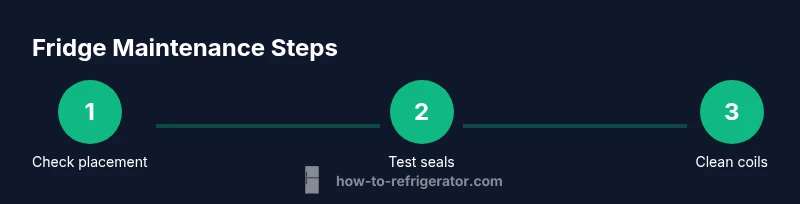
- 1
Check placement and ventilation
Ensure the fridge is level and not pushed against walls or cabinets that block airflow. Verify at least 1-2 inches of clearance around the back and sides. Poor clearance increases heat buildup and energy use, reducing cooling efficiency.
Tip: Move the unit slightly away from the wall to restore airflow, then recheck level. - 2
Test door seals
Close the door on a thin sheet of paper or a dollar bill. If you can pull it out easily with moderate resistance, the gasket may be worn and in need of replacement. Clean the gasket with a damp cloth to remove grime that can compromise the seal.
Tip: Replace worn seals promptly to prevent cool air loss and energy waste. - 3
Clean condenser coils
Unplug the refrigerator. Access the condenser coils (usually at the back or beneath the unit) and remove dust with a coil brush or vacuum. Dirty coils reduce cooling efficiency and raise energy consumption, so perform this every 6–12 months depending on dust exposure.
Tip: Do not use liquids on electrical components; avoid bending delicate fins. - 4
Inspect frost and defrost system
Look for excessive frost on the evaporator or unusual ice buildup. Regular frost indicates a potential defrost timer or heater issue. If frost is persistent, it may require professional diagnosis to prevent compressor strain.
Tip: If you see frost, turn off the defrost cycle if you’re comfortable; otherwise, schedule service. - 5
Verify internal temperatures
Place a thermometer on several shelves and compare readings with the thermostat setting. Aim for consistent readings across zones and adjust the thermostat gradually if discrepancies arise. Frequent temperature fluctuation can signal airflow problems or a failing component.
Tip: Record daily readings for a week to establish a stable baseline. - 6
Check drainage and defrost path
Inspect the defrost drain for clogs and clear any blockages. A blocked drain can cause water leaks and elevated humidity inside the fridge, impacting performance.
Tip: Pour a small amount of warm water down the drain to test flow. - 7
Assess energy use and noise
Monitor for unusual noises or rising energy use after maintenance. A noisy compressor or fan bearing may indicate wear that warrants professional evaluation. Quiet operation generally signals healthy components.
Tip: If sounds change suddenly, capture audio and note the time to share with a tech. - 8
Document results and plan maintenance
Record temperature readings, seal condition, coil cleanliness, and any fixes performed. Create a simple maintenance schedule to review every 3–6 months and before major holidays when fridge use spikes.
Tip: Keep a simple log nearby for quick reference during future checks.
FAQ
What defines a quality refrigerator for home use?
A quality refrigerator maintains safe temperatures, minimizes frost, and operates reliably with energy efficiency. It should provide even cooling across zones and require minimal unexpected maintenance, aligning with the homeowner’s budget and lifestyle.
A quality fridge keeps your food safe with steady temperatures, efficient energy use, and durable components.
How can I test my fridge’s temperature accuracy at home?
Place a thermometer on multiple shelves and compare readings to the thermostat. If there are significant discrepancies, adjust the thermostat gradually and consider a service check if inconsistencies persist.
Use a thermometer on several shelves and compare to the thermostat; adjust if needed and seek service if temps stay off.
Is it safe to clean the condenser coils myself?
Yes, unplug the unit and use a coil brush or vacuum to remove dust. Avoid liquids near electrical components and handle fins gently to prevent damage.
Yes, but unplug first and use a soft brush or vacuum for the coils.
When should I repair vs replace my fridge?
If repair costs are high relative to the appliance's expected lifetime and energy use, replacement may offer better value. Consider current energy efficiency, reliability, and repair risk when deciding.
If repairs would cost as much as buying a new one or if reliability is a concern, replacing might be the smarter choice.
What maintenance helps extend fridge life?
Keep seals clean, clean coils, ensure proper airflow, and monitor temperatures. Regular maintenance reduces strain on the compressor and prolongs overall performance.
Regular sealing, cleaning coils, and checking temps help extend your fridge’s life.
How do I know if my fridge is not cooling correctly?
If interior temps drift or you notice frost accumulation, inspect seals and coils first. If the problem persists after basic checks, contact a licensed technician.
If temperatures drift or there’s frost, start with seals and coils, then call a pro if needed.
Watch Video
Top Takeaways
- Choose energy-efficient models with solid seals.
- Regular maintenance saves energy and extends life.
- Test temperatures and airflow to verify performance.
- Address cooling issues early to avoid costly repairs.
- Decide repair vs replacement based on cost, reliability, and energy use.