Is My Refrigerator Too Cold? Quick Troubleshooting Guide
Learn how to diagnose and fix a refrigerator that is too cold. Quick checks, diagnostic flow, step-by-step fixes, safety tips, and when to call a pro from How To Refrigerator.


Most overcooling is caused by a thermostat set too low or blocked airflow. Quick fixes: 1) Set the fridge to a safe range (about 37°F/3°C) and the freezer near 0°F (-18°C). 2) Clear air vents and avoid packing items around them. 3) If frost appears, run a defrost cycle or unplug for manual defrost, then clean coils.
Why is my refrigerator too cold? Signs and root causes
If you’ve ever wondered, is my refrigerator too cold, you’re not alone. Homeowners typically notice frost on shelves, ice forming in the crisper, or foods freezing unexpectedly. In most cases, the culprit is a thermostat set too low, but crowded shelves and blocked air vents can also distort cooling. The How To Refrigerator team finds that a quick reset of the temperature and a clean, open path for air are often enough to restore balance, especially when frost is minimal. Understanding these signs helps you act quickly, avoid energy waste, and protect produce from freezer burn. Keep notes on what you adjusted and what temperatures you observe to track progress and spot patterns.
Quick checks you can perform without tools
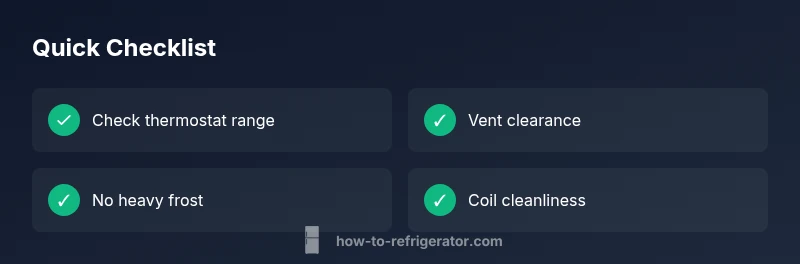
Before diving into diagnostics, perform a few safe, straightforward checks. Start with the thermostat: set fridge to 37°F (3°C) and freezer to 0°F (-18°C). If you have separate controls, ensure they’re not both set to coldest. Next, inspect the door seals; a worn gasket can cause inconsistent cooling and frost formation in some zones. Then, look for airflow obstructions: don’t cram groceries against vents, and keep shelves evenly spaced to promote air movement. Finally, do a quick frost check: light frost on the back wall of the freezer or heavy frost on the coil area can indicate a defrost issue that needs attention. These steps often solve many cases of overcooling and save energy.
How to approach diagnosis: flow from symptoms to solutions
Treat this like a logical flowchart. Start with the simplest causes (thermostat, airflow) and progressively test more complex issues (defrost system, sensors). Keep a simple temperature log for 24–48 hours to observe stability. If you notice frost that grows despite normal use, a defrost timer or heater may be failing. If temperatures vary by shelf, this points to airflow blocks rather than a defective sensor. By following a structured diagnostic approach, you’ll avoid guessing and identify the right fix quickly.
When to seek professional help
Not every fridge repair is a DIY project. If you try the basic steps and the problem persists, or you hear buzzing, sizzling, or see signs of refrigerant leakage, stop and call a trained technician. A pro can test sensors, test the defrost circuit, and recharge refrigerant if needed. Regular maintenance is the best prevention: clean coils, check door seals, and keep the unit away from heat sources. With timely intervention, you can restore proper cooling while protecting food quality and energy bills.
Steps
Estimated time: 30-60 minutes
- 1
Power off and inspect safety
Unplug the refrigerator and move foods away from the coils. Use a flashlight to inspect for obvious signs of damage or frost buildup. Wait 60 seconds after plugging back in before testing temperatures.
Tip: Always unplug before cleaning; this reduces shock risk. - 2
Check thermostat settings
Locate the thermostat controls for fridge and freezer. Set fridge to 34-38°F (1-3°C) and freezer to 0°F (-18°C). Re-check after 24 hours with a thermometer placed in the center of each compartment.
Tip: If you have a digital display, use it to confirm settings. - 3
Test airflow and vents
Ensure air can circulate from the freezer to the fridge. Remove items that block vents. Reorganize shelves to create gaps for air to move.
Tip: A simple rearrangement can restore even cooling. - 4
Defrost check
If frost is heavy or persistent, run a defrost cycle or manually defrost by unplugging for a few hours. Clean melted water and dry surfaces before replugging.
Tip: Avoid using hot water on frost—allow gradual defrost. - 5
Inspect door seals
Close the door slowly and inspect the gasket; look for cracks or gaps. If needed, replace the gasket to restore a proper seal.
Tip: A good seal saves energy and prevents overcooling. - 6
Evaluate coils and fan
Clean condenser coils and ensure the fan spins freely. Dusty coils can cause the compressor to work harder, sometimes affecting temperature distribution.
Tip: Clean coils every 6–12 months for best efficiency.
Diagnosis: Fridge and/or freezer running excessively cold with frost or ice buildup
Possible Causes
- highThermostat set too low or miscalibrated
- highAirflow blocked by items or vents blocked
- mediumDefrost system failure or frost build-up
- lowFaulty temperature sensor/thermistor or control board
Fixes
- easyReset thermostat to manufacturer-recommended range and test for 24 hours
- easyRearrange contents and clear internal vents to restore airflow
- mediumRun defrost cycle or manual defrost; inspect frost patterns
- hardTest or replace temperature sensor/thermistor; inspect control board
FAQ
What is the recommended refrigerator temperature?
Most guidelines suggest keeping the fridge at 34-38°F (1-3°C) and the freezer at 0°F (-18°C). Use a separate thermometer to verify.
Keep your fridge between 34 and 38 degrees Fahrenheit, and the freezer at zero. Use a thermometer to verify.
Why would the fridge be cold but the freezer not?
Inconsistent cooling can indicate airflow blocks or sensor issues. Check that vents aren’t blocked and the doors seal properly.
Inconsistent cooling usually means airflow or a faulty sensor; check vents and door seals.
Can a faulty thermistor cause overcooling?
Yes, a failing thermistor or controller can misread temperatures and overcool the interior. Replacement by a technician is often required.
A bad sensor can trick the system into overcooling; a professional replacement is common.
Should I unplug the fridge to fix it?
Unplug only for defrost or deep cleaning as needed. Do not unplug repeatedly unless following safety guidelines.
Unplug for defrost and cleaning as needed, but avoid frequent unplugging.
When should I call a professional?
If frost is persistent, if you hear unusual noises, or if temps don’t stabilize after basic checks, contact a technician.
Call a pro if frost persists or temps don’t stabilize after basic checks.
Can a not working compressor cause overcooling?
Problems with the compressor can disrupt cooling balance, sometimes causing frost buildup in certain zones. A professional should diagnose and service.
Compressor problems can throw off cooling balance; a pro should check it.
Watch Video
Top Takeaways
- Check and normalize temperature settings first
- Ensure vents are clear for proper airflow
- Defrost promptly if frost is present
- When in doubt, call a professional