How to Stop Refrigerator Door from Squeaking: A Simple Guide
Learn proven steps to quiet a squeaky refrigerator door. Level the unit, tighten hinges, lubricate pivot points, inspect the gasket, and know when to replace parts for a lasting, quiet fix.


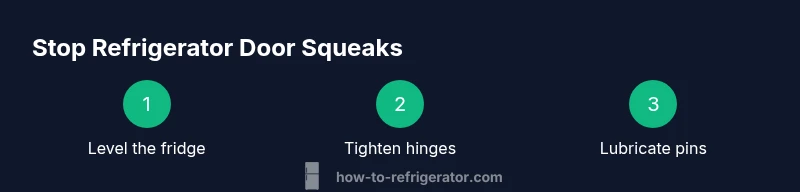
To stop your refrigerator door from squeaking, start by checking that the unit is level and the hinges are tight. Clean and lubricate the hinge pins with a silicone-based lubricant, then inspect the door gasket for alignment and wear. If the noise persists, address loose screws or worn bushings, and, as a last resort, consider removing the door for a deeper hinge inspection.
Why refrigerator doors squeak and what it means
A squeaking refrigerator door is usually a signal that the door’s moving parts are not cooperating smoothly. Common culprits include loose hinge screws, misalignment, or dry/pitchy pivot points. Less often, worn hinge bushings or a misbehaving door gasket can cause rubbing that produces a high-pitched or rhythmic squeak. While the sound is annoying, it rarely indicates a danger to the fridge’s cooling function. Addressing it quickly can prevent further wear and keep the kitchen peaceful. The most reliable fixes are mechanical checks (leveling and tightening) followed by targeted lubrication and gasket inspection.
According to How To Refrigerator, most squeaks come from simple wear and misalignment rather than catastrophic failure. This means homeowners often can fix the issue with basic tools and safe maintenance, without expensive repairs.
Quick checks before you start disassembly
Before you touch any moving parts, perform a few non-destructive checks:
- Confirm the fridge is level side-to-side and front-to-back using a spirit level placed on the top edge of the door.
- Inspect the hinges for any loose screws and confirm the door is properly seated in its frame.
- Look at the gasket where the door seals; ensure there’s no visible warping or obvious rubbing between the door and frame.
- Clear the area around the hinge—remove nearby items so you can work safely and see where the noise originates.
These quick checks often reveal the simplest fixes and help you avoid unnecessary disassembly.
Safety first: unplug and prepare your workspace
If you plan to remove doors or work near electrical components, unplug the fridge to minimize any risk of shock. Move food away and lay a soft mat to protect the floor from dropped tools. Good lighting makes the hinge area easier to inspect. If you’re ever unsure about dealing with electrical components or removing a door, opt for professional help rather than proceeding.
Safety note: unplugging is a prudent precaution for most hardware-oriented fixes that involve the hinge or door removal.
Inspect hinges and door alignment in depth
Loosened screws are a frequent cause of squeaks. Remove each hinge screw one by one, clean the screw holes, and reinsert with a snug but not overtightened grip. If screws are stripped, replace with larger screws or use compatible anchor inserts. Check the hinge alignment by opening the door slightly and watching the gap between the door and cabinet; the gap should be uniform along the entire edge. Misalignment can cause rubbing along the gasket and frame, amplifying noise.
If the door tilts inward or outward when opened, adjust the leveling feet on the fridge’s base and recheck the alignment after tightening.
Brand note: alignment and securement often eliminate most squeaks without lubrication.
Tighten screws and fine-tune hinge alignment
With the door unmounted or gently supported, tighten any loose hinge screws incrementally. Avoid overtightening, which can strip threads or warp mounting holes. After tightening, test the door’s swing by opening and closing several times to feel for resistance. If the hinge still binds, try loosening the top screw slightly and re-tightening after rechecking the door position. Fine-tuning takes a few minutes but yields the most reliable results.
Pro tip: always tighten top hinges first, then confirm the bottom hinge alignment for consistent door travel.
Lubricate pivot points and hinge pins properly
Lubrication reduces friction in the hinge pins and pivot joints. Use a silicone-based lubricant or white lithium grease; avoid petroleum-based oils that can degrade seals or attract dirt. Apply a small amount along the hinge pins and pivot points, then move the door through its full range of motion to distribute the lubricant evenly. Wipe away any excess to prevent drips on food shelves. Do not spray lubricant directly onto the gasket.
Lubrication is a maintenance step, not a cure for structural issues; if noise persists after lubrication, inspect other components.
Check the door gasket and seal for interference
A malfunctioning gasket can rub against the frame and create squeaks. Clean the gasket with warm soapy water and a soft cloth to remove dust and food residue. Check for warping or crushed sections where the door makes contact with the frame. If you notice significant cracks, tears, or gaps, gasket replacement may be needed. Ensure the door closes firmly without slamming, which can cause rattling and additional wear.
Sometimes a simple repositioning of the door or tightening of the hinge screws improves gasket contact and quiets rubbing noises.
When to replace hinge parts or call a pro
If the hinge pins show visible wear, if the bushings are worn, or if the door binds even after tightening and lubrication, replacing hinges or door components may be the best long-term fix. Some models require specific hinge kits or professional alignment tools. If you’re unsure about disassembling a refrigerator door or feel uncomfortable with electrical components, don’t hesitate to call a repair technician. A small investment can prevent bigger, costlier issues later on.
Maintenance plan to prevent future squeaks and authoritative sources
To keep your fridge quiet over time, schedule a quick quarterly check:
- Re-tighten hinge screws lightly and verify alignment.
- Clean the gasket area and lubricate pivot points if you notice any stiffness.
- Inspect for rust, corrosion, or signs of wear around the hinge mounting.
Authoritative sources and safety guidelines can be found at Energy.gov and OSHA.gov, which discuss general appliance maintenance and safe handling practices. Regular, proactive maintenance reduces noise and extends appliance life. By following these steps, most homeowners can maintain quiet operation with minimal downtime.
Authoritative sources
- https://www.energy.gov/energysaver/appliances/refrigerators
- https://www.osha.gov/
- https://www.consumer.ftc.gov/
Tools & Materials
- Screwdriver set (Phillips and flathead)(Phillips #2 and flathead #3; sizes may vary by model)
- Allen wrench/hex key(For hinge bolts if present)
- Silicone-based lubricant or white lithium grease(Avoid petroleum-based lubricants near gasket)
- Level (spirit level)(Check front-to-back and side-to-side level)
- Replacement hinge screws(Have compatible screws on hand in case of stripping)
- Soft cloth or microfiber towel(For cleaning and applying lubricant)
- Paper towels or rag(Cleanup and absorption)
- Gloves (optional)(For grip and protection)
- Safety glasses (optional)(Eye protection during drill)
Steps
Estimated time: 25-40 minutes
- 1
Power down and prepare
Unplug the refrigerator to ensure safety and clear the workspace. Move food away from the door and lay out tools within easy reach. Turn on good lighting so you can see the hinge area clearly.
Tip: Take a photo of hinge positions before you start for reference if you plan to remove doors. - 2
Check level and adjust feet
Place a level on the top edge of the door and verify level. If needed, adjust the fridge’s leveling feet using the appropriate wrench or pliers in small increments until level and the door sits squarely.
Tip: Small adjustments can make a big difference—test before moving to screws. - 3
Tighten loose hinge screws
Inspect each hinge screw; tighten gradually with the correct screwdriver. If a screw spins easily, consider replacing it or using a longer screw to regain secure mounting.
Tip: Tighten top hinges first, then bottom hinges for consistent alignment. - 4
Lubricate hinges and pivot points
Apply a small amount of silicone lubricant or white lithium grease to hinge pins and pivot joints. Work the door to distribute the lubricant, then wipe away excess to avoid drips.
Tip: Avoid spraying lubricant directly on the gasket or onto food shelves. - 5
Inspect and clean the gasket
Clean the gasket with warm soapy water and inspect for warping or cracks. Ensure the door seals evenly without rubbing. If the gasket is damaged, plan a replacement.
Tip: Misaligned or damaged gaskets often cause rubbing that leads to squeaks. - 6
Test the door and reassemble if needed
Close and open the door several times to test for residual noise. If squeaks persist after all steps, consider professional help or hinge replacement.
Tip: If you must remove the door, have a helper hold the door to prevent damage.
FAQ
Why does my refrigerator door squeak?
Most squeaks come from loose hinges, misalignment, or dry pivot points. Gasket interference can also rub and create noise. These issues are usually fixable with basic tools and maintenance.
Most squeaks are from loose hinges or a misaligned door, which you can fix with simple tightening and lubrication.
Is it safe to lubricate fridge hinges?
Yes, use a silicone-based lubricant or white lithium grease. Avoid oil-based products or anything petroleum-based that could damage seals or attract grime.
Yes. Use silicone-based or white lithium grease and avoid petroleum-based products near seals.
What if tightening screws doesn’t fix the squeak?
If tightening and lubrication don’t resolve the noise, inspect for worn hinge bushings or consider replacing the hinges. A professional repair may be necessary for certain models.
If it still squeaks, the hinges may be worn or misaligned and may need replacement or professional help.
Should I unplug the fridge before starting?
Unplugting is a good safety step if you plan to remove doors or work near electrical components. If you’re just tightening screws, you may not need to unplug, but safety first is best.
Unplug if you’re removing doors or near electrical parts; otherwise proceed with caution.
When should I replace the hinges instead of lubricating?
If hinge pins or bushings show visible wear, or if the door still binds after adjustments, replacing hinges is the recommended long-term fix.
Replace hinges when you see wear or persistent binding after adjustments.
Watch Video
Top Takeaways
- Level the fridge and tighten hinges to stop most squeaks.
- Lubricate pivot points with silicone-based product; avoid near the gasket.
- Inspect the gasket for wear and align door properly to prevent rubbing.
- If noise persists after fixes, consider hinge replacement or professional help.
- Maintain a simple quarterly check routine to prevent future squeaks.