When Refrigerator Makes Knocking Noise: Step-by-Step Troubleshooting
Learn fast, safe steps to diagnose and fix knocking noises from your refrigerator. This guide provides a clear diagnostic flow, practical checks, and when to call a professional for lasting quiet.


Most knocking noises from a refrigerator come from vibration or a loose component. Start with the simplest fixes: level the unit, remove loose items near the motor, and ensure shelves aren’t rattling. If the sound persists, check the doors, ice maker, and water lines for obstruction. If the issue continues after basic checks, plan a deeper diagnostic or call a pro.
What knocking noises in a refrigerator usually indicate
When you hear a knocking sound from a refrigerator, your first job is to determine whether it’s a harmless vibration or a sign of a failing part. In many homes, a knock is caused by items rattling on shelves, the unit not sitting level, or airflow continuing as the compressor cycles. According to How To Refrigerator, most knocking noises are solvable with a few safe checks. The challenge is to isolate the source: is the noise constant, intermittent, or tied to a specific event like door opening or the compressor switching on? If you’re troubleshooting when refrigerator makes knocking noise, start with the basics described in this guide. These steps reduce nuisance noise, prevent wear on moving parts, and help keep food at safe temperatures. Look for obvious culprits: a shelf or bin pressed against a condenser cover, loose screws, or a runner that’s rubbing on the cabinet. A quick inspection can often identify the simple fix before you consider more involved repairs.
Start with simple, safe checks
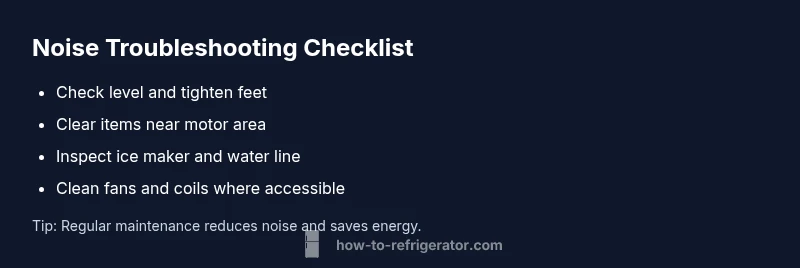
The most effective way to approach knocking noises is a systematic, safe checklist. Begin by unplugging the refrigerator before touching any internal parts. Move any nearby items away from the motor compartment and recheck the stability of the unit—leveling feet should contact the floor evenly. Open and close doors a few times to see if the sound correlates with door movement, which can reveal loose shelves or bins. Inspect door gaskets for tightness; a loose seal can cause panels to vibrate during cooling cycles. Finally, ensure the appliance sits on a clean, flat surface with adequate clearance at the back and sides. If you’re unsure, or if the noise occurs while the unit is loaded with heavy items, consider seeking help earlier in the process. The goal is to reduce vibration and eliminate rattles without risking safety or food safety.
Evaporator fan, condenser fan, or compressor? How to tell
A common source of knocking noises is a motorized fan hitting ice, debris, or worn blades. The evaporator fan lives inside the freezer compartment and typically begins to knock when ice builds up on the cooling coil. The condenser fan sits near the back of the fridge and can rattle if it’s bent or blocked by dust. The compressor and its mounting can also generate knocking sounds if mounts loosen or the vibration isolators wear out. To differentiate, listen for timing cues: evaporator fan noise often starts after the compressor runs and stops when the door is opened or the thermostat cycles, while a condenser fan usually runs continuously in many models. If the noise is constant, suspected issues include a loose motor mount or a bent blade. When refrigerator makes knocking noise, the source often points to a fan or a mounting problem.
Ice maker and water line checks
If you have an ice maker, a common cause of knocking is ice cubes tumbling into the tray or ice maker blades striking the housing due to misalignment. Check for ice blockages, frozen lines, or a worn fill valve. Inspect the water line connections for kinks or leaks, which can create vibration and a knocking-like rattle. If your model uses a self-cleaning cycle, make sure it completes normally and isn’t sending a pulse that sounds like knocking. Clearing ice buildup and ensuring smooth water flow often resolves the most frequent knocks associated with ice making.
Leveling, anti-vibration, and how to reduce noise
Uneven flooring or misaligned feet are frequent culprits of knocking noises. Use a carpenter’s level to verify that the fridge sits perfectly plumb, then adjust the leveling feet so that the unit is firmly anchored on all four corners. Add anti-vibration pads or a thick mat under the feet to dampen movement and reduce rubbing between panels. Avoid over-tightening, which can transmit more vibration; aim for firm contact without distortion. If you notice the foot threads are damaged, replace them before releveling. These adjustments can dramatically reduce knocking noises and extend the life of your appliance.
Safe inspection of internal components and wiring
If the basics didn’t solve the issue, you may need to inspect internal parts more closely. Remove the access panel on the back or side of the fridge to check for loose wiring, rattling tubes, or signs of wear. Do not touch the sealed refrigerant lines; refrigerant systems are pressure-critical and dangerous if opened. When examining, keep hands dry and wear gloves if you reach under the compressor area. If a fan blade is nicked, bent, or obstructed by ice, replace the fan assembly rather than attempting a DIY repair on the motor. If you’re uncomfortable with any step, stop and contact a professional.
When to call a professional: red flags and timing
If, after completing the basic checks, the knocking persists, or you notice signs such as rising temperatures inside the fridge, frost buildup, or a buzzing or grinding noise that seems linked to the compressor, it’s time to call a pro. A licensed technician can check compressor mounting, verify refrigerant pressures, and diagnose motor bearings with specialized tools. Don’t delay if you suspect a leaking refrigerant or a failing sealed system. Refrigeration repairs can be dangerous and require proper handling and permits.
Regular maintenance to prevent future knocking noises
Prevention beats repair. Schedule routine maintenance that includes cleaning condenser coils, checking door seals, and lubricating drawer runners if the manufacturer supports it. Clean the fan blades and dust the motor compartment at least twice a year in moderate climates. Ensure adequate clearance around the cabinet, keep the back of the fridge free of dust, and replace air filters if your model uses them. These practices reduce vibration, improve efficiency, and minimize the odds of future knocking noises.
Quick-reference noise map: symptoms and fixes
- Constant knock while the compressor runs: check condenser fan, motor mount, and level feet. If unresolved, call a professional.
- Intermittent tap when the door closes: inspect door shelves, gaskets, and drawer rails for loose parts.
- Humming plus knock from the back: examine compressor mounting and vibration dampeners.
- Ice maker knock: clear ice, realign the ice maker, check the fill valve.
- Knocks during defrost cycle: defrost drain or heater can cause transient sounds; ensure defrost system is functioning properly. This map helps you quickly match symptoms to likely fixes, guiding you toward the safest, fastest resolution when refrigerator makes knocking noise.
Steps
Estimated time: 1-2 hours
- 1
Unplug and prep
For safety, unplug the fridge and clear the area around the power cord. Remove nearby items that could vibrate against the cabinet. This first step prevents electrical hazards while you inspect common noise sources.
Tip: Always start with power off before touching any internal parts. - 2
Check leveling and feet
Place a spirit level on the top surface and adjust the front feet until the unit sits evenly. A wobbly fridge easily creates knocking noises from cabinet flex.
Tip: Make micro-adjustments and recheck level from multiple corners. - 3
Inspect interior shelves and bins
Look for items resting against doors or fans. Misplaced bins can rattle during cooling cycles. Move or tighten shelves to eliminate contact points.
Tip: Run a quick door cycle to test if the noise changes. - 4
Isolate the noise source
Close the doors and listen closely to narrow whether the sound comes from the back, top, or interior. Note timing (during compressor start/stop, or constant).
Tip: Keep notes of when the sound occurs for later diagnosis. - 5
Check ice maker and water line
If you have an ice maker, inspect for ice blockages and misalignment. Inspect the water line for kinks or vibration and disable the maker temporarily to test changes.
Tip: Turn off ice maker switch if you suspect it causes the knock. - 6
Inspect exterior panels and doors
Ensure screws are tight and panels aren’t rubbing on the cabinet. Check the door gasket for a tight seal that can cause panel movement.
Tip: Don’t overtighten fasteners; snug contact is enough to stop movement. - 7
Access fans and coils (if comfortable)
If you have the model manual, carefully remove access panels to inspect evaporator/condenser fans for ice, debris, or bent blades. Do not touch sealed lines.
Tip: Only proceed if you’re confident with panel removal and safety. - 8
Add vibration dampening
Place anti-vibration pads under feet or a mat under the fridge to dampen movement. This reduces rubbing between panels and lowers noise.
Tip: Avoid thick mats that trap heat around the compressor. - 9
Decide on next steps
If the noise persists after these steps, schedule professional service for compressor mounting, refrigerant checks, or sealed-system issues.
Tip: Document symptoms and the fixes you attempted to help the tech.
Diagnosis: Knocking noise from refrigerator during operation
Possible Causes
- highLoose items or unstable shelves causing vibration
- highUnlevel fridge causing cabinet vibration
- mediumEvaporator fan hitting ice or debris
- lowCondenser or compressor mounting loosened
- lowIce maker alignment or water line vibration
Fixes
- easySecure loose items and level the fridge
- easyReposition shelves and drawers to avoid contact
- easyPlace vibration-dampening mats under feet
- mediumInspect and repair evaporator/condenser fans as needed
- hardCall a qualified technician for compressor or sealed-system issues
FAQ
What causes knocking noises in a refrigerator?
Knocking noises often come from vibration, loose items, or fan issues. Ice buildup, misaligned shelves, or a loose compressor mount can also produce knocking sounds. Starting with basic checks helps identify the source quickly.
Knocking usually points to a vibration or a loose part—start with simple checks to locate the source.
Is knocking noise dangerous to ignore?
Ongoing knocking can indicate a failing component that may worsen or affect food safety. While not immediately dangerous, it’s wise to diagnose and fix it promptly to avoid bigger repairs.
Ongoing knocks can signal a failing part, so don’t delay checking it.
Can I fix knocking noises myself?
Many fixes are safe for DIY with unplugging and basic checks like leveling and removing obstructions. For issues with fans or compressors, consult a professional.
Some fixes are DIY, but major parts should be handled by a pro.
How do I know if the evaporator fan is the source?
If the knock happens after cooling cycles and sounds like a blade rubbing or a rattle near the freezer, the evaporator fan is a likely culprit. Access may require removing panels and clearing ice.
A fan rubbing or ice buildup near the freezer usually means evaporator fan trouble.
When should I call a professional?
If the noise persists after basic checks or you notice temperature issues, frost buildup, or unusual compressor noise, contact a licensed technician.
If it won’t go away after basic checks, call a pro.
Are there safety risks with diagnosing fridge noises?
Yes. Unplug before inspecting, avoid tampering with sealed lines, and refrain from water near electrical components. If unsure, stop and seek professional help.
Safety first: unplug and don’t mess with sealed parts.
Watch Video
Top Takeaways
- Start with safe, simple checks and level the fridge
- Identify whether the noise comes from fan, ice maker, or compressor
- Use vibration dampers and routine maintenance to prevent future noise
- Call a professional for compressor or sealed-system issues