How to Refrigerator Gas: Safe Leak Diagnosis & Maintenance
Learn how to refrigerator gas safely, identify leaks, and know when to call a licensed technician. How To Refrigerator explains signs, safety, and maintenance to protect your fridge and home.


Main goal: understand why refrigerant gas safety matters, why DIY gas charging is not advised, and how to spot leaks. You’ll learn safe homeowner checks, how to prepare for a service visit, and when to call a licensed HVAC technician for diagnosis or recharge. This quick answer also highlights the differences between reclaiming gas, leak detection methods, and expected timelines.
Understanding Refrigerant Gas in Household Refrigerators
For most homes, the refrigerant gas is part of a sealed system that quietly moves heat from inside the fridge to the outside. If you're exploring how to refrigerator gas, you’re probably trying to diagnose a possible leak or understand maintenance options. According to How To Refrigerator, handling refrigerant without proper training can be hazardous to your health and the environment. This guide explains the basics, the risks of DIY gas work, and the safer paths to restore cooling. Major refrigerants used in modern refrigerators include hydrofluorocarbons and hydrocarbon blends, each with different safety and environmental considerations. When the system is intact, the compressor circulates the refrigerant through evaporator and condenser coils, absorbing heat from the interior and releasing it outside. Understanding these components helps homeowners recognize when issues are due to leaks, seals, or inadequate airflow rather than a simple recharge. Prospective DIY fixes should focus on safe, non-invasive maintenance and conserving energy while you plan a professional visit.
Why DIY Refrigerant Gas Work Is Risky
Attempting to recover or recharge refrigerant gas without certification is not just unlawful in many jurisdictions; it is dangerous. Refrigerants can displace oxygen, cause frostbite from rapid expansion, and the equipment used to recharge the system can cause leaks if mischarged. In addition, improper charging can lead to inefficient cooling, sensor faults, and warranty voidance. The gas is also a regulated pollutant under environmental laws; releasing it can harm the atmosphere. For homeowners, the best practice is to treat any suspected gas issue as a service event, and to focus on safe, non-invasive maintenance that supports proper operation and energy efficiency while waiting for a licensed technician. How To Refrigerator analysis shows that most issues are caused by leaks, coil dirt, or door seal wear rather than simple refills. Keeping these distinctions in mind helps you plan effectively and protects your home from hazardous exposure.
Signs of a Refrigerant Leak
Look for telltale signs that the sealed refrigerant system may be compromised. Common indicators include oily residue around joints or fittings, frost or ice buildup on the evaporator, reduced cooling performance, erratic cycling of the compressor, and longer-than-usual run times. You might also notice a faint refrigerant odor or hissing sounds near the back panel, though odors are not always present. If you observe any of these, do not attempt to seal or recharge the system yourself; leaks require professional handling and proper recovery. Documenting the appliance model and refrigerant type can help technicians prepare for service efficiently.
Safe Homeowner Checks Before Calling a Pro
Start with non-invasive, safety-focused checks. Power off the fridge if you suspect a severe leak or electrical issue, then verify the door seals are intact and sealing properly. Clean exterior condenser coils if they are dirty and ensure the fridge sits level for optimal airflow. Check the interior temperature settings and confirm there are no obstructions blocking vents. Note any unusual noises or vibrations but avoid poking at connections or attempting to loosen fittings. Finally, gather the model and refrigerant information from the rating plate and prepare a brief history of the symptoms to share with the technician.
What a Professional Will Do During Service
A licensed HVAC technician or refrigeration technician will perform a controlled assessment of the sealed system. This includes leak testing with electronic detectors or soap bubble methods, evaluating refrigerant charge, and inspecting connections for corrosion or damage. If a leak is found, the technician will recover any remaining refrigerant, repair the leak, evacuate the system, and recharge it with the correct refrigerant type. They will also verify that the system maintains proper pressures and test for continued cooling performance. Expect a detailed diagnostic report and a suggested maintenance plan to prevent recurrence.
Preventive Maintenance to Reduce Leaks and Extend Life
Proactive care can minimize leak risks and keep your refrigerator running efficiently. Regularly dust and clean condenser coils, ensure proper airflow around the appliance, and keep the area well ventilated. Replace door seals if they show wear or gaps, and avoid overpacking the shelves which can impede airflow. Schedule periodic professional inspections, especially if you notice unusual warmth or a drop in cooling efficiency. While DIY checks help, refrigerant gas handling and repairs require licensed professionals to stay compliant with environmental regulations.
Choosing the Right Technician and What to Expect
When selecting a service provider, look for EPA Section 608 certification and verifiable licensing information. Request a written estimate that itemizes diagnostics, repairs, and any refrigerant recharge, and ask about warranty terms on parts and labor. Verify parts compatibility with your model and refrigerant type (R-134a, R-600a, etc.). Ask for a clear explanation of the repair steps and an estimated timeline. A reputable technician will explain your options, including potential energy-efficiency improvements that reduce future leak risk and adapt to your home environment.
Tools & Materials
- Nitrile gloves(Protect hands from refrigerant exposure and sharp edges)
- Safety goggles(Eye protection when inspecting joints or using detectors)
- Flashlight/headlamp(To inspect coils and connections clearly in dim spaces)
- Owner's manual for refrigerant type(Identify refrigerant type (e.g., R-134a, R-600a) for service requests)
- Smartphone or camera(Document signs and share visuals with technicians)
- Soap bubble solution or professional leak detector (for trained users only)(Use only if you are trained; do not attempt refrigerant handling)
- Clear workspace around the fridge(Ensure safe access for a technician; remove clutter)
Steps
Estimated time: 1-2 hours
- 1
Assess safety and scope
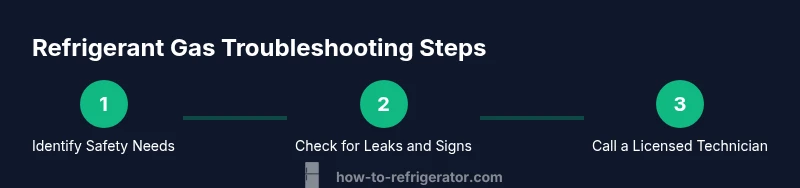
Evaluate whether the issue involves potential refrigerant leaks or non-gas-related cooling problems. Do not attempt to recover or recharge refrigerant without certification. Prioritize personal safety and prepare to communicate with a licensed professional.
Tip: If you smell chemicals, hear hissing, or feel dizziness, evacuate and ventilate the area before proceeding. - 2
Check for visible leak indicators
Inspect the back and sides for oily residue around joints and around the evaporator or condenser lines. Look for frost on the coils or unusual ice buildup. Document any signs with photos to help the technician diagnose quickly.
Tip: Avoid touching fittings or attempting to tighten connections yourself. - 3
Assess cooling performance and airflow
Confirm the interior temperature is stable and that vents are not blocked. Clean exterior coils if dusty and ensure the appliance is level for optimal airflow. Note any cycling irregularities or noise patterns.
Tip: Clean coils from outside with a gentle breeze; never spray water into the coils. - 4
Prepare refrigerant and model information
Locate the rating plate to confirm model and refrigerant type. Write down the serial number and take quick photos of the control panel and connections. This helps the technician order the correct parts and refrigerant.
Tip: Keep the appliance manual handy for exact refrigerant details and warranty notes. - 5
Schedule a professional assessment
Contact a licensed technician and share your findings, model information, and observed symptoms. Request a formal diagnostic report and a scope of work before any service.
Tip: Ask about EPA certification, warranty coverage, and whether a refrigerant recharge is included in the estimate.
FAQ
Can I handle refrigerant gas myself?
No. Refrigerant gas handling requires EPA-certified technicians and proper recovery equipment. DIY attempts can be dangerous and illegal in many areas.
No, refrigerant gas handling is not a DIY task and should be left to licensed professionals.
What are common signs of a refrigerant leak?
Common signs include oily residue around joints, frost on coils, poor cooling, and longer compressor cycles. If you notice any of these, schedule a professional inspection.
Look for oil around joints and frost on coils, then call a pro.
How long does a typical refrigerant repair take?
Time varies by leak location and repair depth. Diagnosis may take 1-2 hours; the full recharge and leak fix can extend the service window.
Diagnosis may take a couple of hours; full service could take longer depending on the leak.
Will a leak affect energy bills?
Yes. A leaking or undercharged system often runs longer to maintain temperature, increasing energy use until repaired.
Leaks can raise energy use because the fridge works harder.
What should I ask a technician before work begins?
Ask about refrigerant type, EPA credentials, warranty on parts and labor, and whether a full system recharge is included in the estimate.
Ask about credentials and warranties before agreeing to the service.
Are there safe, non-invasive checks I can perform?
Yes. You can inspect door seals, airflow, and condenser cleanliness. Do not attempt to access or repair refrigerant lines yourself.
You can check seals and airflow, but avoid touching refrigerant lines.
Watch Video
Top Takeaways
- Never attempt refrigerant gas charging yourself.
- Leads you to call a licensed technician for leaks and recharge.
- Document symptoms and model details before service.
- Regular preventive maintenance reduces leak risk.
- Verify technician credentials and warranty terms before work.