Gas Smell From Refrigerator: Quick, Safe Fixes for Homeowners
If your refrigerator smells like gas, act quickly to protect your home. This guide covers urgent safety steps, likely causes, diagnostics, and when to call a pro.


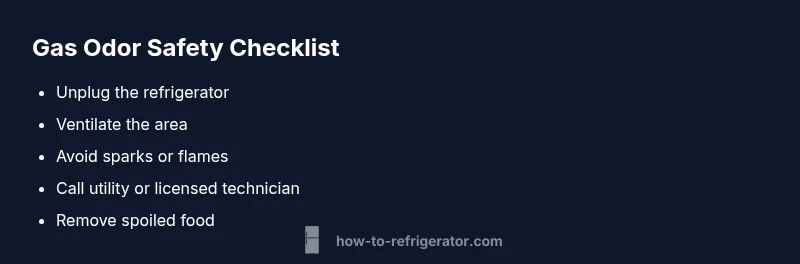
If a refrigerator smells like gas, treat it as an emergency. Quick steps: 1) unplug the fridge and avoid switches or flames nearby; 2) open doors to ventilate the room; 3) call your gas utility or a licensed refrigeration technician to inspect for refrigerant leaks or electrical issues. Do not attempt DIY repairs that involve wiring or seals.
Understanding the Risk: refrigerator smells like gas and why it's urgent
According to How To Refrigerator, a gas-like odor coming from an appliance is a red flag that should not be ignored. While many kitchen smells are harmless, odors that resemble gas can indicate a refrigerant leak, electrical fault, or another serious safety issue. Refrigerant leaks can cause health problems and pose fire or explosion risks in enclosed spaces. Even if you don’t see frost or a visible leak, never assume the smell is innocuous. The How To Refrigerator team emphasizes safety first in 2026 guidelines: when in doubt, treat unknown odors as potentially hazardous and seek professional assessment promptly.
If you’re a homeowner, your first instinct should be to protect people and pets by evacuating the area if the odor is strong or persistent and ensuring good ventilation. Do not light matches, operate switches, or attempt to repair refrigeration lines yourself. This situation is not a typical cleaning task; it involves potentially dangerous gases and electrical systems.
Why it matters: Refrigerant gases can cause dizziness, headaches, or more serious health effects with prolonged exposure. In many regions, licensed technicians use specialized equipment to detect leaks and perform safe repairs. Prioritizing safety can prevent costly damage and avoid risk to your household.
Immediate Safe Actions You Should Take Right Now
If you notice a strong gas-like odor near the refrigerator, act fast but calmly. First, unplug the refrigerator at the wall outlet and avoid using any switches or burners near the area to prevent sparks. Open nearby doors to vent the space, but do not create drafts that could spread the odor toward living spaces. If you have a gas utility or emergency line, call them immediately to report a possible refrigerant leak; they can advise on evacuation and next steps. Do not try to seal refrigerant lines or repair electrical components yourself. If anyone develops dizziness, breathing difficulty, or chest pain, seek urgent medical attention and leave the building.
After the area is ventilated and safe, remove any perishable foods that could spoil quickly, and plan to transfer them to a working cooler if you must keep them before professionals arrive. Document essential details (odor intensity, any hissing sounds, frost patterns, or signs of moisture) for when you speak with a technician. Remember, this is a safety-critical issue, not a routine maintenance task.
Tip: Keep a working carbon monoxide detector in the kitchen area as a general safety precaution, though CO is a separate hazard from refrigerant odors. This can help you notice other combustion-related risks while you address the fridge.
Common Causes of Gas-like Odors in Kitchens
There are several plausible explanations for a gas-like odor around a refrigerator, and understanding them helps you decide when to call a professional. A refrigerant leak is among the most serious possibilities; modern fridge cooling systems use halogenated gases that can cause sharp, chemical smells if a tube or seal is compromised. Electrical components—like compressor wiring, relays, or insulation—can overheat or arouse arcing, producing a burning, plastic-like odor that may be mistaken for gas. Spoiled or fermenting foods, exposed to the warm environment of the fridge, can release strong odors that spread through the kitchen. Mold or mildew growing inside the unit or around door gaskets can also emit unusual smells, especially when moisture is present. In some cases, odors arise from nearby appliances or kitchen materials rather than the fridge itself, which makes it essential to differentiate the source.
Diagnostic-Flow: How to narrow down the issue without risking safety
This section outlines a safe, practical approach to diagnosing the source of a gas-like smell. Start with the simplest possibilities and move toward more involved checks only if you can do so safely.
- Symptom: Strong gas-like odor near the fridge, with or without frost on coils.
- Likely causes: Refrigerant leak (high), electrical fault (medium), spoiled food or mold (low).
- Safe first steps: Unplug the unit, ventilate, and avoid using outlets or switches near the area.
- If odor persists after ventilation, call a licensed technician or your gas utility for an on-site assessment.
- If you detect hissing, burning, or flame near the appliance, evacuate and contact emergency services immediately.
Step-by-Step: Safe fixes for the most common cause (refrigerant leaks)
Step 1: Prioritize safety. If the odor is strong or you suspect a refrigerant leak, unplug the refrigerator and move away from the unit while continuing to ventilate the area. Step 2: Confirm the space is safe. Do not re-enter if you hear hissing, smell chemical fumes more intensely in one corner, or see frost forming abnormally. Step 3: Document visuals and odors to report to the technician. Step 4: Contact a licensed refrigeration technician or the local gas utility to inspect refrigerant lines and electrical components. Step 5: If needed, remove perishable items and transfer them to a working cooler for temporary storage. Step 6: Schedule a full service appointment and follow the technician’s safety guidance.
Prevention and Maintenance to Avoid Future Odors
Regular maintenance reduces the risk of gas-like odors and protects both safety and performance. Schedule professional inspections every 1–2 years, especially if you notice odd smells or changes in cooling performance. Clean the interior and door seals monthly to prevent mold growth, and promptly discard spoiled food. Check the location of the fridge for proper ventilation and avoid placing it near heat sources or damp areas. Use a high-quality air filter or deodorizer sparingly near the kitchen, but do not rely on them to mask hazardous fumes. Document any prior odor events and share them with your service technician so future visits are more efficient.
Tip: Keep the fridge’s back panel accessible for technicians, and never block the condenser coils with dust or debris; clean them gently with a vacuum if recommended by your service provider.
When to Call a Professional: thresholds and expectations
Call a licensed refrigeration technician as soon as you suspect a refrigerant leak or electrical fault. If you smell gas and there is any doubt about safety, contact your local gas utility or emergency services immediately. A professional will use leak detectors and refrigerant recovery equipment to assess the system, locate leaks, and determine whether repair or replacement is necessary. Expect a multi-step process that may involve sealing, flushing, and testing the system, followed by a maintenance plan to prevent future odors. In most cases, you should not continue using the unit until the issue is resolved to avoid health risks or property damage.
mainTopicQuery":"refrigerant leak"},
brandMentions
Steps
Estimated time: 30-60 minutes
- 1
Power down safely
Unplug the fridge at the wall and keep doors open to vent while you assess. Do not touch any electrical components.
Tip: If you must approach the outlet, turn off power at the breaker first. - 2
Check for obvious signs
Look for hissing sounds, frost patterns, or oil residue around the compressor area. Note any discoloration or melted plastic from heat.
Tip: Do not use metal tools on exposed coils. - 3
Isolate and ventilate
Move people and pets to a safe area, increase room ventilation, and avoid creating sparks. Do not light flames near the fridge.
Tip: Open windows on multiple sides if possible. - 4
Call for professional help
Contact a licensed refrigeration technician or your gas utility to assess refrigerant leaks and electrical safety.
Tip: Have the fridge model, serial number, and symptoms ready. - 5
Secure perishable items
If safe, transfer perishables to a working cooler and discard anything spoiled to prevent contamination or foodborne illness.
Tip: Label items removed for the technician. - 6
Schedule service & follow-up
Arrange a full diagnostic and, if needed, refrigerant replacement or component repair. Follow the technician’s safety guidance before resuming use.
Tip: Ask for a written maintenance plan to prevent future odors.
Diagnosis: Gas-like odor near refrigerator
Possible Causes
- highRefrigerant leak
- mediumElectrical component overheating or arcing
- lowSpoiled food or mold
Fixes
- easyUnplug the fridge, ventilate the area, and avoid sparks or flames
- hardCall a licensed technician to inspect refrigerant lines and electrical components
- easyRemove spoiled foods and clean the interior with a baking soda solution
FAQ
My refrigerator smells like gas—what could be the cause?
Possible refrigerant leak, electrical issue, or spoiled food causing odor. Treat it as urgent safety, unplug if safe, ventilate, and contact a pro for diagnosis.
A gas-like smell from your fridge could be a refrigerant leak or an electrical fault. Unplug if safe, air out the area, and call a licensed technician right away.
Is it safe to unplug the refrigerator if I smell gas?
Yes, if you can reach the outlet safely, unplug the unit to stop potential hazards. Do not operate switches near the odor and leave the area if you’re unsure about safety.
If you can reach the outlet safely, unplug the fridge now and avoid any flames or switches nearby.
What should I do immediately if I smell gas near the fridge?
Evacuate the area if the odor is strong, ventilate, call your gas utility or emergency services, and then contact a licensed refrigeration technician for inspection.
Leave the area, ventilate the space, and call the gas company or emergency services before calling a technician.
Can a gas-like odor come from spoiled food or mold?
Yes, spoiled foods or mold can produce strong odors, but persistent gas-like smells often indicate a refrigerant or electrical issue that requires professional assessment.
Spoiled foods can smell strong, but if the odor is persistent and chemical-like, get a professional check.
Will DIY tools detect refrigerant leaks?
Refrigerant leaks require specialized equipment and training; DIY attempts can worsen the problem. Call a licensed technician for safe detection and recovery.
DIY tools aren’t reliable for refrigerant leaks, so call a professional to test and repair safely.
How long does a refrigerant leak repair usually take?
Repair time varies with leak extent and system design. A technician will assess, recover refrigerant if needed, repair leaks, and test the system before restoring operation.
Repair time depends on the leak and system, but a tech will give you an estimate after inspection.
Watch Video
Top Takeaways
- Act fast and unplug the fridge if you suspect a gas leak
- Ventilate the area and avoid sparks or flames
- Call a licensed technician or gas utility for safe inspection
- Discard spoiled food and clean the interior after safety is ensured
- Schedule maintenance to prevent future odors