Refrigerator Smells Like Burning: Urgent Fix Guide
Urgent guide to diagnose and fix a refrigerator that smells like burning. Safety-first, diagnostic flow, step-by-step fixes, and prevention tips from How To Refrigerator.


A burning fridge smell usually signals an electrical issue involving the power cord, outlet, or compressor. Immediately unplug at the wall, keep away from the unit, and check for obvious heat or melted insulation. If the smell persists after safety checks, contact a licensed appliance technician. Do not operate the fridge while you inspect it.
Understanding the Urgency: Why a Burning Smell Can't be Ignored
If you wake up to a strong odor of burning near your refrigerator, you are dealing with a potential electrical issue that could lead to a fire. A loud hum, smoking, or a scorching chemical smell are all red flags. The phrase refrigerator smells like burning is not just an annoyance; it signals an overheating component or melted insulation. According to How To Refrigerator, any burnt or plastic-like scent should be treated as an emergency, and you should stop using the appliance until it is inspected. The How To Refrigerator team emphasizes safety first: unplug the unit, avoid touching any exposed wires, and keep children and pets away. While some odor sources may be harmless dust or spilled food, a burning odor almost always indicates heat somewhere it shouldn’t. Early detection can prevent costly damage to the compressor, wiring, or control panel and reduce the risk of fire. If you notice smoke, call emergency services immediately and evacuate if necessary. This guide will walk you through safe steps to assess the situation and decide when to call a professional.
Common Causes That Trigger a Burning Fragrance in Your Fridge
Burning smells around a refrigerator typically come from electrical components overheated by poor connections, failed insulation, or heavy usage without proper ventilation. A scorching power cord or outlet can emit a chemical burning odor before a visible sign of danger. The compressor or its start relay might overheat if there is a fault or an improper startup sequence. Dust and debris on condenser coils can insulate heat and force the system to work harder, which might create a hot, burnt scent near the rear of the appliance. Internal wiring damage, frayed insulation, or tape that has degraded over time can also emit heat and odor. In rare cases, a malfunctioning defrost heater can overheat near the evaporator. Remember that smells may travel through the cabinet; even a slight warmth behind the unit could indicate airflow restrictions. How To Refrigerator's guidance is to treat any burning scent as potentially dangerous and investigate calmly, step by step.
Immediate Safety Steps You Should Take Now
If you detect a burning smell, safety comes first. Unplug the refrigerator at the wall or switch off the dedicated circuit breaker. Do not use an extension cord or power strip, and avoid touching any wiring or the back of the unit if it feels hot. If there is smoke, evacuate and call emergency services. Move perishable foods to a working refrigerator or a cooler if you can do so safely, but do not open the freezer unnecessarily, which can hasten thawing. After the device is de-energized, inspect only visually from a distance for obvious signs of damage (char marks, melted insulation). Do not replug or power the unit until a qualified technician has assessed it. If you must use a professional service, document symptoms and any unusual noises or lights to help the technician diagnose quickly.
Diagnostic Flow: From Symptom to Solution
Symptom: A burning smell is present when the fridge is running.
- Causes to consider:
- Electrical outlet or power cord overheating (likelihood: high)
- Overheating compressor or start relay (likelihood: high)
- Dusty condenser coils causing overheating (likelihood: medium)
- Internal wiring damage or insulation degradation (likelihood: low)
- Fixes to attempt:
- Unplug the fridge and inspect the power cord for visible damage (easy)
- Check the outlet and breaker for signs of overheating; replace components if necessary (easy)
- Clean condenser coils and ensure proper airflow (easy)
- If the smell remains after basic checks, call a licensed technician to inspect the compressor and wiring (hard)
If this doesn’t resolve the odor, escalate to professional service promptly. Always prioritize safety and avoid running the unit with damaged wiring to reduce fire risk.
Step-By-Step Fixes for the Most Likely Cause
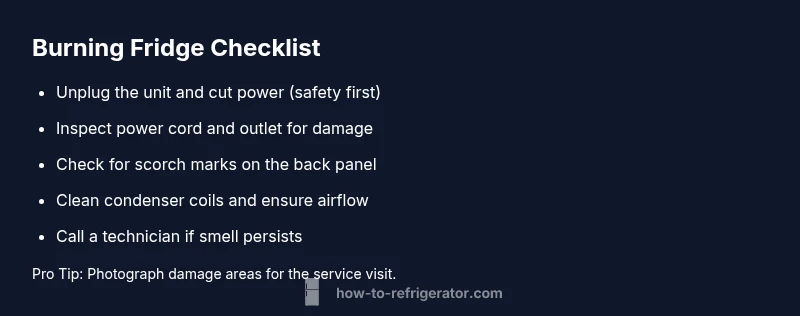
- Power down safely
- Title: Power down and secure power
- Description: Unplug the fridge at the wall. If the outlet feels warm, switch off the corresponding circuit breaker and leave the fridge unplugged until a technician inspects it. Pro tip: use a non-contact voltage tester to confirm there is no current before touching the plug.
- Tip: Always verify the power is off at the breaker before touching the cord.
- Inspect the power cord and outlet
- Title: Inspect cords and outlets
- Description: Look for melted insulation, scorch marks, or a loose connection. If you see damage, replace the cord or have the outlet upgraded by a licensed electrician. Pro tip: avoid using damaged cords or extension cables, which can worsen heat buildup.
- Tip: Photograph damage for the technician’s reference.
- Check for scorch marks on the back panel
- Title: Inspect the back panel
- Description: Feel for heat near the rear panel and look for signs of scorching around the condenser or wiring harness. If you notice scorch marks, stop and call a pro—don’t attempt further wiring work. Pro tip: note the exact location of heat to help the technician pinpoint the fault.
- Tip: Do not touch any exposed wiring if you see damage.
- Clean condenser coils and vents
- Title: Clean condenser coils and vents
- Description: Dust and debris reduce airflow, causing the system to overheat. Use a vacuum with a brush attachment or a coil-cleaning brush to remove buildup. Pro tip: unplug the unit and wait for it to cool before cleaning; ensure you don’t damage sensitive coils.
- Tip: Keep vents clear and allow air to circulate around the back of the appliance.
- Check the evaporator fan and drip pan
- Title: Inspect the fan and drip pan
- Description: A noisy or failing evaporator fan can indicate motor issues that generate heat and odor. Do not run the fridge if the fan housing is hot or noisy. Pro tip: take a sample of any unusual noises to describe to the technician.
- Tip: Do not attempt fan motor repairs yourself unless you’re trained.
- When in doubt, call a professional
- Title: Call a professional
- Description: If burning smells persist after basic checks, a licensed appliance technician should diagnose the compressor, wiring, and control board. Pro tip: request a written diagnostic report and a clear estimate before work begins.
- Tip: Maintain your warranty documentation and service history for smoother repairs.
EstimatedTime: "45-60 minutes"
Prevention and Maintenance to Avoid Future Odors
Preventing a burning smell starts with regular maintenance and mindful usage. Schedule periodic checks of condenser coils and door seals; ensure the air intake and vents are not blocked by stored items. Clean coils at least once or twice a year to maintain efficient cooling and reduce heat buildup. Inspect the power cord and outlet for wear, and replace damaged components promptly. Keep the area around the fridge clean and dry, and avoid placing the appliance near heat sources like ovens or radiators. Finally, implement a monthly quick check to listen for unusual noises, test the door seals, and verify the temperature is properly set to prevent overworking the compressor. Following these steps can help you avoid not only odors but also premature repair costs.
Quick Checks You Can Do Periodically
- Check door seals for cracks or gaps and replace them if needed.
- Keep condenser coils clean and free of dust.
- Ensure the fridge has adequate clearance for airflow at the back.
- Use a dedicated, properly rated outlet; avoid daisy-chaining through power strips.
- Note any changes in odor, heat, or cooling performance and address them early.
Steps
Estimated time: 45-60 minutes
- 1
Power down safely
Unplug the fridge at the wall. If the outlet feels warm, switch off the related circuit breaker and leave the fridge unplugged until a technician inspects it. Pro tip: use a non-contact voltage tester to confirm there is no current before touching the plug.
Tip: Always verify power is off at the breaker before touching the cord. - 2
Inspect the power cord and outlet
Look for melted insulation, scorch marks, or a loose connection. If you see damage, replace the cord or have the outlet upgraded by a licensed electrician. Pro tip: avoid using damaged cords or extension cables, which can worsen heat buildup.
Tip: Photograph damage for technician reference. - 3
Check for scorch marks on the back panel
Feel for heat near the rear panel and look for signs of scorching around the condenser or wiring harness. If you notice scorch marks, stop and call a pro—don’t attempt further wiring work. Pro tip: note the exact location of heat to help the technician pinpoint the fault.
Tip: Do not touch exposed wiring. - 4
Clean condenser coils and vents
Dust and debris reduce airflow, causing the system to overheat. Use a vacuum with a brush attachment or a coil-cleaning brush to remove buildup. Pro tip: unplug the unit and wait for it to cool before cleaning; ensure you don’t damage sensitive coils.
Tip: Keep vents clear to allow air to circulate. - 5
Check the evaporator fan and drip pan
A noisy or failing evaporator fan can indicate motor issues that generate heat and odor. Do not run the fridge if the fan housing is hot or noisy. Pro tip: take notes on unusual noises for the technician.
Tip: Only trained personnel should service the fan motor. - 6
Call a professional if smells persist
If burning smells persist after basic checks, a licensed appliance technician should diagnose the compressor, wiring, and control board. Pro tip: request a written diagnostic report and a clear estimate before work begins.
Tip: Keep warranty details handy for service.
Diagnosis: Machine emits a burning smell when running
Possible Causes
- highOverheating electrical outlet or damaged power cord
- highOverheating compressor or start relay
- mediumDusty condenser coils causing overheating
- lowInternal wiring damage or insulation degradation
Fixes
- easyUnplug the fridge and inspect the power cord for visible damage
- easyCheck the outlet and breaker for overheating; replace components if needed
- easyClean condenser coils and ensure proper airflow
- hardIf smell persists, contact a licensed appliance technician to inspect the compressor and wiring
FAQ
What should I do first if my fridge smells like burning?
Prioritize safety: unplug the refrigerator at the wall, switch off the dedicated circuit, and do not touch damaged wiring. If there is smoke, evacuate and call emergency services. Then assess whether a professional inspection is needed.
First, unplug the fridge and call for help if there’s smoke. Safety comes first before any inspection.
Is it safe to keep using the fridge after the smell goes away?
No. A burning odor can recur and indicates an underlying issue. Have a technician inspect the electrical components and cooling system before resuming normal use.
No—get it inspected even if the smell seems to disappear.
Could the smell come from the freezer?
Yes, a burning odor can originate from the freezer area if the defrost heater or fan is failing, or if wiring runs through that compartment. Inspect gradually and avoid disassembly beyond your comfort level.
It can come from the freezer—don’t ignore it; have a pro check it.
When should I call a professional?
Call a professional if the odor persists after basic safety checks, if you notice scorch marks, or if you’re uncomfortable inspecting electrical components. They can verify the compressor, wiring, and control board levels.
Call a professional if the smell remains after basic checks.
Can burning smell be caused by spoiled food?
Rarely. Spoiled food itself doesn’t usually produce a true burning odor; a burning scent points to electrical or mechanical heat. It’s important to differentiate smells and err on the side of caution.
Usually not from spoiled food; it’s more likely electrical heat.
Watch Video
Top Takeaways
- Unplug immediately when you smell burning.
- Prioritize safety and call a professional for electrical issues.
- Regular maintenance reduces odor risks and extends fridge life.
- Keep a record of symptoms and maintenance for service history.