Is It Normal for Refrigerator to Be Hot? A Homeowner's Troubleshooting Guide
Urgent troubleshooting guide to diagnose why a refrigerator feels hot, with quick checks, a diagnostic flow, step-by-step fixes, safety tips, and prevention strategies. Learn practical actions from How To Refrigerator Team to keep your fridge safe and efficient.


If your refrigerator feels hot, the most common issues are restricted airflow, dusty condenser coils, or a failing door seal. First, unplug if the compressor is dangerously hot, move the unit to improve ventilation, and clear obstructions. Then clean the coils, inspect seals, and ensure proper airflow; if the compressor remains hot, call a professional.
Why This Happens: Is It Normal for Refrigerator to Be Hot?
Is it normal for refrigerator to be hot? In most homes, it is not. A hot exterior or a warm rear panel usually signals an underlying problem. The most common culprits are restricted airflow, dirty condenser coils, or doors that don’t seal properly. When airflow is blocked or coils are dirty, the compressor runs longer and harder, generating more heat. In warmer kitchens, ambient heat can compound the issue, but overheating should still be investigated rather than ignored. According to How To Refrigerator, addressing overheating quickly can prevent energy waste and potential component damage. Don’t assume a hot fridge is harmless—consistent heat is a sign something needs attention.
Beyond the obvious, a few quieter factors can contribute. A malfunctioning evaporator fan, a defrost heater stuck on, or a damaged thermostat can cause excessive cycling or continuous operation. In some cases, a high room temperature, poor ventilation behind the unit, or even a recently opened door that stayed ajar for an extended period can elevate surface temperatures. Understanding these factors helps homeowners prioritize simple fixes before calling a technician. The goal is to restore proper airflow, cooling efficiency, and door integrity so the appliance returns to its normal operating range.
Quick Checks You Can Do Today
Before diving into deeper diagnostics, run through these at-home checks. They cover the most common causes and can often solve the issue without tools.
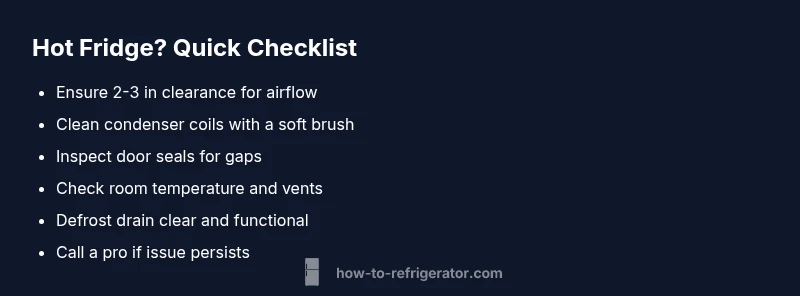
- Ensure there is at least 2-3 inches of clearance behind and on the sides of the refrigerator for heat dissipation. Move the unit away from walls, cabinets, or heat-producing appliances.
- Inspect the condenser coils (usually at the back or beneath the unit). If you feel dust or lint, unplug the fridge and gently vacuum or brush the coils clean. Do not use a metal brush or metallic tools.
- Check the door seals for cracks, warping, or gaps when the door is closed. A bad seal lets warm air into the compartment, causing the compressor to work harder.
- Listen for unusual noises from the compressor or fan. A humming or buzzing that’s louder than normal may indicate a component strain.
- Confirm the interior temperature settings are correct and not accidentally set too high. If you recently changed settings, revert to a standard temperature and observe.
- Consider room temperature. If the kitchen is unusually hot, it will make the fridge work harder; provide ventilation and keep the unit out of direct sunlight.
If these checks don’t resolve the issue, move to the diagnostic flow for a more structured approach.
Diagnostic Flow: Symptom to Diagnosis (High-Level)
When you notice heat from or around the fridge, follow a simple diagnostic path to isolate the cause. Start with the easiest checks and build up to more involved steps. This flow helps you decide whether you can fix it safely at home or if professional intervention is needed.
- Symptom: Exterior surface is noticeably warm or hot to touch, or the interior back panel feels warmer than expected.
- Diagnosis path: Verify airflow, then inspect condenser coils, then test door seals and defrost components, and finally assess ambient room heat.
- Solution flow: Improve ventilation and clean coils; replace seals if needed; adjust thermostat if miscalibrated; if heat persists, contact a service technician.
Remember: never bypass safety features or operate the fridge with exposed wiring. If you smell burning plastic or hear a crackling sound, unplug immediately and call a pro.
Safety First: When to Unplug and Call a Pro
If any sign points to a potential electrical fault, unplug the unit and do not attempt risky repairs. Symptoms that warrant immediate professional help include a burning smell, tripped breakers, or visible melted components. A hot compressor that remains hot to the touch after your initial checks can indicate a faulty start relay, overheated motor, or refrigerant-related issue that requires licensed service.
For most homeowners, simple preventive steps and careful observation are enough to avoid a trip to the repair shop. If you are uncomfortable with any procedure, stop and contact a professional. Safety is the top priority.
The How To Refrigerator Team emphasizes that early intervention saves energy and can extend appliance life.
Prevention: How to Keep Your Refrigerator Cool Over Time
Prevention is easier than reactive fixes. Regular maintenance keeps overheating from occurring and helps your fridge run efficiently. Establish a simple routine:
- Keep the area around the fridge clean and free of dust. Vacuum the coils every 6–12 months, or as recommended by your model's manual.
- Ensure consistent airflow by maintaining proper clearance and avoiding placement near heat sources or in direct sunlight.
- Inspect seals periodically; replace worn gaskets promptly to maintain interior stability.
- Monitor door usage: minimize how long the door is open, and check for items that block the door’s seal.
- Schedule professional checks after major appliance moves or if you notice recurring warmth despite proper airflow.
By following these steps, you reduce energy consumption and prolong the life of your refrigerator. How To Refrigerator recommends making maintenance part of your routine rather than a reaction to a heat issue.
Steps
Estimated time: 45-60 minutes
- 1
Power down safely and inspect basics
Unplug the fridge and visually inspect for obvious signs of damage or loose connections. If you smell burning or see melting insulation, stop and call a professional. Confirm the unit has no power before touching any internal components.
Tip: Safety first: never poke at electrical components with bare hands. - 2
Check ventilation and clearances
Measure the clearance around the unit and remove any items that block airflow. Move the fridge away from walls or cabinets that trap heat. Ensure the top, back, and sides are free from obstructions.
Tip: Good airflow reduces compressor workload and heat buildup. - 3
Clean condenser coils
Disconnect power, locate the coils (back or underneath), and gently remove dust with a brush. Vacuum the area to remove loose particles. Reconnect power and observe performance.
Tip: Do not use metal tools; they can damage components. - 4
Inspect door seals and gaskets
Close the door on a thin sheet of paper; if you can pull it out easily, the seal may be worn. Check for cracks, warping, or gaps and replace if needed.
Tip: A tight seal prevents warm air from entering and keeps cooling efficient. - 5
Check temperature settings and defrost cycle
Verify the thermostat is set to a normal range and not accidentally set too high. If your model uses a defrost timer, ensure it’s not stuck in defrost mode.
Tip: Small changes can make a big difference in cooling efficiency. - 6
Test operation and monitor
Plug back in and listen for normal fan operation. Allow several hours to confirm whether the unit stabilizes at the proper temperature. Note any persistent signs of overheating.
Tip: Keep a log of temperatures if you’re troubleshooting ongoing issues.
Diagnosis: Refrigerator feels hot to touch on exterior or interior compartments
Possible Causes
- highRestricted airflow due to poor ventilation or blocked vents
- highDirty condenser coils accumulating dust
- mediumFaulty door seals or gaskets allowing warm air in
- lowAmbient temperature too high or hot kitchen environment
Fixes
- easyImprove ventilation; ensure 2-3 inches clearance around the back and sides
- easyClean condenser coils using a soft brush or vacuum; unplug the fridge before cleaning
- easyInspect and replace door seals if cracked or loose
- hardIf the compressor or fan is overheating or not running, contact a professional
FAQ
What causes a fridge to overheat?
Overheating is usually due to restricted airflow, dirty condenser coils, or faulty door seals. A hot ambient environment can contribute, but persistent heat should be investigated.
Overheating is usually caused by airflow issues, dirty coils, or bad door seals. A hot room can add to the problem, but persistent heat needs checking.
Is it dangerous if the exterior of the fridge is hot?
A hot exterior is a sign the unit is working hard. While not immediately dangerous, it indicates potential problems that could lead to inefficiency or breakdowns.
A hot exterior means the fridge is working hard. It’s a warning sign that you should diagnose the issue soon.
When should I call a professional?
Call a professional if the compressor remains hot after basic fixes, if you smell burning, or if there’s any electrical issue. Also seek help if the problem recurs after cleaning.
Call a professional if the compressor stays hot after checks or if you smell burning.
Can a dirty condenser coil cause overheating?
Yes. A dusty coil cannot release heat efficiently, causing the compressor to overwork and generate more warmth.
Dirty coils make heat hard to shed, forcing the compressor to work harder.
How can I prevent overheating in the future?
Maintain airflow, clean coils regularly, check seals, and avoid placing the fridge in direct heat or sunlight. Regular checks save energy and extend lifespan.
Keep airflow good, clean coils, and check seals to prevent future overheating.
Watch Video
Top Takeaways
- Check airflow and clean coils to reduce heat.
- Inspect door seals for airtight closure.
- Unplug and call a pro if you smell burning or see damage.
- Prevent overheating with regular maintenance and ventilation.
- Monitor temperatures and keep the kitchen cool.