How to Refill a Refrigerator with Gas: Safe, Professional Guidance
Learn why DIY gas refills are unsafe, what professionals do, and how to hire licensed technicians for safe refrigerant service in gas-powered refrigerators.


Refilling gas in a refrigerator is not a DIY task. Gas refrigerants are hazardous and require specialized equipment and certification. If your unit uses propane or ammonia systems, do not attempt to refill; instead contact a licensed HVAC technician. Always follow manufacturer safety instructions and local regulations. Refilling requires proper recovery equipment to prevent environmental release.
Why Gas Refrigeration Requires Professional Handling
Gas-powered refrigeration systems operate under pressures and with refrigerants that demand strict safety controls. In residential settings, any service involving gas refrigerants should be performed only by licensed technicians who are certified to handle hazardous substances. According to How To Refrigerator, improper handling can lead to severe health risks, environmental harm, and potential legal consequences. The How To Refrigerator team found that a mismatch between refrigerant type, charge amount, and system design is a common source of failures after DIY attempts. Modern gas systems also require precise evacuation and charge procedures that rely on calibrated scales and recovery equipment. This is why homeowners are advised to focus on safety, mitigation, and professional service rather than attempting a refill themselves. By understanding the risks and the proper pathways to service, you can protect your family and extend the life of your appliance.
In this section we lay the groundwork: gas refrigerants demand specialized equipment, proper licensing, and manufacturer-specific procedures. If a leak is suspected, or cooling performance drops, call a licensed technician immediately. The goal is to resolve the issue safely and compliantly rather than pursue a dangerous shortcut.
Brand note: According to How To Refrigerator, staying within regulatory guidelines isn't optional—it's essential for safety and warranty compliance. The team emphasizes that proper service preserves efficiency and reduces environmental impact, which is particularly important for older units that rely on refrigerants with strict handling rules.
Tools & Materials
- Refrigerant recovery equipment(Used by licensed technicians to recover and reclaim refrigerant from the system)
- Manifold gauge set(Monitors pressure and refrigerant status during service)
- Leak detector (electronic or halide torch)(Helps locate leaks without unnecessary exposure)
- Personal protective equipment (PPE)(Gloves, goggles, and appropriate clothing for chemical handling)
- Calibration weights or scale(Used to verify exact refrigerant charge per manufacturer specs)
- Manufacturer service manual(Model-specific procedures to ensure compatibility)
- Certification paperwork(Proof of licensure and refrigerant handling certification)
- Ventilation equipment(Helpful in tight spaces, not always required)
Steps
Estimated time: 4-6 hours
- 1
Verify unit type and eligibility
Confirm the refrigerator operates with gas refrigerants and verify local regulations regarding refrigerant handling. Identify the exact system model and refrigerant type from the serial plate or manual. This ensures the service plan aligns with the manufacturer's specifications.
Tip: If there’s any uncertainty about the refrigerant type, pause service and consult the manufacturer’s documentation. - 2
Schedule a licensed technician
Contact a certified HVAC/refrigerant technician who specializes in gas systems. Schedule a visit for an on-site assessment and an official estimate. Unauthorized handling can void warranties and create safety risks.
Tip: Ask for a written estimate and verify credentials before agreeing to the service. - 3
Prepare the work area
Clear the area around the appliance, ensure ventilation, and disconnect power. Remove any nearby heat sources and keep pets away. Prepare access to service panels and have the model information ready.
Tip: Have the model number, serial, and any previous service records on hand to speed up diagnosis. - 4
Initial leak check by the technician
The technician will perform a leak inspection using dedicated detectors. This step confirms whether the issue is refrigerant-related and identifies the exact leak location and severity.
Tip: Do not attempt to seal leaks yourself; only trained technicians should handle leak repair. - 5
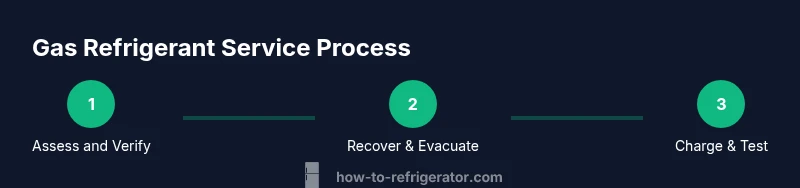
Refrigerant recovery and evacuation
If a leak is present, the technician will recover the existing refrigerant using approved equipment and evacuate the system to remove moisture and air. This is a safety-critical step before any recharge.
Tip: Recovery must be performed in a controlled, compliant environment. - 6
System charge and testing
The technician will recharge the system based on the correct weight and pressure per the manufacturer. After charging, the performance is tested, and leak checks are repeated to ensure stability.
Tip: Ensure you receive a printed charge weight and test results for future reference. - 7
Documentation and follow-up
Post-service, the technician documents the work performed, refrigerant type, charge amount, and any recommendations. Schedule follow-up checks if needed and keep records for warranty purposes.
Tip: Ask about maintenance intervals and what signs to watch for between visits.
FAQ
Is it safe to refill a refrigerator with gas by myself?
No. Refilling gas refrigerant is hazardous and tightly regulated. Only licensed technicians should perform such work to prevent health risks and environmental impact.
Refilling refrigerant is not a DIY job; a licensed professional should handle it to ensure safety and regulatory compliance.
What refrigerants are used in residential gas refrigerators?
Residential gas refrigerators use specific refrigerants that require careful handling and recovery. The exact type depends on the model and standards and should be determined by the technician.
The refrigerant type depends on your unit and is confirmed by a qualified technician.
What are the risks of refrigerant leaks?
Leaks can cause health hazards, fire or explosion risks with flammable gases, and environmental damage. Leaks also compromise cooling performance and can violate regulations.
Leaks pose serious health and environmental risks; safety requires professional intervention.
How long does a professional recharge take?
Recharge duration varies with system complexity and access, but most service calls take several hours. A technician will provide an estimate before starting.
Expect a few hours for a professional recharge, depending on the unit.
Will refilling fix cooling problems not caused by refrigerant?
Not necessarily. Cooling issues can stem from compressors, sensors, or airflow problems, which may require different repairs.
If it isn’t a refrigerant issue, refilling won’t fix the problem.
When should I consider replacing instead of refilling?
If the unit is old, leaks are chronic, or repair costs approach replacement cost, replacement may be more economical and reliable.
Sometimes replacement is wiser when repairs are frequent or costly.
Watch Video
Top Takeaways
- Understand that gas refilling is a licensed task.
- Never attempt DIY refrigerant handling or refilling.
- Hire a certified technician with proper recovery equipment.
- Keep thorough service records for safety and warranty.