How to Fix Refrigerator Seal: A Comprehensive Step-by-Step Guide
Learn how to fix a refrigerator seal with a proven, safe method. Step-by-step tips cover inspection, cleaning, reseating, and replacement to stop leaks, improve cooling, and save energy. Includes tools, maintenance, FAQs, and a YouTube video query for extra guidance.


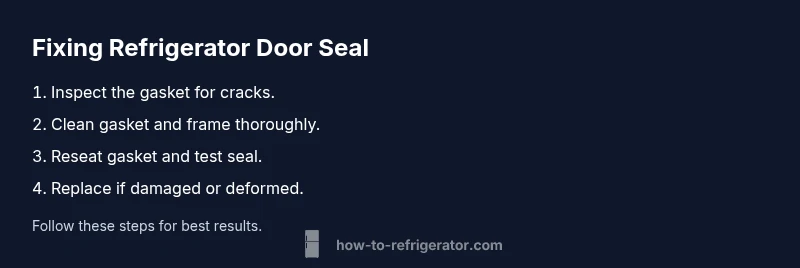
Goal: fix refrigerator seal to stop cold leaks, improve door alignment, and reduce energy use. Step-by-step plan: inspect for damage, clean the gasket, reseat the door, test the seal, and replace the gasket if necessary. Gather common tools, work calmly, and verify a tight seal before returning to normal use.
Diagnosing the Seal: Is it the Gasket or the Door?
A stubborn fridge door seal is often the root of energy waste, warm spots near the gaskets, or doors that don't stay closed. According to How To Refrigerator, a worn or dirty door gasket is a common cause of cooling issues, usually stemming from door misalignment, wear, or residue on the seal. Start by examining the entire gasket edge for cracks, tears, or stiff sections. Open and close the door slowly, then apply gentle pressure around the edges to feel for gaps. If you notice air pockets, or if the door appears to sit unevenly, the seal or hinge alignment may be the culprit. For best results, test with a simple bill or paper test: close the door with a dollar bill snug between the door and frame; if you can pull the bill out easily with little resistance, the seal needs attention.
This diagnostic step helps you separate gasket issues from hinge or frame problems, which saves time and prevents unnecessary replacements. By identifying the real culprit, you can choose a repair path that is safe, effective, and cost-efficient. How To Refrigerator analysis shows that many homeowners face seal-related cooling challenges as seals wear with age, not just from visible tears. If the seal looks intact but the door still leaks, think about alignment and frame cleanliness as your next steps.
Tools & Materials
- Screwdriver set (Phillips and flat-head)(To adjust hinges and tighten screws)
- Soft cloths or microfiber towels(For cleaning the gasket and door frame)
- Mild dish soap(Dilute in warm water for cleaning)
- Warm water(For cleaning and damp wiping)
- Replacement refrigerator door gasket (if damage is visible)(Choose the correct size for your model)
- White vinegar (optional)(For odor or mold on gasket (dilute))
- Hair dryer (optional)(To warm and reshape a stiff gasket)
Steps
Estimated time: 45-90 minutes
- 1
Inspect gasket and frame
Carefully inspect the gasket seam around the entire door for cracks, tears, stiffness, or gaps. Check the door frame for dings or warping that could prevent a tight seal. Perform a gentle close with light pressure and feel along the edge for air leaks. If you notice one section that always seems loose, focus your attention there.
Tip: Use a bright light or flashlight to highlight subtle gaps; mark any problem areas with a dry-erase marker for reference. - 2
Clean gasket and door edge
Mix a mild soap solution with warm water. Wipe the gasket thoroughly, including folds and corners, then clean the mating surface on the door frame. Rinse with a clean cloth and dry completely before testing. Residue and mold are common culprits of poor sealing.
Tip: Avoid harsh solvents or abrasive pads that can damage rubber; thorough drying helps the gasket reseal properly. - 3
Check and adjust door alignment
If the door seems misaligned, tighten or loosen hinge screws to adjust the door angle slightly. Recheck the gasket contact all the way around by closing the door and feeling for consistent contact. A misaligned door creates gaps even when the gasket is intact.
Tip: Make small adjustments and test frequently; large changes can create new alignment issues. - 4
Perform a seal test (dollar bill test)
Close the door with a dollar bill (or similar) placed mid-edge. Try pulling the bill out with light resistance around all four sides. If the bill slides out easily in any spot, the seal needs further attention or a gasket replacement.
Tip: Do this test at room temperature; extreme cold can temporarily alter gasket flexibility. - 5
Replace gasket if damaged
If you observe cracks, tears, or significant deformation after cleaning and alignment, replace the gasket with a model-compatible unit. Install by inserting the new gasket into the channel, ensuring a snug fit along the entire edge. Re-test to confirm a solid seal.
Tip: Keep the old gasket to compare fit and ensure the new gasket seats correctly.
FAQ
Can I fix a refrigerator seal without replacing the gasket?
Yes, for minor wear you can often fix it with cleaning and reseating. If cracks or tears are present, replacement is usually necessary.
Yes, you can fix minor wear with cleaning and reseating. If there are cracks, you should replace the gasket.
What is the dollar bill test and how does it work?
The dollar bill test checks seal tightness. If the bill slides out easily at any edge, the seal may be failing and needs attention.
The dollar bill test checks the seal’s tightness; if the bill moves easily, the seal may be compromised.
How do I know if the gasket is damaged beyond repair?
Look for cracks, tearing, hardening, or deformation that prevents a proper seal; these are indicators that replacement is needed.
Look for cracks or rigid spots that won’t seal properly; those usually mean you need a new gasket.
Are there safety risks when repairing a fridge seal?
Primary risk is electrical; unplug before work and avoid forcing electrical components. Use proper tools and avoid sharp edges.
Unplug the fridge before starting; be careful with sharp edges and avoid touching electrical parts.
How long does gasket replacement take?
Replacement time varies by model and skill level; plan for a short project if you’re comfortable but seek help for complex models.
It varies by model, but you can complete it in a single session if you follow the instructions.
Watch Video
Top Takeaways
- Inspect the seal and frame for damage.
- Clean both gasket and mating surface thoroughly.
- Reseat and test with dollar bill method.
- Replace damaged gaskets promptly to restore efficiency.