How to Check Refrigerator Water Valve
Learn how to locate, inspect, and test your refrigerator water valve to prevent leaks and ensure a steady ice-maker and dispenser flow. This step-by-step guide covers safety, common valve types, and when to replace.


This guide will show you how to locate and check your refrigerator water valve, safely shut off the supply, inspect for leaks, and test water flow to the ice maker or dispenser. You’ll learn when a valve needs replacement and how to choose a proper replacement valve, so you can fix issues without needless parts or delays.
Understanding refrigerator water valve basics
The refrigerator water valve is the gateway between your home's water line and the ice maker and water dispenser inside the door. For homeowners learning how to check refrigerator water valve, the goal is to verify that water is not blocked, the valve isn't leaking, and the line delivers consistent pressure. This valve is typically located where the supply line meets the fridge, and it may be a dedicated shut-off valve under a cabinet or behind the lower back panel of the unit. In most homes, two types are common: a compression valve that clamps onto the copper or plastic supply line, and a service valve with threaded connections. Knowing the difference helps you assess compatibility when you replace it. Signs of trouble include a damp spot around the valve, a decrease in water pressure, or no water flow to the ice maker. If you only encounter occasional ice or water issues, it could be a valve problem, but other culprits include clogged filters, blocked lines, or a frozen dispenser line. According to How To Refrigerator, understanding the basics makes it easier to diagnose without unnecessary parts. If you're troubleshooting, start with visual inspection, then test water flow away from the fridge to isolate the problem.
Locate the valve behind the fridge
Most fridge water valves live behind the appliance, tucked either at the bottom rear or on one side where the water line enters. Start by unplugging the unit and pulling it gently away from the wall to access the service panel. Look for a small shut-off valve on the incoming water line; common connections are 1/4 inch or 3/8 inch compression fittings. If you have a saddle valve, you may see a protruding clamp on the copper line with a needle valve; these are less reliable and often recommended for replacement with a standard shut-off valve. Use a flashlight to inspect for corrosion, mineral buildup, or wear on the valve stem. Photograph the setup so you can reference it later when buying a replacement. If you have trouble identifying the valve type, note whether the valve uses compression nuts or threaded adapters. When you identify the valve, determine if the line to the fridge is currently on or off; always verify the shut-off works by running a small amount of water into a cup.
Assess valve types and compatibility
Valves come in several styles, and choosing the right one depends on your supply line and fridge model. The most common home option is a compression shut-off valve with a threaded inlet that connects to the water supply line and a compression nut that tightens onto copper tubing. Some setups use a push-to-connect or quick-connect valve, which can be easier but may require compatible fittings. Saddle valves clamp onto a copper line and are used in some apartments; these are less reliable and often recommended for replacement with a proper angle stop valve. Before you buy, check the thread size (often 1/4 inch or 3/8 inch) and confirm compatibility with your fridge’s supply line. The valve should seal without requiring excessive force, and the supplier's instructions will indicate whether thread sealant or Teflon tape is needed. If your system uses a plastic tube, ensure the valve fittings accommodate plastic tubing and include a tight, leak-free grip. A good valve will have a clean stem, smooth operation, and no visible corrosion.
Safety prerequisites you must observe
Dealing with water lines around an appliance requires basic safety steps to prevent flooding. Before touching any valve, unplug the refrigerator and turn off the main water supply to your home if you’re replacing the valve itself. Place towels or a small bucket to catch any residual water, and work in a dry, well-lit area. Wear eye protection if you anticipate splashing. Use two containers: one to collect any water from the line and another to hold the removed valve hardware. Avoid working with power cords or outlet strips while you’re near water. If you’re unsure about the water pressure or if the line is under high pressure, consider contacting a professional. For added safety, check for any gas or electrical lines behind the unit before you tug the appliance away.
Inspect for leaks and wear
With the supply off, inspect the valve body for signs of leakage and corrosion. Check the packing nut and the valve stem for any looseness. Run your finger along the hose connections to feel for wetness; a damp spot around the valve is a telltale sign of a problem. Look for mineral buildup on fittings, which can indicate a slow leak or blocked flow. If you see wear on the valve seat, a replacement is prudent. Pay attention to the overall condition of the line; a brittle, cracking hose requires replacement. Note any movement in the valve when you reattach the supply line; if the valve spins or wobbles, the connection is likely worn and should be replaced to prevent future leaks. Remember, even a small leak can cause water damage over time, so addressing it promptly is essential.
Saddle valve vs compression valve: when to replace
Saddle valves are inexpensive but tend to fail over time; they compress onto a copper line and can cause leaks if not installed perfectly. In most modern installations, a dedicated compression angle-stop valve or a quarter-turn valve is preferred for reliability. If your saddle valve shows any sign of leakage, or if the needle valve ever leaks after turning, replace it with a standard shut-off valve. When replacing, choose a valve with the correct inlet and outlet sizes to match your supply line and fridge line. Compare valve bodies for ease of tightening, the availability of a replaceable cartridge, and the type of connection (compression vs. sweat-fitted). If you’re uncomfortable with soldering or thread sealing, hire a plumber or a qualified appliance technician. A properly installed valve will operate smoothly with a full 90-degree turn and no wobble.
Testing water flow after reassembly
After reattaching the fridge line and restoring the water supply, slowly turn the valve back on and watch for leaks at the connections. If you replaced the valve, purge air by running water through the dispenser for 1-2 minutes before judging quality. Check under the unit for damp spots and confirm that the ice maker or water dispenser produces a steady stream. If the water remains weak or inconsistent, inspect the line for kinks or frozen segments in the cabinet. If you suspect air pockets, bleed the line by opening the faucet upstream for a moment and then closing it. Finally, recheck the refrigerator to ensure it recognizes the water flow.
When to call a professional
If you’re unsure about valve sizing, encounter stubborn leaks, or cannot access the valve safely, hire a licensed plumber or appliance technician. A professional can verify the valve type, ensure proper threading, and perform leak testing with specialized tools. Leaks behind walls or under cabinets may require drywall repair and more extensive plumbing work, so a pro can prevent further damage. For many homeowners, replacing a valve is straightforward if you have the right tools, but inaccuracies can lead to flooding or expensive water damage. If your refrigerator is under warranty, check the terms before performing any replacement that could void coverage.
Preventive maintenance and best practices
To extend valve life, perform a quick monthly check for leaks around the valve and ice maker line. Replace water filters regularly and inspect hoses for cracks. Use flexible stainless steel supply lines where possible, as they resist kinking better than rigid plastic hoses. Keep the valve area clean and dry to spot leaks early. If you notice a slow drip, tighten the connection a small amount and test again; if you need to tighten repeatedly, the valve or line may be failing and should be replaced. Consider upgrading saddle valves to a proper angle stop valve if you have ongoing issues. Finally, maintain a simple maintenance log: date of replacement, name of part, and any observed symptoms.
Authority sources and further guidance
For safety and installation guidance, refer to reputable sources. The US Energy Department offers guidelines on residential appliances and water use, while EPA WaterSense covers efficient water-use practices that can influence how you approach water connections. University extension resources provide practical, local plumbing advice and maintenance techniques. Always verify compatibility with your fridge model and follow manufacturer recommendations. These sources help ensure your project remains safe and compliant while you learn how to check refrigerator water valve properly.
Tools & Materials
- Adjustable wrench(For loosening fittings)
- Channel-lock pliers(Grip hoses and fittings)
- Screwdrivers (flathead and Phillips)(Remove panels and clamps)
- Bucket or towels(Catch residual water and prevent spills)
- Flashlight(Inspect dark areas behind fridge)
- Teflon tape or pipe joint compound(Seal threaded connections)
- Replacement valve (angle-stop)(Match inlet/outlet size (1/4" or 3/8"))
- Saddle valve (optional)(Only if replacing; not recommended long-term)
- Rags or absorbent towels(Wipe spills and keep area dry)
Steps
Estimated time: 60-120 minutes
- 1
Power down and safety prep
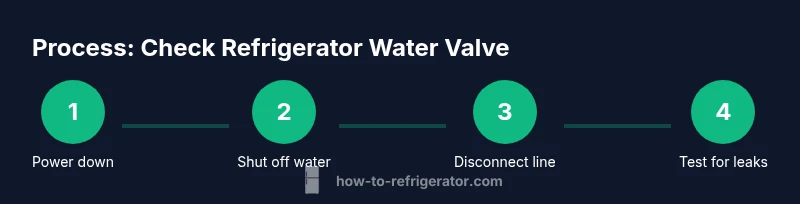
Begin by unplugging the refrigerator and turning off the main water supply if you plan to replace the valve. Clear the area, remove obstructions, and place towels to catch any water. This step reduces the risk of electric shock and water damage during valve handling.
Tip: Take a photo of the current connections before disconnecting to aid reassembly. - 2
Shut off water at the source
If your system has a dedicated shut-off valve, fully close it. If you must access a main shut-off, turn it clockwise until it stops. Verifying the supply is off prevents spurts of water when you detach the line.
Tip: Double-check that the line to the fridge is still off after closing the valve. - 3
Disconnect the fridge water line
Place a bucket or towels under the connection, then loosen the compression nut and separate the supply line from the valve. Keep the line and hardware organized for reassembly. Expect residual water to drip as you separate the fittings.
Tip: Do not yank the line; loosen fittings slowly to avoid damage. - 4
Assess whether to replace the valve
If the valve shows corrosion, leaks at the packing nut, or stiff operation, plan to replace it with a more reliable angle-stop valve. If not replacing, you can clean the threads and recheck for leaks after reassembly.
Tip: Use plumber's tape on threaded connections for a better seal. - 5
Install the new valve
Thread the valve onto the inlet line and tighten by hand, then snug with a wrench. Ensure the valve body sits square and that the connections align with fridge and supply lines. Do not overtighten to avoid damaging threads.
Tip: Finger-tight plus a quarter-turn with a wrench is usually sufficient. - 6
Reconnect the fridge line
Attach the supply line to the valve outlet and tighten securely. Inspect visually for any misalignment before proceeding. Use plumbing tape or sealant per the valve's instructions.
Tip: Ensure the hose isn’t kinked and that there is a straight path from valve to fridge. - 7
Restore water and purge air
Slowly open the shut-off valve and let water run to flush the line. Run the dispenser for 1–2 minutes to purge air. Check for leaks at every connection and wipe away any residual moisture.
Tip: If air pockets persist, run water for a longer period and then recheck. - 8
Check for leaks
Carefully inspect all fittings for moisture after a short test. If you see moisture, tighten connections in small increments and re-test. Persistent leaks indicate a misfit or damaged component that may require replacement.
Tip: Keep a dry towel handy during this step. - 9
Restore power and test the fridge
Plug the refrigerator back in and turn it on. Verify that the ice maker and water dispenser produce a steady flow. If performance is inconsistent, recheck hose routing and valve alignment.
Tip: Monitor the area for several hours after initial test for any slow leaks.
FAQ
What are the common signs that my refrigerator water valve needs replacement?
Look for persistent leaks, reduced water flow, or irregular water pressure to the ice maker. Visible corrosion or a stiff valve stem are strong indicators that a replacement is needed.
Common signs include leaks, weak water flow, and corrosion on the valve stem. If you see these, plan for replacement.
Can I replace a saddle valve myself?
Saddle valves are usually less reliable and are best avoided for new installations. Replacing with a proper compression angle-stop valve provides a more durable seal.
You can replace it yourself, but a proper valve is usually a better long-term choice.
What is the typical valve size for standard fridge connections?
Most fridge connections use 1/4 inch or 3/8 inch fittings. Always verify the size of the incoming line and the fridge-side line before buying a valve.
Most setups use 1/4 or 3/8 inch valves; check your line size to be sure.
Do I need to shut off the main water supply for valve work?
Yes. Shutting off the main water supply minimizes the risk of flooding if a leak occurs while you work on the line.
Yes, turn off the main water to be safe.
Is it safe to test the valve without a plumber?
Yes, with careful steps and proper safety, you can test the valve yourself. Stop and call a professional if leaks persist or you feel unsure.
Most people can test it themselves if they follow steps and stay safe.
What should I do if the dispenser still doesn’t work after replacement?
Check for clogged filters, kinked lines, or air pockets in the line. Ensure the fridge is powered and that the water supply is fully open.
If it still doesn’t work, inspect filters, lines, and power, then try again.
Watch Video
Top Takeaways
- Always shut off water before starting work on the valve.
- Test for leaks carefully after reassembly.
- Replace outdated saddle valves with proper shut-off valves when possible.
- Verify valve size matches the supply line before purchase.
- Document changes to aid future maintenance.