How to Check If Refrigerator Compressor Is Dead
Learn how to diagnose a dead refrigerator compressor with safe checks, tests, and a step-by-step plan. This home guide from How To Refrigerator helps homeowners decide between fixes and when to call a pro.


If your fridge isn’t cooling and you hear no compressor hum, the compressor is the most likely issue. Start with a quick power check, then inspect the start relay and overload protector, and verify the relay pins aren’t burned. If the compressor is seized or runs hot, replacement is required. For safety, call a pro if you’re unsure.
Is the compressor actually dead? How to tell
When your refrigerator isn’t cooling and you hear no hum from the motor, it’s natural to suspect the compressor. This guide on how to check if refrigerator compressor is dead takes you through safe, practical checks rooted in How To Refrigerator’s testing approach for homeowners. According to How To Refrigerator, many cooling problems start with power or the start components rather than the compressor itself. Begin with a basic power check: confirm the fridge is plugged in, the outlet has power, and the circuit breaker hasn’t tripped. If the lights dim when the door is opened, that can signal a power draw issue rather than a dead compressor. Listen for any buzzing or clicking noises when the unit attempts to start; absence of these sounds often points to the start circuit rather than the compressor itself. If you confirm power but hear nothing, proceed to safe, non-invasive checks on the relay and overload protector. Remember, a true dead compressor generally presents with either no electrical activity and no cooling, or consistent overheating that trips protection. Stay methodical and document each test as you go so you can share specifics with a repair technician. The goal is to determine whether the compressor is truly at fault or if a simpler component is to blame.
Safe initial checks you can perform
Before you touch any wires, perform a series of safe checks to avoid shock or accidental damage. First, unplug the refrigerator and wait 5-10 minutes to let the system discharge any capacitors. Verify the power outlet is delivering voltage with a simple lamp test or a multimeter, and inspect the wall outlet for signs of wear or damage. Check the circuit breaker or fuse box for trips or blown fuses. If you have other devices on the same circuit, temporarily unplug them to reduce load. Confirm the fridge door switch is functioning; a faulty switch can make the interior light come on but not affect the compressor, which helps you distinguish lighting issues from cooling problems. Listen closely to the condenser fan—if it runs continuously, the compressor may be under heavy load or failing, and if the fan is silent, the issue might be electrical rather than mechanical. Finally, feel the back of the unit from a safe distance for heat buildup around the compressor area. Excessive heat or burned odor is a strong signal to stop tests and call a pro. These checks help you narrow down whether the fault lies in power, the start device, or the compressor itself. Be mindful of safety: never probe live wires, and wear insulated gloves if you must touch components.
Diagnostic flow for cooling issues
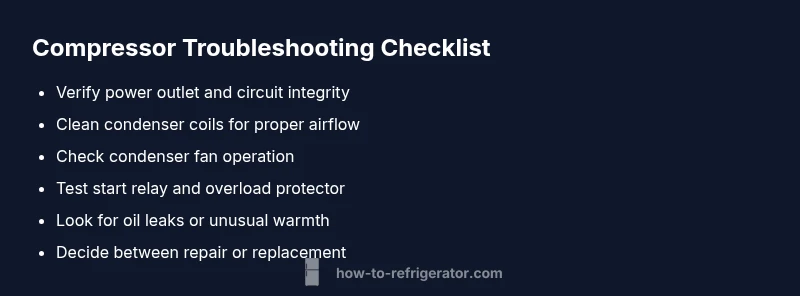
A systematic diagnostic flow helps you distinguish compressor faults from other cooling problems. Start with the simplest checks and progress to component testing. Step 1: verify voltage to the fridge and ensure the outlet isn’t erratic. Step 2: confirm the condenser coil is clean and unobstructed; restricted airflow can mimic a compressor fault by preventing cooling. Step 3: check the condenser fan operation; a non-functioning fan can cause overheating, which may trigger thermal protection and shut down the compressor. Step 4: listen for a faint hum or subtle vibration when the compressor attempts to start; absence can indicate a failing start relay or a seized compressor. Step 5: test the start relay and overload protector if you can safely access them, using a multimeter for continuity where permitted. Step 6: measure current draw if you have the right tools and expertise; a compressor that draws abnormally high current can indicate a mechanical fault. If tests point to the compressor, or if you feel unsure at any point, it’s time to call a professional. Remember: some tasks require handling refrigerants and high voltage—don’t proceed beyond your comfort level.
Start with the most common fix: start relay and overload protector
Many cooling issues that look like a dead compressor come down to a failed start relay or overloaded protector. First, locate the relay on the motor housing; it’s often a small device clipped to or near the compressor. Remove the relay and inspect for signs of burning, melting, or discoloration. You can perform a quick continuity test with a multimeter if you’re comfortable. If the relay shows bad readings or looks compromised, replace it with a compatible kit. When replacing, ensure the connections are secure, and avoid overtightening. After replacement, reassemble and power the fridge back on. Listen for the compressor engaging—this is the moment when you know the repair worked or if the fault persists. If the compressor still doesn’t start after a relay replacement, the issue may be a faulty overload protector, a bad capacitor, or a seized compressor. In many cases, a new relay or protector resolves the problem without needing a full compressor replacement. If you encounter refrigerant exposure, odd smells, or visible oil pooling, stop and contact a licensed technician immediately.
When to replace the compressor
If the diagnostic flow points to the compressor itself, you face a critical decision. A compressor replacement is a major repair that involves handling refrigerant and potentially high temperatures, so it’s often more cost-effective to replace the entire appliance for older units or models with limited parts support. Signs that the compressor is beyond an inexpensive fix include persistent overheating, loud or continuous buzzing or grinding noises, repeated tripping of the circuit breaker, or a lack of cooling despite a functioning relay and fan. For safety and reliability, consult with a qualified repair technician to obtain a precise quote and warranty terms on the work. In many cases, technicians will recommend a full appliance replacement if the unit is older than its expected lifespan or if multiple refrigerant-related components show wear. The How To Refrigerator Team emphasizes evaluating long-term value: labor, parts availability, and the age of the fridge should influence whether you repair or replace.
Prevention tips to extend fridge life
Prevention is better than repair when it comes to refrigeration. Regularly clean the condenser coils at least every 6-12 months, more often in dusty environments, and ensure the fridge has adequate clearance for airflow. Inspect door seals for cracks or gaps and replace them promptly to maintain proper cooling without overworking the compressor. Keep the thermostat in the optimal range (usually around 37-40°F/3-4°C for the fresh food compartment) to avoid overcooling or overheating. Avoid keeping the door open for long periods; frequent door-opening raises the compressor workload. Schedule periodic professional maintenance to check refrigerant levels, inspect the compressor area for oil leaks, and ensure electrical connections are tight and corrosion-free. A well-maintained refrigerator not only reduces the risk of compressor failure but also improves energy efficiency and food safety. This proactive approach aligns with the How To Refrigerator’s maintenance philosophy: preventive care saves time, money, and frustration.
Steps
Estimated time: 90-150 minutes
- 1
Power down and safety check
Unplug the refrigerator and wait 5-10 minutes to allow capacitors to discharge. Confirm the outlet has power using a tester or lamp. This step reduces shock risk when you access internal components.
Tip: Always wear insulated gloves when handling electrical components. - 2
Access the compressor area
Move the fridge slightly away from the wall, unplugged. Remove the service panel or access cover to reach the compressor, which is typically at the back bottom of the unit. Keep track of screws and connectors.
Tip: Take a photo before disconnecting any wires to help during reassembly. - 3
Inspect for obvious damage
Look for oil pooling around the compressor, burn marks, or smells of burnt plastic. Visible damage or leaks are indicators that the compressor is failing and should not be forced to run.
Tip: Don’t poke around oil leaks with bare hands—oil can be hot and slippery. - 4
Test start relay and overload protector
Locate the start relay on the side of the compressor. If you can safely access it, test continuity with a multimeter according to the device’s instructions. Replace if readings are open or obvious failure signs exist.
Tip: Only test components you can reach without discharging refrigerant lines. - 5
Replace faulty components
Install a new start relay or relay-capacitor kit if the tests indicate failure. Ensure all connections are clean, dry, and secured, then reassemble the panel.
Tip: Use manufacturer-approved parts to avoid compatibility issues. - 6
Power up and observe
Plug the unit back in and monitor for compressor engagement and cooling within 15-30 minutes. If there is no startup or if it shuts down again, the compressor may be beyond repair.
Tip: If it trips the breaker again, stop and call a professional. - 7
Decision point: repair vs. replace
If the compressor still fails to start after relay replacement, you likely need a replacement unit. Obtain professional guidance on availability, warranties, and total cost.
Tip: Consider total appliance cost and lifespan before proceeding.
Diagnosis: Machine won't cool; no compressor hum
Possible Causes
- highPower issue
- mediumFaulty start relay
- mediumOverload protector failure
- lowCompressor seized
- lowElectrical short or wiring fault
Fixes
- easyReset breaker or replace blown fuse; plug fridge into a known-good outlet
- easyInspect and replace the start relay/overload protector if accessible
- mediumTest continuity and replace failed components; avoid refrigerant handling unless certified
- hardIf the compressor is seized or overheated, replacement is required; contact a licensed technician
FAQ
What are the first signs that a refrigerator compressor is dead?
Common signs include no cooling, no compressor hum, and rapid cycling of the unit. If power is present but the compressor does not start, a failure in the start relay or the compressor itself is likely. Always verify power and safety steps first before assuming the compressor is dead.
If you notice no cooling and no compressor noise, it’s likely the compressor or its start circuit is failing. Start with power checks and then inspect the relay before deciding on repair or replacement.
Can I test the compressor without opening the unit?
Yes, you can do a quick external check: ensure power at the outlet, listen for any hum from the compressor, and check that the condenser fan runs. If you can't hear a hum or see the fan running while the unit attempts to cool, the issue may be internal to the compressor or start components.
You can test safely by checking power and listening for a compressor hum and fan operation; lack of these signals suggests an internal fault.
Is it safe to reset the circuit breaker when the compressor fails?
Resetting the breaker can restore power if the issue was a temporary surge. If the breaker trips again after restart, there’s a persistent fault. Do not repeatedly reset to avoid overheating or electrical hazards; call a pro.
You can reset once to test, but if it trips again, stop and get professional help.
How much does compressor replacement cost?
Costs vary by model and region, but replacing a compressor typically involves parts and labor. For many homes, a full replacement is a practical option when the unit is older or parts are scarce, and a professional estimate is essential.
Prices vary; you’ll need a professional estimate to compare repair versus replacement.
Will a fridge work without a functioning compressor?
A fridge cannot maintain temperatures without a functioning compressor. Even if other components work, the cooling cycle relies on the compressor to circulate refrigerant. If the compressor is dead, replacement or a new unit is typically required.
No, without a working compressor it won’t cool properly; you’ll usually need repair or replacement.
What are common causes of compressor failure?
Common causes include electrical faults in the start relay or overload protector, motor bearing wear, refrigerant issues, or chronic overheating due to dirty coils or poor airflow. A professional can diagnose the exact cause and recommend replacement if needed.
Electrical faults in start components, overheating, or refrigerant problems commonly lead to compressor failure.
Watch Video
Top Takeaways
- Check power and simple components first
- Start with the relay and overload protector
- Listen for the compressor engagement and cooling
- Call a pro if the compressor is dead or repairs exceed warranty