How Long Does a Refrigerator Take to Get Cold? A Practical Guide
Learn how long a typical refrigerator takes to reach cold temperatures, the factors that influence cooling time, and practical steps to speed up cooling safely with expert guidance.


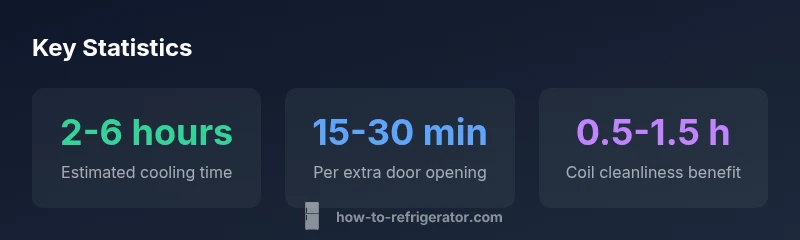
According to How To Refrigerator, a typical household refrigerator reaches its normal cooling temperature about 2-6 hours after power is restored or after you close the door and restart. Times vary with starting temperature, ambient room conditions, and model design. Use a thermometer to confirm it has reached 35-38°F (2-3°C).
What 'cold' means for a refrigerator
A well-functioning refrigerator maintains specific temperatures to keep food safe and fresh. For the fridge compartment, target roughly 35-38°F (2-3°C). The freezer is typically kept at 0°F (-18°C). When a unit is first powered on or after a power interruption, the cooling cycle must establish air circulation from the compressor through the condenser coils and evaporator fans. The time to reach these targets depends on several variables, but under favorable conditions, a typical household fridge should approach normal temperatures within a few hours. If the unit seems warmer after several hours, inspect door seals, clean dusty condenser coils, and verify thermostat settings.
Key factors that govern cooling time
Cooling time is not one-size-fits-all. Key variables include:
- Starting temperature: A fridge that was warm or loaded with room-temperature items will take longer to cool than one starting cold.
- Door openings: Each opening allows warm air in; frequent openings significantly extend cooling time.
- Size and load pattern: Large capacity or densely packed shelves can impede airflow; leaving space around items supports convection.
- Environment: Ambient temperature, air flow, and proximity to heat sources affect speed.
- Condenser condition: A dirty condenser coil rejects heat less efficiently, increasing cooling time.
- Thermostat accuracy: If the sensor is out of calibration, the compressor may overshoot or undershoot target temperature, altering cooling onset.
Understanding these factors helps you diagnose why a fridge might be slow to reach temperature and what to fix first.
How to estimate cooling time in practice
Estimating cooling time involves simple measurements. Start with a realistic starting temperature, ideally around 5°C (41°F) or warmer. When you restore power or close the door, place a fridge thermometer on the middle shelf and note temperatures every 1–2 hours. Watch for the temperature to drop into the 2–3°C (35–38°F) range. If progress stalls beyond 6–8 hours, recheck seals, airflow, and coil cleanliness. Documenting these measurements over several cycles helps you predict performance for future events.
Safe, practical steps to promote faster cooling
You can speed cooling safely with a few best practices:
- Minimize door openings, especially right after power is restored.
- Check door seals for cracks or gaps and replace if needed.
- Do not overload the fridge; allow air to circulate around items and keep vents clear.
- Keep the condenser coils clean and unobstructed; vacuum or brush monthly.
- Avoid placing hot foods inside; pre-cool or cool foods to room temp before storing.
- Verify the thermostat is set to the recommended range (usually around 35-38°F / 2-3°C).
- Ensure good airflow around the appliance and away from heat sources.
These steps can meaningfully shorten the time it takes for your fridge to reach the target temperature.
Common troubleshooting when cooling is slow
If cooling remains slow, start with basic checks: verify the power supply, inspect the condenser coils, and confirm doors seal properly. Listen for the evaporator fan, which should run when the compressor is on. Frost buildup, unusual noises, or excessive warm air coming from vents indicate issues needing professional attention. Do not ignore persistent slow cooling, as it can impact food safety and energy efficiency.
Data-driven approach to monitoring performance
A data-driven approach helps you quantify cooling performance over time. Record ambient room temperature, starting fridge temperature, and endpoint temperature after each cycle. Use this data to identify trends, such as seasonal changes or the impact of door-opening frequency. If you notice gradual degradation in cooling performance, it could signal a developing issue with the compressor or refrigerant circuit. Regular checks and documentation support proactive maintenance and informed decisions about repairs.
Cooling time scenarios and expectations
| Scenario | Estimated Time to Reach Target Temp | Notes |
|---|---|---|
| New installation in cool room | 2-6 hours | Starting from ambient temp and cool room; allow extra time for air circulation |
| Power restored after outage | 3-6 hours | Compressors restart gradually; monitor temps carefully |
| Regular daily usage with loaded groceries | 2-4 hours | Airflow improves with even spacing; avoid overpacking |
| Fridge with dusty condenser coils | 4-6 hours | Dirty coils reduce cooling efficiency; clean coils regularly |
FAQ
How long should a new refrigerator take to get cold?
New fridges typically reach the target temp within 2-6 hours, depending on room temperature and door behavior. Monitor with a thermometer and ensure adequate airflow.
New fridges usually take a few hours to cool; use a thermometer to verify accuracy and avoid overpacking.
What slows cooling the most?
Warm starts, frequent door openings, dusty coils, and thermostat miscalibration are the top culprits. Addressing these often restores normal cooling times.
The biggest slowdowns are warm starts, lots of door openings, dirty coils, and an out-of-calibration thermostat.
Can I speed up cooling safely?
Yes. Minimize door openings, avoid placing hot foods inside, and ensure proper airflow. Do not override safety features or make abrupt temperature changes.
You can speed it up by limiting door openings and letting air circulate properly—safely and gradually.
Does energy-saving mode affect cooling time?
Eco or energy-saving modes can slow cooling slightly because they throttle the compressor. If timing is critical, temporarily disable eco modes.
Eco modes can slow cooling a bit; turn them off temporarily if you need faster cooling.
What temperature should my fridge be set to?
Aim for about 35-38°F (2-3°C). Use a dedicated thermometer to verify, since door position and load can alter perceived temperature.
Keep it around 35-38°F and check with a thermometer to be sure.
When should I call a professional?
If the fridge does not begin cooling within 24-48 hours after proper setup or after a power restoration, consult a technician to inspect for compressor or refrigerant issues.
If it still isn’t cooling after a day or two, it’s time to get a professional check.
“Stable cooling times depend on airflow, coil cleanliness, and accurate thermostats; small maintenance steps can yield noticeable improvements.”
Top Takeaways
- Start with correct target temps using a thermometer.
- Limit door openings to reduce warm air ingress.
- Keep condenser coils clean for efficient heat rejection.
- Ensure thermostat is accurate and calibrated.
- Use data logs to track cooling performance over time.