Fridge Freezer Maintenance: A Homeowner's Guide to Fixes
Step-by-step, homeowner-friendly instructions to diagnose, maintain, and repair common fridge freezer issues safely. Learn with practical checks and tips from How To Refrigerator.


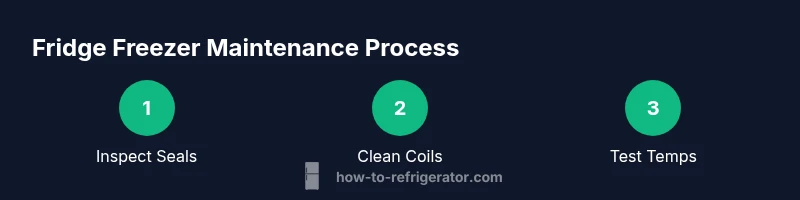
With this guide, you will diagnose and fix common fridge freezer problems using safe, homeowner-friendly steps. You’ll learn how to verify cooling, identify simple causes, run basic maintenance, and decide when to call a professional. The steps cover unplugging safely, inspecting coils and seals, cleaning interior surfaces, testing temperatures, and rechecking operation to restore reliable cooling.
Understanding fridge freezer basics
Your fridge freezer is a compact system that combines a refrigerator and a freezer in one cabinet. The fridge portion maintains temperatures around 35-38°F (2-3°C) to slow bacterial growth, while the freezer keeps roughly 0°F (-18°C) for long-term storage. Efficient operation depends on proper airflow, clean condenser coils, door seals, and correct temperature settings. In practice, the common reasons people experience issues are simple: a door left ajar, dusty coils, frost buildup, or a thermostat that has drifted with age. According to How To Refrigerator, many cooling problems originate outside of the compressor itself and can be resolved with a few routine checks. Before you begin any inspection, unplug the unit if you will access electrical components, and remove items from shelves to give yourself clear working space. This foundation helps homeowners troubleshoot without risking damage or voiding warranties.
Diagnosing common cooling issues
Common fridge freezer problems show up as the unit running continuously, frost where it shouldn’t, or uneven cooling between the fridge and freezer compartments. Start by ruling out simple causes: check that the door seals are intact and closing fully; make sure vents aren’t blocked by groceries; and inspect the rear or bottom coils for dust and lint. If the fridge is warm while the freezer stays cold, the damper control or thermostat may be at fault. Frost buildup in the freezer often signals a defrost drain or evaporator issue. How To Refrigerator analysis shows that airflow, door seals, and temperature settings are frequent culprits rather than a failed compressor. Have a clear plan to document symptoms, then verify them with methodical checks.
Safe maintenance practices you can perform
Regular, safe maintenance can prevent many fridge freezer issues. Start by unplugging the unit, then wipe interior surfaces with a mild soap solution and a soft cloth to remove spills and odors. Inspect door gaskets for cracks or gaps and clean them with a damp cloth to restore a tight seal. If you notice frost buildup along the edges or in the freezer, consult the defrost drain for blockages and ensure it drains freely. Clean condenser coils (behind or underneath the unit) with a vacuum or soft brush to improve airflow and reduce compressor workload. Finally, set temperatures to recommended ranges (fridge around 3-5°C, freezer at or below -18°C) and monitor for 24 hours to confirm stability. These steps emphasize safety, using non-invasive checks that protect your appliance and warranty when performed correctly.
When to call a professional and how to prepare
If the fridge freezer continues to malfunction after basic checks, or you notice warm air returning to the fridge despite a cold freezer, it’s time to consult a technician. Also call a pro if you detect unusual noises, refrigerant smells, ice behind the panels, or moisture around electrical components. Before you call, gather model and serial numbers, a list of symptoms, and the dates you observed changes. The How To Refrigerator team recommends documenting temperatures and settings, so the technician has immediate context and can diagnose efficiently. A professional repair often protects your investment and can prevent further damage to your fridge freezer.
Quick-start checklist for ongoing fridge freezer health
- Check gaskets monthly and replace if cracked to maintain seal integrity.
- Vacuum coils every 6-12 months depending on usage and environment.
- Keep air vents clear and organize shelves to improve airflow.
- Record temperatures and adjust settings if you notice drift.
- Schedule professional service if symptoms persist beyond a reasonable troubleshooting window.
Tools & Materials
- Phillips head screwdriver(For internal panel screws on access doors)
- Flathead screwdriver or pry tool(Helpful for removing wire covers or panels without damage)
- Multimeter(For checking wiring and basic electrical continuity safely)
- Soft cloths or microfiber towels(Non-abrasive cleaning of interior surfaces)
- Mild dish soap(Gentle cleaning solution)
- Baking soda(Deodorize interiors and clean lightly)
- Vacuum with brush attachment(Dust off condenser coils and vents)
- Old towels or absorbent rags(Protect floors and absorb spills)
- Replacement door gasket(Only if seals are cracked or torn)
- Gloves and safety glasses(Personal protection during cleaning and inspection)
Steps
Estimated time: 60-90 minutes
- 1
Unplug and prepare
Power off the fridge freezer and move items away from the back and sides to access panels safely. This prevents electrical hazards and gives you room to inspect components. Allow a brief pause before touching any wiring or exposed parts.
Tip: Keep a flashlight handy to inspect tight spaces and coils. - 2
Inspect exterior seals and doors
Check door gaskets for cracks, tears, or deformations. A worn seal can let warm room air in, causing the fridge to work harder. If you find obvious damage, replace the gasket or plan a repair with a pro.
Tip: Close the door firmly and listen for a distinct sealing click. - 3
Clean condenser coils
Locate coils at the back or underneath. Unplug, then gently vacuum or brush away dust and lint. Clean coils improve airflow and reduce compressor strain, which helps fridge freezer performance.
Tip: Do not bend delicate fins; use slow, steady motions. - 4
Check and adjust the thermostat
Ensure the thermostat is set within the manufacturer’s recommended range (fridge ~3-5°C, freezer ~-18°C). If temperatures drift, recalibrate or test with a thermometer. Small changes can restore balance.
Tip: Note the current setting before tweaking, so you can revert if needed. - 5
Address frost and defrost drain
If frost is present, inspect the defrost drain for blockages. Clear obstructions with warm water and a soft pipe-cleaner or thermometer probe. Frost-free systems rely on this drain to function properly.
Tip: Never poke aggressively; use gentle heat to avoid damage. - 6
Test run and monitor
Plug the unit back in and allow 24 hours for temperatures to stabilize. Use a thermometer to verify the fridge stays around 3-5°C and the freezer near -18°C. Recheck after a full day of operation.
Tip: Keep door stays aligned and avoid frequent opening during the test period.
FAQ
Why isn't my fridge freezer cooling properly?
Common causes include dirty condenser coils, a faulty door seal, blocked vents, or thermostat drift. Start with simple checks before contacting a pro. If temperatures remain unstable after basic steps, deeper diagnostics may be required.
Not cooling can be caused by dirty coils, door seals, or a failing thermostat. Start with easy checks, then seek professional help if needed.
Is it safe to use a hair dryer to clear a defrost drain?
Avoid using a hair dryer on defrost drains. Excess heat or force can damage plastic parts. Use warm water, a flexible pipe cleaner, and gentle suction to clear blockages.
No. Don’t use a hair dryer. Use warm water and a pipe cleaner to clear the drain instead.
How often should I inspect fridge freezer coils?
Check condenser coils at least every six to twelve months, more often in dusty environments. Regular cleaning helps maintain efficiency and cooling performance.
Check coils every 6 to 12 months, more often where dust collects.
When should I call a professional for fridge freezer issues?
If cooling issues persist after basic maintenance, if you hear unusual noises, or detect refrigerant signs, contact a licensed technician. Don’t attempt refrigerant work yourself.
Call a pro if basic checks don’t fix the problem or you notice strange noises or leaks.
What maintenance helps prevent fridge freezer problems?
Regular cleaning, seal checks, coil maintenance, and stable temperature settings reduce risk of failure. Keeping the unit near adequate clearance improves airflow and efficiency.
Regular cleaning, seals, and coils, plus stable temps, prevent many issues.
Watch Video
Top Takeaways
- Check seals and airflow regularly
- Clean condenser coils to boost efficiency
- Keep temperatures stable within recommended ranges
- Document symptoms before calling a pro
- Know when to escalate to professional repair