Refrigerator Service: DIY Fixes and Maintenance Guide
Learn how to diagnose, repair, and maintain your refrigerator with expert, actionable steps. This How To Refrigerator guide covers common issues, safety considerations, and preventive maintenance to keep your fridge running efficiently.


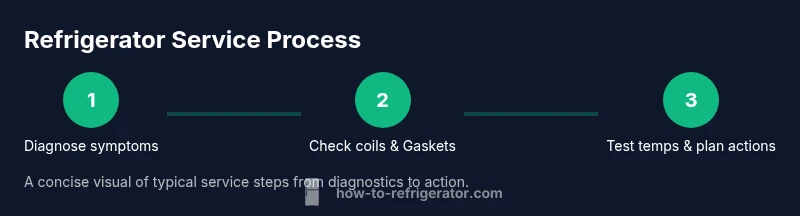
With refrigerator service, you can diagnose common cooling issues, test components, and perform safe maintenance to extend appliance life. This guide covers DIY checks, when to call a pro, and how to prepare for service visits. Following expert steps from How To Refrigerator helps homeowners fix small problems and avoid costly replacements.
What professional refrigerator service includes
Professional refrigerator service covers a comprehensive review of cooling performance, electrical systems, and physical condition to restore reliability and energy efficiency. A technician will typically verify temperature accuracy in both the refrigerator and freezer compartments, inspect the condenser coil and fan for dust or obstruction, and test sensors and control boards for proper signaling. They will also assess door seals, insulation, and airflow paths to ensure cold air circulates correctly. A thorough service considers defrost system operation, drain lines, and evaporator coils for frost buildup, which can cause uneven cooling. Importantly, technicians document observed symptoms, temperature readings, and any corrective actions so homeowners have a clear record for future maintenance or warranty considerations. As you plan refrigerator service, keep in mind that some issues require specialized equipment or refrigerant handling, which should only be performed by licensed professionals. This block emphasizes the core idea that regular maintenance reduces energy use and prolongs appliance life, in line with How To Refrigerator's guidance on practical, safe fridge care.
DIY vs professional service: weighing the options
Deciding between DIY fixes and professional refrigerator service depends on the issue, safety considerations, and your comfort level. For minor problems—such as a dusty condenser coil, a loose door seal, or a misaligned shelf—home maintenance can yield meaningful improvements with minimal risk. DIY approaches empower homeowners to extend appliance life and understand the repair landscape, while also helping you identify when a problem exceeds safe DIY boundaries. In contrast, issues involving refrigerant handling, suspected compressor failure, electrical faults, or persistent freezing patterns often require professional expertise, diagnostic equipment, and compliance with safety and environmental regulations. How To Refrigerator emphasizes that a practical approach balances quick, low-risk fixes with professional evaluation when required to avoid safety hazards or inaccurate diagnoses. A well-informed homeowner can schedule service more efficiently by documenting symptoms, taking notes on temperatures, and noting any unexpected noises or odors.
Common refrigerator issues and how service addresses them
Not cooling or warm air in the fridge: Technicians verify thermostat operation, inspect door seals, and check airflow to identify obstruction sources. Uneven cooling or frost buildup: The defrost system, evaporator coils, and drainage paths are inspected; repairs or cleaning may restore consistent temperatures. Excessive noise or vibration: Fans, motors, and compressor mounts are checked for wear, loose components, or misalignment, with repairs or replacements as needed. Condensation, leaks, or water on the floor: Drain lines, drip pans, and water inlet connections are examined for clogs or cracks, ensuring proper drainage and sealing. Ice maker issues or water dispenser problems: The water line, filter, and filling mechanism are tested for flow and contamination, with parts replaced if necessary. Energy inefficiency: The technician reviews insulation, seals, door alignment, and refrigerant status (where applicable) to improve efficiency and reduce running costs. Across these issues, professional service prioritizes safety, accuracy, and long-term reliability, delivering results that DIY checks alone may not achieve.
Safety and best practices for at-home fridge checks
Always disconnect power before inspecting internal components or touching electrical parts. Use insulated tools and wear protective gloves and eyewear to guard against sharp edges. Do not attempt refrigerant handling yourself; refrigerants require certified equipment and licenses. Keep the area dry to avoid electrical hazards and place a non-slip mat under the appliance during inspections. If you observe visible refrigerant leaks, loud hissing sounds, or burning odors, shut off power immediately and contact a licensed technician. When evaluating temperatures, rely on an accurate thermometer placed at several locations inside the fridge and freezer to get a representative reading. Finally, document symptoms with dates, times, and ambient conditions to help any technician diagnose the issue more efficiently. How To Refrigerator recommends following a structured safety-first approach for every service scenario.
Maintenance routines to extend fridge life
Incorporate simple, regular maintenance to reduce the likelihood of breakdowns. Clean condenser coils every 6–12 months or more often if you have pets or a dusty environment. Inspect and replace worn door seals to maintain door super tightness and prevent cold air from escaping. Clear airflow vents inside the cabinet to avoid hotspots and improve cooling performance. Keep the defrost drain clear and check for frost accumulation around the evaporator; address these early to prevent water leaks and motor strain. Schedule periodic inspections to verify thermostat accuracy and refrigerant status. While some tasks can be done by homeowners, record-keeping and a proactive maintenance mindset help maximize efficiency and life span.
How to prepare for a service visit
Before a refrigerator service visit, gather essential information: model and serial numbers, recent temperature readings, and a list of observed symptoms (noise, frost, leaks, not cooling). Prepare access to the unit by clearing the area around it and removing items from the top and back that might obstruct service. Take photos of the interior configuration, door gaskets, and visible cables to aid diagnosis. If possible, run a quick temperature check and note the results. Create a simple timeline of when the problems began and any changes you made to mitigate the issue. Finally, confirm warranty status and note any prior repairs. Providing a concise history helps the technician troubleshoot faster and more accurately.
Running costs, warranties, and service expectations
Costs for refrigerator service vary by region, issue complexity, and whether a home visit includes parts replacement. Rather than focusing on a fixed price, expect a service provider to offer a clear assessment, explain recommended fixes, and present potential parts and labor estimates. If a refrigerant-related problem or compressor failure is suspected, the provider will typically advise on warranty coverage or the need for specialized replacement parts. When dealing with older units, consider the balance between repair costs and the value of the refrigerator. A transparent technician will discuss energy efficiency improvements and provide a maintenance plan to prevent future problems. How To Refrigerator notes that expectations should include safety safeguards, a defined scope, and a written warranty on workmanship and any parts installed. This ensures homeowners can make informed decisions about repair versus replacement and plan accordingly.
What to ask your technician and how to document the repair
When your technician finishes, request a written summary of issues found, recommended repairs, and any parts replaced. Ask about warranty duration on parts and labor, and whether refrigerant handling was performed or required by regulation. Request a copy of diagnostic readings, including thermostat calibration and temperature data across different zones. If multiple fixes were performed, ask for a maintenance checklist to guide future care. Finally, schedule a follow-up check if the technician recommends monitoring temperatures over time. Keeping a detailed service history helps with future maintenance, resale value, and potential warranty claims.
Tools & Materials
- Multimeter(to test voltage and sensor signals)
- Screwdriver set (Phillips & flathead)(for access panels and fasteners)
- Nut drivers(appliance-specific fasteners)
- Coil brush / cleaning tool(to brush condenser coils)
- Soft lint-free cloths(for wiping and residue removal)
- Vacuum with brush attachment(optional for dusty coils)
- Bucket and mild dish soap(for spill cleanup and interior surfaces)
- Thermometer (fridge/freezer)(verify temperature readings)
- Gloves and safety glasses(protect hands and eyes)
- Model/serial number documentation(helps with parts lookup)
Steps
Estimated time: 60-180 minutes
- 1
Power down safely
Unplug the refrigerator and remove any stored food to prevent contamination or injury. Verify the unit cannot restart unexpectedly and wait a few minutes before touching internal components. This step minimizes the risk of electric shock while accessing panels or coils.
Tip: Always unplug before probing wiring or electrical panels to avoid shock. - 2
Document symptoms and observations
Record temperature readings, noises, frost patterns, and any leaks. Take photos of door seals and wiring diagrams if available. A clear symptom log speeds up diagnosis and reduces redundant checks during service.
Tip: Note the time of day and ambient temperature when measurements are taken. - 3
Inspect door seals and gaskets
Check for cracking, sagging, or gaps in the door seals. A poor seal causes air leakage and temperature instability. Clean seals with mild soap and water, and replace if elasticity is lost or tears are present.
Tip: Perform a simple dollar-bill test at several door corners to assess seal integrity. - 4
Check condenser coils and fan
Inspect the condenser coils for dust and debris. Use a coil brush or vacuum to remove buildup. Ensure the fan spins freely and there are no obstructions that impede airflow.
Tip: Do not use metal tools on coils; use soft brushes to avoid damage. - 5
Test thermostat and temperature controls
Verify thermostat settings correspond to actual temperatures. Use a thermometer to measure fridge and freezer temps at multiple shelves. If readings deviate from the dial, recalibration or part replacement may be needed.
Tip: Allow readings to stabilize for 15–20 minutes before recording results. - 6
Examine defrost drain and ice buildup
Look for frost accumulation near the evaporator and check the defrost drain for clogs. If blocked, carefully remove ice and flush the drain with warm water. Clogged drains can cause water leaks and poor cooling.
Tip: Never use harsh chemicals in the drainage system; use warm water first. - 7
Reassemble and re-test
Reconnect power, return items, and re-check temperatures after a reasonable run time. Compare post-test readings to initial measurements to confirm improvements.
Tip: Record post-test temperatures and note any lingering discrepancies. - 8
Decide on next steps
If issues persist or refrigerant handling is suspected, schedule professional service. For non-critical fixes, you may complete the repairs yourself and schedule a follow-up check.
Tip: When in doubt about refrigerant or compressor problems, stop and seek pro help.
FAQ
What is refrigerator service?
Refrigerator service is the process of diagnosing, maintaining, and repairing a fridge to restore cooling performance and energy efficiency.
Refrigerator service means diagnosing, maintaining, and repairing your fridge to restore proper cooling and efficiency.
Can I perform refrigerator service myself?
Some minor tasks like cleaning coils and replacing worn seals are doable at home. More complex issues, especially those involving refrigerants or electrical components, should be handled by a professional.
You can handle simple tasks yourself, but for complex problems contact a professional.
How do I know when it's time to call a professional?
If temperatures remain unstable, there are unusual noises, leaks, or you notice refrigerant odors, it's wise to consult a licensed technician for a formal diagnosis.
If temps stay off, you hear odd noises, or see leaks, call a licensed technician.
Is cleaning the condenser coils enough to fix not cooling?
Cleaning coils can improve cooling efficiency, but persistent not-cooling can indicate a failing compressor, thermostat issue, or refrigerant problem that needs professional assessment.
Coil cleaning helps, but ongoing cooling problems may require a pro.
What should I prepare before a service visit?
Have your model/serial number ready, note symptoms and temperatures, and clear access to the unit. Gather any warranty documents and a list of prior repairs.
Prepare model/serial, symptoms, temperatures, and warranty info for the visit.
Do warranties cover service work or parts?
Warranties vary by manufacturer and region. A technician can confirm coverage and whether parts or labor are eligible under your warranty.
Warranty coverage depends on your manufacturer and region; ask the technician for specifics.
Top Takeaways
- Start with safety and unplug the unit.
- Document symptoms and temps before repairing.
- Regular coil cleaning improves efficiency and cooling.
- DIY fixes suit minor issues; complex problems require a pro.
- Keep a repair log to track future maintenance.