Fix Refrigerator Door Seal: DIY Step-by-Step Guide Now
Learn to diagnose, clean, and repair a leaky or loose refrigerator door seal with a homeowner-friendly, step-by-step approach. Safety tips, tools, and testing methods included.


You’ll fix a loose or leaking refrigerator door seal by inspecting the gasket, cleaning the edge, and replacing or realigning as needed. This DIY method uses common tools and a simple test to confirm a tight seal without professional service. You’ll also learn when replacement is more cost-effective than repair.
Understanding why door seals fail
According to How To Refrigerator, door seal issues are common as gaskets age, accumulate grime, or are affected by door misalignment. A worn or dirty seal can cause frost buildup, higher energy use, and air leaks. In this section, we’ll unpack the anatomy of the door seal, how it interacts with the door frame, and what typical failure modes look like. The rubber’s elasticity diminishes over time, reducing the seal’s ability to form a tight barrier. By understanding the failure modes—cracks, warping, compression loss, and corner separations—you’ll be better prepared to decide between a reseating, a repair, or a gasket replacement. Remember, a properly sealed door saves energy and protects stored food; start with a careful inspection to guide your next steps, as emphasized by the How To Refrigerator team.
Safety and planning before you start
Safety first. Unplug the fridge before starting any work on the door gasket to reduce the risk of electric shock or accidental motor startup. Clear the area around the fridge so you have a clean, dry workspace and place a tray or towel to catch any drips. Read your model’s manual for gasket-specific guidelines and note whether the door is hinged on the left or right side, which affects how you access the gasket groove. Consider the age of the refrigerator; if the seal is cracked or the door sits unevenly after multiple openings, plan for a gasket replacement rather than a temporary fix. This planning phase also helps you gather the required tools and a replacement gasket if needed, as recommended by experts at How To Refrigerator.
Assessing whether replacement is needed (not only cleaning)
Determine if the gasket is simply dirty or visibly damaged. Look for cracks, tears, stiffening, or a flattened profile that won’t press evenly against the door frame. If the gasket has lost its elasticity or shows signs of wear in multiple spots, replacement is likely the best option. Cleaning can help with surface grime, but it won’t restore a worn seal. This decision influences your next steps and the time you’ll invest, which is a practical outcome highlighted by the How To Refrigerator team.
Tools and workspace setup
A well-organized workspace makes the fix safer and faster. Gather a mild detergent, clean microfiber cloths, a plastic scraper, and a replacement gasket if required. Have a shallow tray or bowl for soapy water, and a small flashlight to inspect the gasket groove. Work on a stable surface and protect surrounding cabinetry with a soft mat. A tidy setup reduces the risk of misplacing parts and helps you verify the seal from multiple angles, ensuring you’re addressing the right problem. As you prepare, remember the guidance from How To Refrigerator on staying methodical rather than rushing a gasket replacement.
Removing a damaged gasket (if replacement is needed)
If you confirmed that the gasket needs replacement, carefully detach it from the door frame. Use a plastic card or your fingers to lift the gasket lip out of the groove, working from one corner around the perimeter. Do not pry aggressively, which can crack the door or tear the frame. Keep track of the gasket orientation by taking photos as you go; this makes reinstallation easier and reduces guesswork. If screws hold the gasket in place on your model, remove them with the appropriate screwdriver and keep them in a labeled container for later.
Cleaning and inspecting the groove and edge
With the old gasket removed or loosened, clean the gasket groove and the door edge with warm water and a mild detergent. Remove all soap residue and dry the groove thoroughly before installing a new gasket. Use a microfiber cloth to wipe away grime that can prevent a tight seal, and inspect the groove for nicks or debris that could interfere with seating. A clean, smooth groove helps the new gasket seal evenly and reduces the chance of air leaks, an insight supported by practical DIY guides from How To Refrigerator.
Installing a new gasket or reseating the existing one
If you’re installing a new gasket, align it with the groove, starting at a corner and working your way around. Press gently into the groove, ensuring there are no twists or kinks. If you’re reseating an existing gasket, reinsert it with even pressure, pulling slightly outward from the door to help it seat fully in the channel. Check that the gasket sits flush with the door edge all around and that the hinge area closes without catching. A proper seating is essential for a consistent seal.
Realigning the door and adjusting hinges
A misaligned door can prevent the seal from contacting the frame evenly. If the door drifts or rubs when closed, inspect the hinges and mounting screws for tightness. In some cases, you may need to loosen and reposition hinges by a small amount to achieve a square door alignment. If the hinge needs more adjustment than you can safely perform, consult the appliance manual or contact a pro. Realigning is a common yet critical step to ensure the gasket seals correctly, a principle repeated in trusted DIY guides.
Testing closure and confirming a tight seal
After installation and alignment, perform a closure test. Close the door firmly and inspect for consistent contact along the gasket. A simple, practical test is the dollar bill test: close the door on a one-dollar bill at various points around the edge; if you can pull the bill out with light resistance, the seal isn’t tight enough. Re-check corners and the hinge area to ensure the seal remains even. For a more thorough check, run the fridge at its normal temperature and observe frost buildup or unusual cooling patterns, which can indicate air leaks that need further adjustment. This testing approach aligns with techniques recommended by How To Refrigerator to confirm a proper seal.
Maintenance and future-proofing
Regular maintenance prevents premature seal wear. Wipe the gasket with a mild soap solution and dry it completely at each cleaning. Avoid sharp tools that can nick the gasket, and address any door alignment issues promptly to avoid ongoing wear. If your model supports it, apply a light silicone-based lubricant around the gasket edge to maintain flexibility, but do not overapply. Schedule periodic checks every 6–12 months and perform the dollar bill test or similar seat checks to verify the seal remains tight. Following these practices helps extend gasket life and preserve energy efficiency, a point highlighted by the How To Refrigerator team.
Troubleshooting edge cases
If you still notice air leaks after replacing and seating the gasket, evaluate other seal-related components, such as door alignment, hinge wear, and the refrigerator’s overall age. A door that sticks or rubs edges may indicate bent seal lips or frame distortion. In some cases, molding cracks or improper mounting of the hinge can affect sealing performance. When in doubt, consult a professional, especially if the fridge is under warranty or if you notice unusual noises or motor strain. The How To Refrigerator team stresses a careful, stepwise approach to isolate the issue and avoid unnecessary repairs.
Tools & Materials
- Replacement gasket(If the existing gasket is torn, stretched, or hardened)
- Mild dish soap(For cleaning the gasket and door edge)
- Warm water(To dissolve grime and residue)
- Soft microfiber cloth(For cleaning and drying surfaces)
- Plastic scraper or old credit card(Gently ease gasket into groove without damage)
- Screwdriver (Phillips or flat-head)(Only if your model uses screws to hold the gasket)
- Silicone lubricant (optional)(Light lubrication can help seating but use sparingly)
Steps
Estimated time: 60-120 minutes
- 1
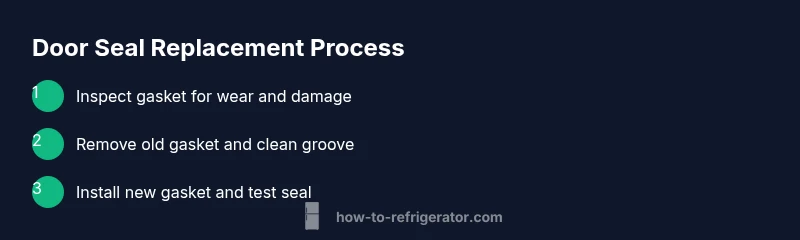
Inspect gasket for wear
Carefully examine the entire gasket for visible cracks, tears, stiffening, or deformities. Check corners and along the edge where the seal meets the frame. If damage is present, plan on replacement rather than patching.
Tip: Use good lighting and feel the edge with your finger to detect hard spots. - 2
Remove damaged gasket (if replacement needed)
Detach the gasket from the door frame using gentle lifting and sliding motions. If screws hold the gasket, remove them with the appropriate screwdriver and keep them labeled. Set the old gasket aside for recycling or disposal.
Tip: Take photos of the gasket orientation before removal to guide reinstallation. - 3
Clean groove and door edge
Wipe the groove and door edge with warm soapy water to remove grime. Rinse and dry thoroughly to prevent moisture from seeping under the new gasket. Use a microfiber cloth to reach tight corners.
Tip: Use a soft brush to reach into narrow grooves. - 4
Prepare the new gasket (check alignment)
Lay the new gasket flat and confirm its correct orientation by comparing to the old one or the door design. If there’s a notch or label, ensure it aligns with the door’s corner. This step saves time during installation.
Tip: If available, apply a thin line of silicone lubricant along the edge. - 5
Install gasket into groove
Starting at a corner, press the gasket lip into the groove and work your way around the door. Ensure there are no twists or kinks and that the gasket sits flush with the door edge.
Tip: Use a plastic tool to aid seating without gouging the groove. - 6
Reattach screws or clips (if applicable)
Reinstall any screws or clips to secure the gasket. Do not overtighten, which can deform the gasket or damage the door.
Tip: Consult the model manual for torque guidance. - 7
Realign the door if needed
If the door rubs or sits unevenly, loosen and adjust the hinges slightly, then retighten. Aim for a square door and consistent gaps at all edges.
Tip: Small hinge adjustments can significantly improve sealing. - 8
Test seal with dollar bill
Close the door and place a dollar bill between the door and gasket at several points. If you can pull it out with light resistance, adjust the seating and re-test.
Tip: Test top, middle, and bottom edges for full coverage. - 9
Final check and routine maintenance
Run normal operation and check for frost, unusual cooling, or air leaks. Wipe the gasket dry and schedule checks every 6–12 months.
Tip: Keep doors level and clean to extend gasket life.
FAQ
How do I know if my fridge door seal is damaged?
Look for visible cracks, brittleness, tears, or a loose fit around the door. Damaged gaskets often need replacement for a proper seal.
Check for cracks or gaps—damaged gaskets usually require replacement.
Can I fix a door seal without replacing it?
Sometimes cleaning and reseating restores a gasket, but wear and deformation typically require replacement for a reliable seal.
Cleaning and reseating can help, but wear usually means replacement.
Will replacing the gasket improve energy efficiency?
A tight seal prevents cool air loss, which helps the unit run more efficiently. Savings depend on the extent of leaks and other factors.
A proper seal helps energy use, but results vary with other factors.
How long does gasket replacement take?
A typical replacement, including setup and testing, takes about an hour or two depending on model and whether hinges must be adjusted.
Most repairs take around an hour or two.
Should I unplug the fridge before repair?
Yes. Unplugging removes electrical risk and allows safe handling of the gasket and edges.
Yes—unplug before you start.
Where can I buy a replacement gasket?
Replacement gaskets are available from appliance parts retailers or the manufacturer. Buy a model that matches your fridge’s make and door type.
Check appliance part retailers for your exact model.
Watch Video
Top Takeaways
- Inspect thoroughly for wear or stiffness.
- Replace damaged gaskets to ensure a tight seal.
- Use the dollar bill test to verify closure.
- Maintain regular gasket cleaning to extend life.