Does Refrigerator Work on Inverter? A Practical Sizing Guide
Explore whether a refrigerator can run on an inverter, how to size the inverter, and practical safety tips. How To Refrigerator explains running watts, startup surges, and setup you can trust.


Yes, a refrigerator can run on an inverter, but success depends on the inverter's size, surge capacity, and the fridge's startup draw. Inverter compressors generally draw less power at steady operation, but startup surges can spike higher. To be safe, choose an inverter rated for at least 1.5–3 kW peak and match it to your fridge's running wattage plus startup margin.
Does an inverter-powered refrigerator work in practice?
The question does refrigerator work on inverter often comes up during outages or when considering off-grid living. In practical terms, a standard household refrigerator can run on an inverter if the system is correctly sized and configured. In this guide, we’ll unpack what affects compatibility, how to size the inverter, and what installation best practices look like. The first step is understanding the phrase does refrigerator work on inverter in real-world terms: the fridge’s compressor and fans are AC devices, the inverter converts DC from a battery or other source to AC, and startup surges can be considerably higher than running watts. The modern inverter compressor is typically efficient and capable of modulating speed, but you still need enough peak capacity to handle the momentary surge when the compressor starts. For homeowners, this is a facts-based decision grounded in wattage, surge, and safe electrical practices.
Key factors that influence inverter compatibility
Compatibility hinges on several interrelated variables. First, the fridge’s running wattage is the continuous power draw when the compressor is operating. Second, startup surge is the brief spike required to start the compressor, which can be several times the running wattage. Third, the inverter’s peak capacity must exceed that startup surge with a safety margin to accommodate other small loads that may come on momentarily. Fourth, the inverter type matters: a pure sine wave inverter is generally better for sensitive electronics and motors than a modified sine wave. Fifth, the battery source's capacity and discharge rate will determine how long the fridge runs during an outage or off-grid period. Finally, wiring, protective devices, and transfer mechanisms influence both reliability and safety. When you evaluate these factors, you can determine whether your setup aligns with the goal implied by does refrigerator work on inverter.
Step-by-step sizing: how to match a fridge to an inverter
Follow these practical steps to size your inverter for a fridge while keeping safety in focus. 1) Find the fridge’s running wattage from the energy guide label or the manual. This is the continuous draw you’ll need to support during normal operation. 2) Identify the startup surge for the compressor; this is often listed on the label or can be found in the service manual. 3) Add a generous margin (for example, 20–50%) to account for other small loads and aging components. 4) Choose an inverter with a peak capacity comfortably above the startup surge, preferably a pure sine wave model. 5) Verify your battery capacity and circuit protection meet the demands of the load and surge. 6) If you’re integrating this with solar or a generator, ensure the transfer switch and safety interlocks are correctly configured. 7) Test under controlled conditions and monitor voltages for any dips or unusual noise. 8) Keep a contingency plan for outages or unexpected loads to prevent equipment stress. 9) Document the setup so future maintenance or repairs can follow the same safe sizing rules.
Inverter types: pure sine wave vs modified sine wave
Not all inverters are created equal for refrigeration. A pure sine wave inverter delivers smooth, grid-like AC power, which reduces motor heat and minimizes misoperation of electronic controls. It is generally the recommended option for running a refrigerator, especially if the compressor uses a variable-speed inverter. A modified sine wave inverter is cheaper but can cause less efficient compressor operation or nuisance tripping in some models, leading to reduced cooling or longer cycling. When does refrigerator work on inverter, this distinction matters: for long outages or tight margins, a pure sine wave inverter provides reliability and reduces the risk of temperature excursions. If you’re using solar or a generator, verify the inverter’s waveform compatibility with your fridge’s control electronics and motor type.
Wiring, safety, and installation considerations
A safe, reliable install avoids common mistakes that can invalidate the idea behind does refrigerator work on inverter. Always use a dedicated circuit or transfer switch to isolate the refrigerator from other loads. Use a properly sized, fused DC power source, and connect to an inverter-rated outlet with appropriate gauges. Ground fault protection, proper bonding, and correct enclosure ventilation reduce the risk of overheating or electrical faults. Do not hardwire a high-load appliance directly to a battery bank without professional assessment. For those who want an add-on transfer switch, a manual or automatic switch can minimize power interruption and protect both the fridge and the rest of the system. Finally, select a quality inverter with built-in protections—overload, thermal cutoff, and low-battery shutoff—to maintain safe operation even when the fridge cycles on and off.
Real-world scenarios: outages, off-grid, and grid-tied setups
Outages are where the concept behind does refrigerator work on inverter becomes practical. In a basic off-grid scenario, you might rely on a battery bank sized for daily cycling and an inverter with a generous surge rating. Grid-tied homeowners can still benefit from an inverter-based backup when the grid goes down, but the system must meet local electrical codes and safety standards. In hot climates, temperature stability is essential; ensure the inverter’s capacity supports the fridge’s cooling demand during peak heat periods. When solar is part of the mix, consistent inverter performance reduces the risk of temperature excursions during long sunny days when the fridge runs continuously. Practical planning includes backup power methods and careful evaluation of the fridge’s energy profile relative to the available inverter and energy source.
Maintenance and long-term considerations
Maintenance matters for any inverter-backed fridge system. Regularly inspect cables and connections for signs of wear, corrosion, or loose terminals. Monitor the inverter and battery temperatures, and clean vents to maintain cooling efficiency. Replace aging batteries before they degrade performance, and verify firmware or controller updates from the inverter manufacturer. For longevity, pair a high-quality inverter with an energy-efficient refrigerator model and ensure the system is appropriately sized for startup surges. Document operating hours, surge events, and temperatures to track performance over time and anticipate when components may require service.
Troubleshooting: fridge won’t start on inverter
If the fridge will not start on inverter, begin with the basics: confirm the inverter is on, the battery has sufficient charge, and wiring is correct. Check whether the startup surge exceeds the inverter’s peak rating, which could trigger protective shutdown. Inspect fuses, breakers, and the distribution point to ensure there are no tripped protections. Measure the output voltage at the outlet to confirm it stays within the fridge’s acceptable range during startup. If the problem persists, consult the fridge’s data plate for startup requirements and re-check the inverter’s waveform compatibility. Finally, consider testing with a known-good appliance to verify inverter performance before attributing the issue to the refrigerator itself.
Data points for running refrigerators on inverters
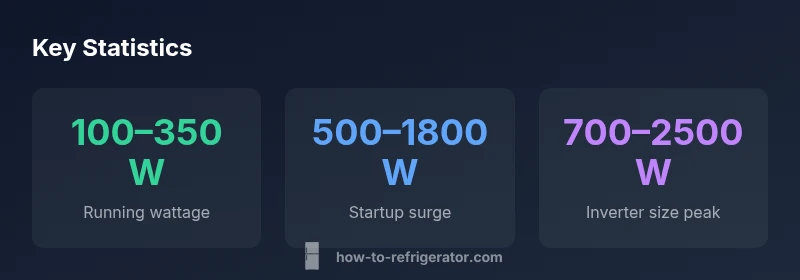
| Aspect | Typical Range | Notes |
|---|---|---|
| Running wattage | 100–350 W | Lower for energy-efficient models |
| Startup surge | 500–1800 W | Upper bound varies by compressor design |
| Inverter size | 700–2500 W peak | Aim higher for longer outages |
| Battery/backup | Depends on capacity | Larger banks extend run time |
FAQ
Can all inverter types run a refrigerator?
Not all inverters are suitable. A pure sine wave inverter with adequate peak capacity is generally required to safely power a refrigerator, especially during startup. Cheaper inverters may struggle with surge or cause voltage drops that affect cooling.
Not all inverters are suitable. Look for a pure sine wave inverter with enough peak capacity to handle the startup surge.
What size inverter do I need for a standard fridge?
Typical guidance points to 700–2500 watts peak, depending on the model and startup draw. Always check the fridge’s label for running watts and startup current and add a safety margin.
Most fridges need a 700 to 2500 watt peak inverter, but always check your model’s numbers and add a margin.
Are energy-efficient or inverter fridges easier to power with an inverter?
Yes. Inverter compressors adjust speed to demand, reducing continuous running power and often improving overall efficiency. However, startup surges still matter and must be sized into the inverter selection.
Inverter fridges are generally easier to power because their motors adjust; startup surge still matters though.
Can a solar inverter power a fridge?
Yes, provided the solar setup can supply the fridge’s continuous load and startup surge. Ensure the inverter is sized appropriately and that the battery storage and charging system support frequent cycling.
Yes, with proper sizing and battery support, a solar inverter can run a fridge.
Is it safe to run a fridge off an inverter during a power outage?
Safe when wired correctly with a transfer switch and proper protection. Avoid direct connection to household circuits without a switch or interlock, and follow local electrical codes.
It's safe if you use a transfer switch and proper protections, per local codes.
Do inverters affect fridge performance?
Quality inverters maintain stable voltage and reduce electrical noise; cheap/inexpensive models may cause voltage dips or erratic operation in some fridges.
A good inverter keeps voltage steady; cheaper ones can cause odd fridge behavior.
“Sizing an inverter for a refrigerator requires accounting for both running wattage and startup surge, plus the specific compressor type. When done correctly, you maintain cooling without overloading the system.”
Top Takeaways
- Size the inverter for startup plus running load
- Prefer pure sine wave for reliability
- Account for surge and add safety margin
- Use proper wiring and safety interlocks
- Plan for maintenance and future upgrades