How Big a Generator to Run a Refrigerator: A Practical Guide
Learn how to size a backup generator for your refrigerator, covering running watts, startup surge, and safe testing. A clear, practical guide from How To Refrigerator for homeowners planning outage power.


According to How To Refrigerator, sizing a generator for a refrigerator means covering both running watts and startup surge with a safety margin. The question how big of a generator to run a refrigerator is answered by selecting a unit that can handle the fridge’s running wattage plus its startup surge, with a little headroom for a small essential load.
Why generator sizing matters for a refrigerator
Powering a refrigerator during an outage requires precision. If you pick a generator that is too small, the fridge will repeatedly restart, causing temperature swings and potential food waste. If you go too large, you may waste fuel and face unnecessary upfront costs, and in some cases you may trigger electrical safety concerns when connecting to certain appliances. By sizing correctly, you ensure consistent cooling, protect food safety, and minimize noise, emissions, and fuel use. At How To Refrigerator we advocate a practical approach: determine the fridge's true load, add a comfortable safety margin, and verify your setup with a controlled test. With the right size you gain reliability, peace of mind, and fewer surprises when the power goes out.
Understanding refrigerator power needs
A refrigerator has two distinct electrical requirements: running watts while the compressor cycles and startup surge when the motor starts. Running watts for a typical modern fridge often fall in the low hundreds of watts, but surges can spike much higher for a split second. The exact numbers depend on the model, age, and whether the unit has an integrated freezer. The fridge label on the back or inside the door usually lists voltage and current, and a watt meter can verify actual running power. Understanding these numbers is the essential first step in choosing an appropriately sized generator and avoids the mistake of assuming all refrigerators draw the same amount of power.
How to calculate the right generator size
Start by identifying the fridge running watts from the label or measured with a watt meter. Then determine the startup surge by observing the momentary peak when the compressor starts — this can be two to three times the running wattage in some models. Add a safe margin to cover other inevitable small loads such as a light or a water dispenser. Finally select a generator with continuous wattage that meets or exceeds the combined running watts plus startup surge, while keeping some headroom for future needs. If you already own a generator, confirm it can sustain the surge and has a proper rating for surge handling.
Typical running watts vs startup surge by fridge type
Small compact fridges with no freezer typically run around 100–250 watts in normal operation, with startup surges around 600–900 watts. Standard top freezer models may run closer to 250–350 watts, with startup peaks near 1000 watts. Large French door or side by side models can draw 500–800 watts running, with startup surges pushing toward 1200–1600 watts or higher. These ranges are approximate and can vary by brand and age. Always verify by checking the label or measuring with a watt meter. A conservative rule is to choose a generator with a continuous rating well above the fridge running watts and a surge rating above the startup requirement.
Choosing a generator size range: 1000W to 3000W
For most single fridge configurations, a 1500–2000W generator provides comfortable headroom for startup surges and a couple of small loads. A 1000W model might power a tiny compact fridge but leaves little room for extra devices. A 3000W class unit can cover larger side by side fridges and allow other essentials, yet it will be heavier and more expensive. When in doubt, target the upper end of the range and ensure your setup is safe and code compliant. Always consider transfer switches or interlocks to make switching from grid to generator safer.
How to account for additional loads
In an outage you may also want to run essential devices such as a modem, lights, or a medical device. Add the estimated watts of each extra load to the fridge running watts. Do not exceed the generator's continuous rating. If you anticipate occasional higher loads, opt for a generator with a higher surge capability or plan to stagger loads rather than run all devices at once. Always prioritize cold food preservation by ensuring the fridge has priority on the circuit.
Safety considerations when running a fridge on a generator
Always operate generators outdoors in a well ventilated area and at a safe distance from doors and windows to avoid carbon monoxide buildup. Use a properly rated extension cord and, if possible, a transfer switch or interlock kit to connect the generator to the home's panel. Do not back feed through outlets or attempt to power a whole house from a single plug. Follow the generator manufacturer guidelines for wiring, grounding, and maintenance to minimize nuisance shutdowns and electrical hazards.
Step-by-step sizing example
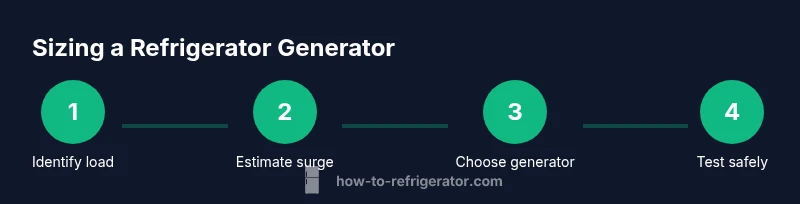
This practical example walks through sizing a typical mid size fridge with a small living area. 1) Read the fridge label and note the running watts and startup surge. 2) Add a margin for a light and a modem. 3) Choose a generator in the 2000W range with a surge rating above 1500W. 4) Install a transfer switch or interlock for safe switching. 5) Test by running the fridge for 20 minutes with the generator at 1/2 load to confirm stability. 6) If alarms or tripping occur, reassess loads or consider a larger unit. 7) Document the final configuration for future outages.
Maintenance and testing for readiness
Regularly test your backup power setup so you know it will work when needed. Inspect cords and outlets for wear, test the start up surge, and verify the transfer switch operation at least twice a year. Change the oil and air filters on the generator as recommended by the manufacturer and store fuel properly. Label the fridge location in your outage plan, and keep a simple quick disconnect handy in case you need to remove the fridge from the load during a harsh surge.
Common mistakes to avoid
Avoid guessing watts or relying on an appliance name alone. Do not assume all fridges draw the same power or that a larger unit will automatically solve issues. Skipping a transfer switch, or using extension cords that are not rated for the load can create shock or fire hazards. Underestimating startup surge is a frequent error that leads to repeated compressor restarts and spoiled food.
Practical tips for long outages
During extended outages, religiously monitor temperature, keep doors closed, and stagger non essential loads so the fridge can use the minimum required surge. Consider propane generators for longer outages where fuel availability is uncertain, but ensure you comply with local regulations. Have extra fuel safely stored and rotate it every few months to keep it fresh.
When to call a professional
If you are unsure about wiring, installing a transfer switch, or dealing with complex loads, contact a licensed electrician or HVAC tech. A professional can verify correct sizing, ensure safe interconnection, and audit your backup plan for reliability. Even with an easy to start generator the risks of improper installation remain, so do not skip professional advice.
Tools & Materials
- Watt meter(Measure running watts of the fridge to verify spec)
- Clamp meter or digital multimeter(Measure current draw and verify loads)
- Outdoor rated extension cords(Heavy gauge, at least 12 AWG for safety and efficiency)
- Transfer switch or interlock kit(Safer interconnection to home electrical system)
- Fridge owner manual or model label(Find running watts and startup surge spec)
- Backup generator(Choose a unit sized for your load range)
- Safety gloves and eye protection(Personal protective equipment for handling cords and hardware)
Steps
Estimated time: 1-2 hours
- 1
Identify fridge power needs
Locate the fridge rating on the label and note the running watts. If the label is unclear, use a watt meter to measure running power under typical operation.
Tip: Check both the label rating and measured running watts for accuracy. - 2
Measure running watts
Plug the fridge into a watt meter when it runs normally and record the value. Repeat a couple of cycles to confirm consistency.
Tip: Do this with doors closed and at normal room temperature for accuracy. - 3
Estimate startup surge
Observe the peak draw when the compressor starts. If your meter supports it, capture the highest temporary wattage.
Tip: Startup surge is usually 2x to 3x running watts for many models. - 4
Add a safety margin
Add 20–40% to the combined running watts and startup surge to accommodate minor loads and future needs.
Tip: Avoid clipping loads by leaving headroom for lights or a modem. - 5
Choose generator size
Select a generator with continuous rating at or above the calculated running watts plus surge, plus reserve for extra devices.
Tip: Remember to consider outdoor placement and ventilation requirements. - 6
Decide on interconnection
Plan to use a transfer switch or interlock for safe connection to your home circuit.
Tip: Do not back feed outlets or power strips when connecting to a home panel. - 7
Test the setup
Run the fridge on the generator for 20–30 minutes under load to confirm stable operation and no tripping.
Tip: Document results and adjust loads if needed.
FAQ
What is the difference between running watts and startup watts for a refrigerator?
Running watts represent continuous power during operation, while startup watts are the brief peak when the compressor starts. Startup watts are typically higher than running watts and determine the minimum surge capability your generator must handle.
Running watts are the fridge's steady power need, startup watts are the brief peak when the compressor kicks in.
Can I run a fridge on a small generator without a transfer switch?
Running a fridge directly from a generator via a household outlet is not recommended. A transfer switch or interlock is the safest method to connect a generator to your home wiring and prevents back feeding.
It's safer to use a transfer switch rather than wiring directly to outlets.
How long can a fridge run on generator power during an outage?
Runtime depends on fuel supply, generator size, and load. A properly sized unit with adequate fuel can run for several hours to days if fueled, with higher efficiency under moderate loads.
Runtime varies with fuel and load; plan for several hours to days with proper fuel.
Do energy efficient or newer fridges reduce the needed generator size?
Yes. More energy efficient models typically draw less running watts and have lower startup surges, which can allow a smaller generator while maintaining performance.
Newer fridges often need less power, easing generator sizing.
What safety steps should I take before connecting a fridge to a generator?
Follow manufacturer instructions, use a transfer switch or interlock, and operate outdoors with proper ventilation. Never back feed an outlet and avoid overloading circuits.
Ventilate, use a transfer switch, and never back feed outlets.
Should I power other appliances at the same time as the fridge?
If you share the circuit, ensure total loads stay within the generator's continuous rating. Stagger loads when possible to avoid surges.
Only run other loads if the total power stays under the generator limit and stagger loads.
Watch Video
Top Takeaways
- Measure fridge watts accurately
- Plan for startup surge with headroom
- Use a transfer switch for safety
- Test the setup before outages
- Maintain the generator regularly