Can a fridge go next to an oven? A practical placement guide for homeowners
Learn safe, practical guidance on placing a refrigerator beside an oven, with layout tips, ventilation, electrical safety, and maintenance from How To Refrigerator.


Yes, you can place a fridge next to an oven in many kitchens, but it isn’t ideal. Heat from the oven can raise energy use and warm the fridge interior over time. If space forces this layout, ensure ventilation, avoid direct heat exposure, and follow the appliance manuals for safe electrical setup. How To Refrigerator provides practical guidelines.
Can a fridge go next to an oven? Practical questions for real kitchens
In many homes, the fridge sits next to the range or oven. The short answer is yes in many layouts, but there are trade-offs. The How To Refrigerator team emphasizes that proximity to heat sources can influence energy efficiency, interior temperatures, and long-term reliability. If you’re designing or renovating, avoid placing the fridge directly against a hot surface or in a location that receives radiant heat from the oven during operation. Instead, plan for a small buffer zone and consider how door openings will interact with cooking zones. This article, grounded in practical repair guidance, helps homeowners evaluate whether this layout works for their space and how to optimize safety and efficiency. According to How To Refrigerator, a thoughtful, measured approach beats forcing a layout that compromises performance.
Heat, energy, and fridge efficiency
"Heat load" from nearby appliances is not just about comfort—it affects how hard the compressor works. When a fridge sits near an oven, warm air can infiltrate the condenser area and raise the interior temperature inside the refrigerator. The result can be higher energy consumption, more frequent cycling, and slower cooling, especially during peak oven use. Many manufacturers specify minimum clearances and venting requirements; failing to observe these can void warranties or reduce efficiency. How To Refrigerator recommends treating the oven as a heat source to be shielded from the fridge as much as possible, and to consider room temperature effects when planning layout. If you must share space, choose configurations that promote air circulation around both appliances and avoid placing the fridge in a hot plenum or direct radiant heat from the oven.
Ventilation and airflow requirements
Ventilation is critical when appliances share space. The fridge relies on a steady flow of ambient air to dissipate heat from its condenser coils. If the oven’s heat rises into the fridge area, you may see higher coil temperatures and degraded efficiency over time. Ensure that the back of the fridge has several inches of clear space for airflow, and avoid cramming the unit into tight corners or against walls that impede rear ventilation. Consider a heat shield or a noncombustible panel between the two appliances if space is tight. The goal is to create a small buffer that reduces radiant heat transfer while preserving easy access to both devices.
Electrical safety and circuits near ovens
Electrical safety becomes more complex when appliances sit side by side. Ovens typically require dedicated circuits; adding a fridge alongside can require careful circuit planning to avoid overloading any single line. Always follow the manufacturer’s installation guidelines and local electrical codes. If in doubt, consult a licensed electrician to verify outlet ratings, GFCI protection where required, and any needed panel adjustments. How To Refrigerator emphasizes that never share a high-draw appliance circuit between the oven and the fridge if it jeopardizes safety. Proper cord routing, strain relief, and compliant outlet placement are essential to prevent overheating or arcing.
Layout strategies for small kitchens
Small kitchens demand creative planning. When space is limited, evaluate alternative placements such as aligning the fridge on an opposing wall or beneath a run of cabinets that creates a non-heat-intensive buffer. If you must place the fridge near the oven, a shallow step-back or partition can reduce radiant heat exposure without sacrificing workflow. Consider the workflow triangle (fridge-prepare-serve) and ensure you can open both appliances without conflict. The goal is to preserve cold-air efficiency while maintaining safe cooking zones and comfortable movement.
Choosing placement: door swing, clearance, and splash zones
The direction a fridge door swings matters more than you might think. If the door blocks the oven’s clearance, it can create user frustration and awkward access to cookware. Leave enough space for door openings and for air to circulate around the door seals. Splash zones around the cooktop—where steam and splashes occur—should not impact the fridge’s seals or motor compartments. By planning in advance, you can maintain optimal door operation, minimize heat transfer, and keep the kitchen visually cohesive.
How to test a temporary arrangement safely
If you’re unsure about permanent placement, test first with temporary setup. Use freestanding shields or position the fridge a few inches away from the oven to observe how heat affects interior temperatures during oven use. Monitor the fridge’s internal temperature with a thermometer in the fresh-food compartment during peak cooking times. If temperatures drift more than a few degrees, reconsider placement or enhance ventilation. Always unplug appliances before moving them and recheck clearance after tests.
Maintenance routines after repositioning
After any layout change, inspect seals, gaskets, and vents for signs of stress. Clean condenser coils and back panels to improve heat dissipation, and ensure there’s no dust buildup near the oven. Periodically check the airflow path and verify that the fridge compressor has unobstructed access to cool air. A well-maintained system reduces energy use and extends appliance life, especially when heat sources are nearby. How To Refrigerator’s team recommends documenting any observed temperature changes to guide future adjustments.
Real-world scenarios and quick checks
Some kitchens manage adjacent placement well, especially with modern, energy-efficient models that tolerate minor heat exposure. In other setups, an inexpensive shield between appliances makes a significant difference. Quick checks include feeling for warmth on the fridge back panel during oven operation, listening for unusual compressor cycling, and ensuring neither appliance blocks vents. If you notice persistent temperature instability, it’s worth rethinking the layout or consulting a professional.
When to consult a professional for placement decisions
If you’re unsure about local codes, electrical safety, or structural constraints, seek a professional opinion. An appliance technician or electrician can assess your kitchen’s design, verify venting, wiring, and circuit capacity, and propose compliant, long-term solutions. A professional assessment can prevent energy waste, safety risks, and warranty issues when dealing with heat-generating appliances next to refrigeration. How To Refrigerator supports informed decisions and may reference local regulations when advising homeowners.
Tools & Materials
- Measuring tape(At least 2 meters; to measure gaps and clearance)
- Level or smartphone app with level(Check vertical alignment for both appliances)
- Pencil and notepad(Document measurements and layout plans)
- Flashlight(Inspect vents, back panels, and corners)
- Heat shield or noncombustible panel(Optional, reduces radiant heat transfer)
- Safety gear (gloves, goggles)(Protect hands during movement of appliances)
Steps
Estimated time: 60-120 minutes
- 1
Assess current kitchen layout
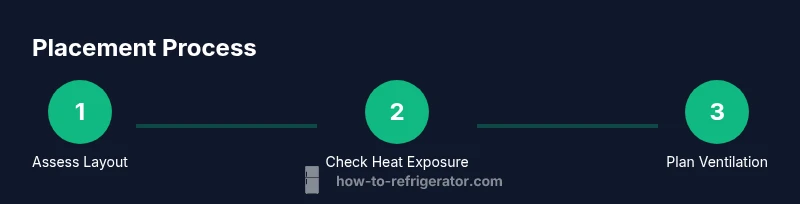
Take initial measurements of the fridge and oven footprints. Note door swings, nearby cabinets, and available gaps. Document any heat sources and airflow paths. This baseline helps determine whether a near-oven placement is feasible.
Tip: Record all distances in writing and draw a quick floor plan to visualize spacing. - 2
Check heat exposure during operation
Run the oven on a typical cooking setting and observe how warm air circulates near the fridge area. Look for signs of radiant heat reaching the fridge back or condenser area. This step establishes whether a shield or buffer is needed.
Tip: Do this with doors closed to simulate normal use. - 3
Verify electrical capacity
Identify the circuits serving the oven and fridge. Ensure there is no shared or overloaded circuit that could risk overheating or nuisance tripping. If in doubt, consult an electrician for a circuit assessment.
Tip: Never piggyback outlets or run cords under rugs. - 4
Plan ventilation and buffering
Decide on a buffer zone or shield between the two appliances. Consider a noncombustible panel or heat-absorbing barrier to minimize heat transfer. Ensure rear clearance is sufficient for airflow.
Tip: A small buffer is often more effective than cramming both units together. - 5
Choose orientation and access
Experiment with fridge and oven positions that maximize workflow—opening doors without interference is key. Ensure the fridge has room for its doors to swing fully and that the oven’s door can open without obstruction.
Tip: Maintain a clear path to the kitchen work triangle. - 6
Move temporary testing setup
Place the fridge in a provisional position and monitor performance for a cooking cycle. Check interior temperatures and compressor activity to spot issues early.
Tip: Use a thermometer placed in the fridge’s main compartment. - 7
Assess airflow and seals
Inspect refrigerator seals and oven ventilation after a trial run. Look for any gaps or warm air leaks that could indicate poor insulation or blocked vents.
Tip: Clean coils and check seals if heat exposure appears unnecessary. - 8
Finalize layout decision
If temperatures stay stable and airflow is unobstructed, finalize the layout. Otherwise, revert to a more distant arrangement or upgrade ventilation solutions.
Tip: Document the final measurements for future reference. - 9
Perform routine maintenance
Schedule periodic checks on seals, coils, and vents to maintain efficiency in the new layout. Keep the area around both appliances clean and free of debris.
Tip: Regular maintenance reduces energy usage and prolongs appliance life. - 10
Plan for future renovations
If your kitchen design plans to expand or reconfigure, consider moving the fridge away from heat sources as a long-term improvement. Use the knowledge gained to optimize future layouts.
Tip: A proactive plan saves effort later.
FAQ
Is it safe to place a fridge next to an oven?
It can be safe in many homes, but heat exposure can reduce efficiency and shorten compressor life. Follow ventilation, clearance, and electrical guidelines, and test the layout before committing.
Yes, it can be safe if you manage heat exposure and electrical setup carefully.
Will heat from the oven raise my fridge’s energy bill?
Heat from nearby appliances can increase the fridge’s workload, raising energy use slightly. Proper ventilation and shielding help minimize this effect.
Heat can nudge up energy use, but ventilation helps keep it in check.
What indicators show my fridge is too close to the oven?
Signs include warm back panels, higher interior temps during oven use, and louder compressor cycles. Address by increasing clearance or shielding.
Look for warm panels and unusual compressor noises when cooking.
Are there budget-friendly alternatives for small kitchens?
Consider a side-by-side layout with a buffer wall, compact models, or moving the fridge to an opposite wall to maximize space and airflow.
In tight kitchens, small design changes can improve airflow and efficiency.
Do all ovens emit the same amount of heat?
Ovens vary by model and mode, but all emit significant heat during operation. Treat oven proximity as a heat source to be managed.
All ovens give off heat, so plan accordingly.
Should I hire a professional for placement decisions?
If you’re uncertain about wiring, venting, or codes, a professional can assess, advise, and implement a compliant solution.
If in doubt, a pro can ensure safety and efficiency.
Watch Video
Top Takeaways
- Plan for airflow around both appliances
- Use a buffer or shield to reduce heat transfer
- Ensure safe electrical setup with dedicated circuits
- Test temporarily before finalizing placement