Where to Place Refrigerator in Kitchen: A Practical Guide
Learn optimal fridge placement for safety, airflow, and boss-level kitchen workflow. This guide covers layout strategies, measurements, and step-by-step installation tips to avoid common mistakes.


Where to place refrigerator in kitchen should balance accessibility, airflow, and traffic flow. Aim for a spot near food prep zones with clear space on all sides and away from heat sources or direct sunlight. This quick answer highlights placement goals and the key checks before moving the unit.
Why Proper Refrigerator Placement Matters
According to How To Refrigerator, placement deeply affects energy efficiency, ice buildup, and the longevity of your appliance. A well-positioned fridge minimizes energy use by improving airflow around the condenser and reducing the time the motor runs to compensate for heat gain. It also protects door seals, shelves, and gaskets from damage caused by improper space or uneven flooring. For homeowners, this means lower operating costs and fewer service calls. A thoughtful layout supports cooking routines, reduces back strain, and keeps groceries within easy reach. The guidance here helps you create a kitchen that feels organized and calm, not cluttered or cramped.
Understanding Kitchen Workflow and Zones
The best fridge location aligns with your primary kitchen zones: prep, cooking, and cleanup. Place the refrigerator where you routinely pass from storage to prep without crossing hot zones or high-traffic paths. In a typical U- or L-shaped kitchen, keep the fridge near the pantry or prep island, but not directly in the main traffic aisle. The goal is to minimize steps between unloading groceries and starting meals. If you share your space with a dining area, consider a position that preserves sight lines and accessibility for family members while minimizing interruptions to others. How To Refrigerator emphasizes planning around your unique routines to maximize efficiency.
Electrical, Plumbing, and Ventilation Requirements
Before deciding on a spot, map the electrical outlet(s) needed and ensure a dedicated circuit if possible. Refrigerators require stable voltage and access to a grounded connection; avoid outlets behind the unit. If you have an ice maker or water dispenser, verify the water line is properly routed and meets local codes. Ventilation clearance behind and at the sides is essential to prevent overheating of the condenser. Do not block ventilation grills with cabinets or decor. This section outlines practical wiring and plumbing checks to prevent future nuisance trips or leaks.
Clearances and Airflow: How Much Space Do You Need?
Airflow is critical for efficient operation and even cooling. Plan for a few inches of space on the sides, a gap behind the unit, and extra clearance at the top to dissipate heat. The exact measurements vary by model, but a general guideline is 1–2 inches minimum from walls and 1–2 inches from cabinetry to doors, plus a larger rear gap if you have a tight kitchen. If your fridge features a back vent or drawer controls, ensure you are not blocking them. Adequate clearance reduces interior temperature fluctuations and prolongs life. How To Refrigerator notes that airflow considerations play a major role in overall performance.
Common Layout Scenarios: Hallway, Alcove, Island, Corner
- Hallway placement works when there’s a clear 3–4 foot gap to the nearest counter or doorway, but ensure the doors swing without hitting walls or appliances. 2) An alcove can be ideal if it’s wide enough for door clearance and does not obstruct foot traffic. 3) An island setup should respect the pedestal’s foot traffic and ensure the door can open fully without colliding with stools or chairs. 4) Corner placements can save space if the corner provides enough room for hinge clearance and ventilation. Each layout has tradeoffs, so visualize your movements and test several mock positions before final installation.
Proximity to Food Prep and Storage
Keeping the fridge near the prep area reduces trips across the kitchen during meal assembly. It’s helpful to position cold storage close enough to the counter for quick access to ingredients while cooking, yet far enough from heat sources like the oven or dishwasher. A well-placed fridge supports a smooth workflow and reduces cross-traffic during busy dinner times. The How To Refrigerator guidance emphasizes evaluating your own cooking rhythms to choose a location that minimizes bends, twists, and long walks across the room.
Door Swing and Traffic: Avoid Bottlenecks
Test the door swing in both open and closed positions with a mirrored or empty cabinet nearby to ensure it does not collide with cabinets, doors, or appliances. If space is tight, consider doors that swing from the opposite direction or a swing-clear layout where the fridge exits into an open zone rather than a narrow corridor. For households with multiple cooks or kids, plan for brief, unobstructed paths to avoid bottlenecks at mealtimes. A practical check is to simulate a grocery run: step back, open the door fully, and see if you can retrieve items without stepping into traffic.
Heat, Sunlight, and Environmental Considerations
Direct sunlight or proximity to heat-producing appliances can raise the fridge’s temperature, making the compressor work harder. Avoid placing the unit next to stoves, ovens, heaters, or warm windows. If sun exposure is unavoidable, consider shading with curtains or using a reflective panel to reduce heat gain. Consistent ambient temperatures help maintain efficient cooling and protect stored food from temperature swings. This section helps you map heat sources around your kitchen and choose a cooler, shaded zone when possible.
Step-by-Step: Measuring and Testing a Spot
Before moving the fridge, measure the intended space using a tape measure, confirm ceiling and door clearances, and check for level flooring. Bring along a level if you can to verify the cabinet site is flat; any tilt can cause doors to misalign and seals to fail. Then place the fridge close to the final spot, but not touching the wall, and test door swing. If you can, place a temporary spacer to simulate gaps. Run a short functional test by plugging in the unit and ensuring the compressor cycles normally without excessive noise or vibration.
Safety and Professional Help: When to Call an Expert
If you’re dealing with gas lines, complex plumbing, or electrical modifications, consult a licensed professional. Safety should always come first—faulty wiring, leaks, or improper venting pose fire and health risks. In older kitchens, hidden pipes or fragile cabinetry may require careful handling to avoid damage. When in doubt, schedule a quick inspection to confirm the spot won’t compromise electrical codes or appliance warranties. The How To Refrigerator team recommends involving a qualified technician for major placements or retrofits.
Maintenance Impacts: When to Reconsider Location
Constant warmth around the unit, poor airflow, or frequent door obstructions can increase energy use and shorten its lifespan. If you notice excess frost buildup, temperature fluctuations, or noisy operation, reassess the location. Even a minor shift in placement can improve efficiency and reduce maintenance needs over time. Regularly review clearance around the back, sides, and top to ensure nothing shifts and blocks vents or coils.
Quick Verify Checklist Before Final Placement
- Confirm 1–2 inches of side clearance and back vent space
- Ensure doors swing without hitting walls or counters
- Verify outlet accessibility and dedicated circuit readiness
- Check for indirect sunlight or heat sources nearby
- Test door seals and level the unit if needed
- Take a final walk-through of the kitchen workflow to ensure accessibility for multiple users
Tools & Materials
- Tape measure (at least 96 inches)(For precise space assessments including door swing and corridor width.)
- Stud finder(Locate studs when securing any furniture or backing boards near the fridge.)
- Carpenter’s level(Confirm the unit sits evenly to avoid seal wear.)
- Pencil or chalk(Mark final placement points on the floor or wall.)
- Masking tape(Temporary markers or spacers during testing.)
- Utility knife(Trim packaging or adjust floor mats as needed.)
- Outlets tester(Ensure outlet is live and properly grounded.)
- Non-slip floor mats or furniture sliders(Protect flooring during moving and prevent shifting.)
Steps
Estimated time: 60-90 minutes
- 1
Measure available space
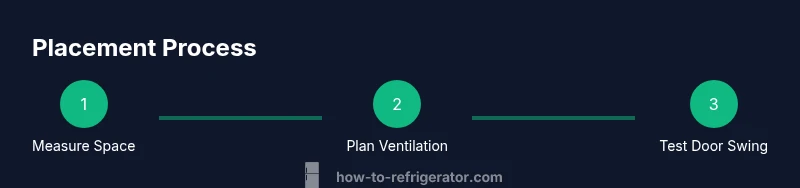
Begin by measuring the target area from wall to wall, including space needed for door clearance. Note any obstruction from cabinetry, islands, or doorway frames. Record the minimum width required for the fridge plus a comfortable opening for the doors. Taking precise measurements up front reduces the need for rework later.
Tip: Always measure twice to avoid mismatches. - 2
Check electrical and plumbing routes
Map the nearest outlets and, if applicable, the water line for an ice maker or dispenser. Ensure the outlet is grounded and reachable without stretching cords. If a water line is needed, plan for a clean, reversible route with easy shut-off access.
Tip: Avoid outlets behind the fridge; use a nearby, accessible outlet instead. - 3
Plan ventilation clearance
Mark the planned position and draw a temporary space around the unit to simulate airflow. Ensure at least 1–2 inches on each side and behind the unit for proper heat dissipation. Remember that obstruction can impede cooling and shorten compressor life.
Tip: Ventilation is a silent energy saver. - 4
Assess door swing and traffic
Test the fridge door in both open and full extension positions. Confirm it won’t collide with counters, islands, or drawers. If space is tight, consider a different orientation or a fridge with a narrower door swing.
Tip: Door clearance matters more than the looks of the space. - 5
Evaluate proximity to prep zones
Position the fridge so ingredients you reach often are within easy reach during cooking. Avoid long walks across busy traffic lanes. A good placement reduces steps and makes meal prep more ergonomic.
Tip: Prioritize workflow over aesthetics in small kitchens. - 6
Level the unit and set the height
Place the fridge on a level surface and adjust feet or shims as needed. A tilted fridge can cause door misalignment and uneven cooling. Recheck levelness after loading groceries first time.
Tip: A leveled fridge reduces wear on seals and wheels. - 7
Secure the space and route cables
Tuck cords and hoses away from foot traffic and doors. Use cable clips to keep lines neat and avoid tripping hazards. If you moved the fridge into place, ensure no pinched cables or hoses.
Tip: Never pinch electrical cables behind the appliance. - 8
Plug in and test operation
Plug the unit into a grounded outlet and listen for normal compressor cycling. Check seals around the doors and verify no unusual rattling or vibration. If issues arise, power down and recheck spacing or level alignment.
Tip: A quiet start is a good sign of proper placement. - 9
Re-check clearances after loading
With groceries in place, re-check the sides and top clearance since items could press against vents or doors. Make any minor adjustments to maintain proper airflow and door operation.
Tip: Load placement can affect airflow; adjust as needed. - 10
Document final setup
Take photos of the final layout and measurements for future renovations. Create a quick note on the fridge placement and clearance to guide any future movement or appliance changes.
Tip: Documentation saves time on repairs or upgrades. - 11
Schedule a short-term evaluation
After 1–2 weeks of operation, revisit the placement to see if any adjustments improve flow or reduce energy use. Small changes can yield noticeable gains in efficiency.
Tip: A simple follow-up check can lock in the best spot. - 12
Finalize position with protection
Once satisfied, secure the fridge temporarily or permanently as needed. Consider protective pads to prevent floor damage and ensure the unit doesn’t shift with daily use.
Tip: Protect your flooring and keep the fridge stable.
FAQ
Why does refrigerator placement affect energy efficiency?
Placement influences airflow around the condenser and how hard the compressor works. Poor airflow or heat exposure can cause the unit to run longer, increasing energy use and wear. Proper spacing helps maintain consistent temperatures and efficiency.
Placement affects how hard the fridge has to work and can impact energy use.
Can I put the fridge next to the oven or dishwasher?
It’s best to avoid placing the fridge directly next to heat sources like ovens or dishwashers, as heat can raise the fridge temperature and increase energy usage. Keep some distance and ensure there is proper ventilation.
Avoid placing the fridge next to heat sources to keep it efficient.
How much space should I leave around the fridge?
A practical rule is a few inches on the sides and more behind the unit for airflow. Check your model’s manual for exact clearance recommendations and ensure no obstructions block vents.
Leave space on all sides for airflow according to your model’s guidance.
Is it important to place the fridge near the pantry or prep area?
Yes, proximity to food storage and prep areas reduces travel time during meal prep and improves workflow. Aim for a balance between accessibility and traffic flow.
Being near prep zones helps you grab ingredients quickly without blocking traffic.
What if my kitchen is small and lacks clear space?
In tight kitchens, consider a shallow-depth fridge or alternate configurations like an under-counter model. Use vertical space wisely and test multiple positions before finalizing.
In small kitchens, look for compact options and test several spots.
When should I call a professional for placement?
If electrical or plumbing changes are needed, or if you’re unsure about ventilation and safety, consult a licensed technician. A professional can prevent hazards and ensure warranties stay valid.
Call a pro if wiring or plumbing needs work or if safety is in doubt.
Watch Video
Top Takeaways
- Plan for airflow and clearance with every spot
- Test door swing and traffic flow before final placement
- Keep electrical and water lines accessible and safe
- Evaluate kitchen workflow to minimize steps during cooking
- Reassess placement after a short acclimation period