Where to Put a Fridge in a Small Kitchen
A homeowner-friendly guide to placing a refrigerator in tight spaces for safe airflow, easy access, and efficient workflow. Learn layouts, measurements, and safety from How To Refrigerator.


To optimize a small kitchen, place the fridge where it does not hinder traffic, allows easy loading, and leaves space for doors to swing open. Ideal spots include along a clear wall opposite the main work zone, or beside a pantry where the door can swing without hitting counters. Always measure width, depth, and clearance before buying. This upfront planning pays off with better workflow and energy efficiency.
Space-saving positioning for small kitchens
In a small kitchen, a refrigerator can easily dominate the floor plan. According to How To Refrigerator, the best placements minimize obstructions, maintain good airflow, and support efficient cooking. Start by measuring your available width and depth, then map potential layouts on graph paper or a simple grid. Consider how doors swing and where you’ll perform tasks like chopping and washing. Ideal spots include along a clear wall opposite the main work zone, or beside a pantry where the door can swing without hitting counters. Also think about proximity to the sink and countertop for easy loading. If you live in a multi-use space, even small changes—like placing the fridge on the perpendicular wall—can transform daily routines. Finally, remember to factor out space for a small toe-kick or plinth if you plan to raise the fridge off the floor for cleaning or ventilation. This planning helps you identify a couple of top contenders and avoid layouts that create extra steps or cramped work zones. The goal is a layout that preserves flow between sink, stove, and prep area, while keeping the fridge out of the main traffic path.
Common fridge configurations for small spaces
Small kitchens come in many shapes, so there isn’t a one-size-fits-all answer. The most common approaches include a standalone fridge on an exterior wall with a clear path to prep zones; a built-in look by aligning the fridge with cabinetry; or a slim counter-depth model tucked next to a pantry or wall. Each layout has pros and cons: a standalone unit can be moved if needed; a built-in look creates a seamless aesthetic but requires precise measurements; a slim fridge minimizes width but may have reduced capacity. When evaluating configurations, compare the total width, door clearance, and how often you’ll need to access the fridge during peak cooking times. If you’re renovating, consider prioritizing venting space along the back and ensuring the power outlet is easily accessible without cords stretching across work surfaces. The goal is to keep every inch usable for prep, cooking, and storage. In the context of where to put a fridge in a small kitchen, think about adjacency to the main work triangle and how potential layouts influence daily routines and energy use.
Traffic flow and clearance guidelines
Clear traffic paths are essential in small kitchens. Position the fridge so it does not create bottlenecks between the sink, stove, and primary prep area. Allow room for the door to swing open without colliding with an island, doorway, or cabinet door. In addition, provide space along the fridge’s front for loading groceries, and keep the fridge at least a few inches away from the wall to support air circulation and easy access to the controls. If your kitchen has a shallow aisle, a vertical or under-counter model can help maintain walking space. Lastly, consider using pull-out drawers or organizers inside the fridge to reduce the need to reach deep into the unit, which can slow you down during busy mornings. Thoughtful placement reduces wasted steps and makes it easier to reach ingredients when you’re cooking, cleaning, or entertaining. Learning where to put a fridge in a small kitchen is about balancing convenience with space constraints.
Electrical and venting considerations
Safety and efficiency hinge on proper electrical and ventilation planning. Ensure the fridge location has a dedicated outlet within reach of the cord, with enough slack so the appliance can be pulled away from the wall for cleaning. Avoid routing cords across walking paths or behind doors. Ventilation at the back is important; do not press the fridge directly against a wall that blocks the vents. If you’re placing a larger model, verify the distance to the nearest heat source, as proximity to a stove or oven can reduce efficiency and shorten the unit’s life. In some layouts, you may need to install a longer cord or reposition an outlet; consult a licensed electrician if you’re unsure. The location also influences how easy it is to service the appliance in the future, so plan for access to the back panel for cleaning coils or swapping a power cord.
Case studies: layouts you can try
Layout A: Fridge against an exterior wall on the opposite side of the kitchen from the sink, creating a clear traffic corridor between prep and cleanup. Layout B: Fridge tucked beside a tall pantry, using the fridge door to align with cabinet faces for a cohesive look. Layout C: A narrow, counter-depth model under the countertop, opening up floor space for a small island or prep cart. For each layout, test with masking tape on the floor to simulate door swings and measure clearance. Think about everyday tasks such as carrying groceries, opening a full-width drawer, and moving a cutting board between stove and sink. If possible, sketch each layout and compare estimated steps, time to reach ingredients, and overall comfort. This hands-on approach reduces the risk of selecting a layout that feels cramped in practice. In the end, the best layout for where to put fridge in a small kitchen balances accessibility with available space and your daily routine.
Troubleshooting layout challenges
Even with careful planning, you may encounter layout challenges: door clearance issues, tight aisles, or an irregular kitchen footprint. In these cases, consider alternative models such as under-counter or apartment-sized fridges that fit the available width better. Another tactic is to place the fridge on a different wall that still preserves accessibility but avoids the busiest path. When doors swing, ensure there’s enough room to open them fully without hitting a countertop or appliance. If you’re remodeling, you can also rearrange nearby cabinets to create a dedicated door swing area, which makes a big difference in usability. Remember, small kitchens reward flexible thinking—adjusting the layout now saves effort later when you’re loading groceries during busy mornings.
Maintenance and long-term planning
Long-term planning means considering seasonal changes, such as groceries that require cold storage for longer periods, and how often you shop. Keep the area around the fridge clean and dust-free to maintain airflow; wipe seals regularly to prevent leaks and ensure a tight close. To avoid future problems, measure again if you ever move the fridge, and keep a simple floor plan on file. If you’re renting or in a temporary space, choose modular, moveable solutions such as slim fridges on rolling bases or freestanding shelves that can expand storage without permanently committing to one layout. By thinking ahead, you’ll know where to put fridge in a small kitchen even when your family’s needs or the kitchen footprint changes.
Tools & Materials
- Tape measure(At least 60 inches long for door clearance and wall checks)
- Graph paper or layout app(For drawing to-scale footprints)
- Masking tape(Mark floor spots and door swings on the actual space)
- Pencil/marker(Label measurements and layout ideas)
- Level(Check floor flatness and level fridge if needed)
- Utility knife(Trim tape and opening materials if necessary)
- Notepad(Record checks and final layout decision)
Steps
Estimated time: 60-90 minutes
- 1
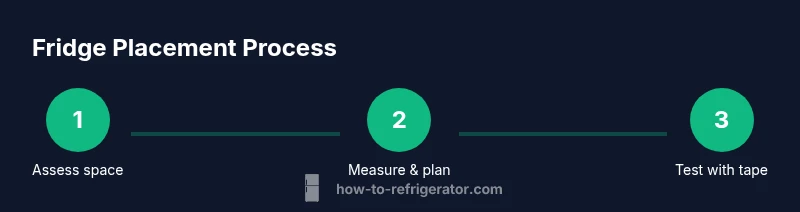
Assess space and set goals
Identify primary tasks in the kitchen and how the fridge will support them. Note entry points, routes, and any space you cannot disturb. This initial assessment guides every subsequent measurement and layout choice.
Tip: Write a one-sentence objective for fridge placement to stay focused. - 2
Measure all relevant dimensions
Measure the width, height, and depth of available space, plus door openings and nearby appliances. Record wall thickness and any obstructions like molding or cornices.
Tip: Double-check measurements at multiple points to avoid rounding errors. - 3
Create a to-scale footprint
Draw the space on graph paper or a layout app, then sketch several fridge footprints to compare how each fits with counters and doors.
Tip: Label each footprint with estimated ease of access for loading groceries. - 4
Check door swings and traffic paths
Simulate fridge doors swinging in each footprint using masking tape. Ensure there’s room for both the fridge door and any adjacent cabinet doors to open fully.
Tip: Prioritize layouts that keep traffic clear between the sink and prep area. - 5
Evaluate electrical and venting needs
Confirm an accessible outlet and consider back-vent clearance. Avoid crimping cords behind the fridge or blocking vents.
Tip: If unsure about electrical safety, consult a licensed electrician before final placement. - 6
Choose a final layout and test-fit
Pick the layout that offers best airflow, shortest travel distance, and least disruption to daily use. Re-measure with the actual fridge if possible.
Tip: Ask a helper to simulate daily tasks (groceries, bag carry-in, unloading) in the chosen layout. - 7
Install and verify operation
Position the fridge, level it if needed, and plug in. Check door seals and ensure the appliance runs quietly without rattling.
Tip: Leave a small space behind the unit for air circulation and coil cleaning access.
FAQ
What is the best location for a fridge in a small kitchen?
The best location minimizes steps between prep and cleanup, keeps doors from colliding with cabinets, and allows for unobstructed ventilation and easy access to outlets.
Place the fridge where you can reach ingredients without stepping around other appliances, and ensure it has ventilation space.
Can I place a fridge next to the oven or stove?
Avoid proximity to heat sources when possible, as heat reduces efficiency and can shorten appliance life. If space is very tight, separate them with a small buffer like a cabinet or countertop.
Try to keep the fridge away from the oven; a small buffer can help maintain efficiency.
How much clearance does a fridge need around it?
Leave space behind and to the sides for air circulation and easy coil access. Avoid pressing the back or sides directly into walls or tight gaps.
Give a bit of space behind and around the fridge for airflow.
Are under-counter fridges a good option in small kitchens?
Yes, under-counter or slim models can free floor space and integrate with cabinetry. Ensure there is adequate ventilation and that dimensions fit your plan.
An under-counter fridge can save space if it fits your layout.
How can I test a layout before moving heavy appliances?
Create a floor-plan tape diagram and simulate door swings. Move a lightweight stand-in object to judge reach, clearance, and workflow.
Tape out the footprint and practice with a mock fridge surface before moving the real unit.
What about moving plans if the kitchen footprint changes?
Keep a flexible layout approach with modular furniture and slim appliances. Re-measure and adjust as needed when renovating or moving.
Be prepared to adjust layouts as your kitchen footprint evolves.
Watch Video
Top Takeaways
- Measure footprint before selecting a fridge.
- Prioritize traffic flow and door clearance.
- Provide ventilation and a reachable outlet.
- Test multiple layouts with tape on the floor.
- Verify final layout with doors open and groceries loaded.