Can a Refrigerator and Stove Be Side by Side? A Practical Guide
Discover whether a refrigerator and stove can sit side by side, with practical spacing, ventilation, electrical considerations, and safety steps for safe, functional kitchen layouts.


Can a refrigerator and stove be side by side? Yes, but only when you respect clearances, ventilation, and code requirements. This quick answer highlights the essentials: ensure proper airflow behind and around both appliances, maintain safe door swing clearance, provide heat management through shielding where needed, and verify electrical and gas connections meet local code. With these precautions, a side-by-side arrangement can be safe and functional.
Can a Refrigerator and Stove Be Side by Side? A Practical Safety Check
If you’re planning a kitchen refresh or remodeling an existing space, you may wonder, can a refrigerator and stove be side by side? The short answer is yes in many layouts, but only when you respect clearances, ventilation, and local codes. The How To Refrigerator team emphasizes that safe proximity depends on heat exposure, airflow, electrical and gas service, and door swing. In this guide, we’ll unpack the key factors that determine whether a side-by-side placement will work in your home, and how to plan for both safety and convenience. Our approach is practical and homeowner-friendly, so you can make informed decisions without hiring a full-scale contractor.
According to How To Refrigerator, starting with a measured plan helps you identify potential heat sources, airflow paths, and service clearances before you move any appliance. This proactive step saves time and reduces the risk of rework later. Whether you’re updating a compact apartment kitchen or a larger family space, a thoughtful layout minimizes heat transfer, improves efficiency, and keeps daily workflows intact.
Ventilation, Clearance, and Building Codes
Ventilation is the invisible driver of safe side-by-side installations. The stove emits heat, moisture, and sometimes combustion byproducts, while the refrigerator relies on a steady flow of cool air to shed heat through its condenser coils. If airflow is blocked, temperatures inside the fridge can rise, reducing efficiency and risking spoilage, and the stove can overheat surrounding cabinetry. Building codes typically require unobstructed ventilation pathways, proper ventilation hood sizing, and protective clearances around heat-producing appliances. While exact numbers vary by jurisdiction, the governing principle is clear: provide adequate space for heat to escape and for doors to open without interference. The How To Refrigerator team notes that many regions require specific distances from gas lines, electrical outlets, and combustible materials. Always consult local codes and appliance manuals before making any changes.
A practical starting point is to mark the intended layout on the floor with painter’s tape, then test door swings and clearance in both directions. If you notice heat at the fridge rear panel or the stove cabinet, you likely need more space or a protective shield. Grounded outlets, GFCI protection in wet areas, and dedicated circuits for the stove are essential safety considerations that influence whether side-by-side placement is appropriate in your kitchen.
Spacing Guidelines: Minimum Clearances You Need
The core question—can a refrigerator and stove be side by side—depends heavily on the space between them and on how heat is managed. While exact distances are determined by local codes and appliance manuals, the guiding principle is safe airflow and unobstructed door operation. Allow space behind both appliances to prevent heat buildup and to enable proper servicing. Consider leaving a small air gap at the back of the refrigerator to facilitate condenser heat dissipation, and ensure the stove has unobstructed access to a hood or vent. In smaller kitchens, stacking appliances vertically or relocating one device to an adjacent wall may be necessary to preserve work zones. Budget-conscious homeowners can also explore compact or slide-in models that reduce depth and improve alignment with countertops. The overarching goal is to maintain consistent temperatures inside the fridge and predictable cooking performance on the stove, while avoiding heat exchange that can reduce efficiency over time.
Electrical and Gas Considerations When Placing Side by Side
Electrical safety is non-negotiable when you align a refrigerator with a stove. The stove typically requires a dedicated circuit, sometimes with high amperage, while the fridge relies on a standard household circuit. Sharing outlets or running multiple heavy-appliance cords through the same outlet can create overheating hazards and tripping risks. Verify that outlets are grounded and placed where cords won’t be pinched or exposed to heat. For gas stoves, ensure that gas lines and shutoffs are accessible and undisturbed by cabinet adjustments. If your kitchen layout places outlets near heat sources, consider rerouting or upgrading the circuit to a dedicated line with proper clearance. A professional inspection can confirm that back-draught prevention, ventilation hood sizing, and duct routing meet safety standards. These electrical and gas considerations directly impact whether a side-by-side configuration is practical in your space.
Layout Scenarios for Different Kitchen Sizes
In compact kitchens, placing a refrigerator and stove side by side is often feasible if you optimize widths, door clearances, and work zones. In larger layouts, you gain flexibility to separate hot and cold zones while still using a shared cooking wall. A useful strategy is to position the fridge on the end of the run to keep cold air from accumulating near the stove, which can affect combustion or insulation performance. For kitchens with island or peninsula layouts, you may prefer a U- or L-shaped work triangle that keeps appliance access intuitive while maintaining safe distances. The goal is to minimize heat exposure to the fridge while preserving convenient access to the stove and adjacent counters. Remember to review the manufacturer’s installation guidelines for both appliances to avoid voiding warranties or violating safety standards.
Heat Exchange, Shielding, and Maintenance Implications
Proximity between a fridge and a stove can influence heat exchange and overall efficiency. Stove heat can raise ambient kitchen temperature, increasing the fridge’s compressor workload. To mitigate this effect, consider heat shields, reflective back panels, or vented backsplashes that direct heat away from the fridge. If possible, install the stove hood to exhaust heat efficiently, and ensure the fridge has adequate ventilation space around its condenser coils. Regular maintenance—cleaning coils, checking door seals, and ensuring proper door alignment—helps maintain efficiency when appliances share a wall. Remember that even small changes in kitchen alignment can impact energy usage and appliance longevity over time. The How To Refrigerator approach emphasizes a measured, data-informed plan to keep your appliances performing at their best.
Safeguards, Backsplashes, and Protective Features
Beyond clearances and vents, protective features can reduce heat and impact on nearby appliances. A heat shield behind the fridge or along the adjacent cabinet can reflect heat away, while a sealed backsplash can contain steam and splashes from the stove. Anti-tip brackets help secure heavy appliances and prevent tipping during loading and unloading—an important safety feature in households with children or active kitchens. When selecting materials, choose heat-resistant finishes and materials with low thermal conductivity for areas directly adjacent to the stove. Finally, ensure your kitchen design allows easy access to maintenance panels and service connections so routine checks don’t require heavy rearrangements. A precautionary note: never obstruct the fridge’s rear grille or vent; unrestricted airflow is essential for consistent temperatures.
Step-by-Step Quick Plan to Reconfigure Your Kitchen
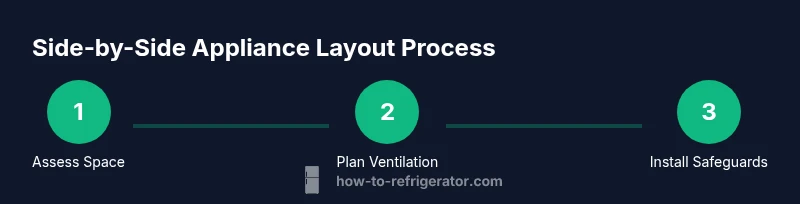
If you’re reconfiguring a kitchen to accommodate side-by-side appliances, a structured plan helps you avoid costly mistakes. Start by mapping existing services, door swings, and clearances. Verify local code requirements and appliance manuals for installation specifics. Then, measure the available width and depth, mark the intended layout, and check functional workflows. Finally, prepare the space with necessary shields, brackets, and venting provisions before moving heavy appliances. This approach minimizes downtime and ensures safety throughout the process.
Maintenance and Safety Checks After Installation
After you’ve positioned a refrigerator and stove side by side, conduct a safety and maintenance routine to safeguard performance. Check door seals and gaskets on the fridge to prevent cool air loss, inspect the stove hood and ventilation ducts for blockages, and confirm that electrical connections remain secure. Periodically clean condenser coils and ensure adequate clearance around both appliances to support airflow. Establish a simple schedule for inspections and cleaning, and document any changes to your kitchen layout so you can revisit them if performance shifts occur. With proactive upkeep, a side-by-side arrangement can deliver both safety and efficiency for years to come.
Tools & Materials
- Measuring tape(Long enough to cover kitchen depth and appliance widths)
- Stud finder(To locate wall studs for secure mounting and supports)
- Level (laser or bubble)(Ensure appliances sit evenly and doors align)
- Pencil and marking tools(Mark reference lines and door swing paths)
- Square or straightedge(Aid in right-angle layouts and cabinet alignments)
- Caulk or silicone sealant(Seal gaps to prevent moisture intrusion)
- Heat shields or reflective backsplashes(Optional but helpful for heat management)
- Anti-tip brackets or straps(Secure heavy appliances to prevent tipping)
- Vent covers or duct materials(Maintain proper ventilation paths)
- Safety gloves(Protect hands when moving appliances)
- Appliance dolly or helper strap(Aid in moving heavy units safely)
Steps
Estimated time: 2-4 hours
- 1
Measure and map the space
Begin by measuring the width, depth, and height of the area where the appliances will sit. Mark the intended positions on the floor and wall to visualize door swings and clearance. Confirm that there’s adequate space for service cords, vents, and access panels.
Tip: Double-check that the fridge and stove can be accessed from both sides without forcing door closures. - 2
Check codes and appliance manuals
Review local building codes and the installation manuals for both appliances. Note any required clearances around combustible materials, required venting, and the type of electrical circuit or gas line specifications. If in doubt, contact a licensed professional.
Tip: Keep a copy of the manuals handy for reference during installation and future maintenance. - 3
Plan the layout and airflow
Draft a layout that prioritizes airflow behind and around both appliances. Ensure the fridge has space to dissipate heat and that the stove’s hood vent can exhaust without re-entrainment. Validate that doors won’t collide and that there’s enough room for user movement.
Tip: Consider moving one appliance slightly away from the wall to create a small air gap if possible. - 4
Prepare the space and install protections
Install anti-tip brackets, heat shields, or protective backsplashes as needed. Seal gaps with caulk to prevent moisture ingress and install vent covers if you’ve altered duct routing. Ensure outlets and gas shutoffs remain accessible after placement.
Tip: Test-fit the appliances prior to final connection to verify clearances and levelness. - 5
Move appliances and check alignment
With a helper, slide the refrigerator and stove into place, level them using the adjustable feet, and confirm door clearances. Verify that electrical cords and gas lines are not stretched or kinked and that hoses remain accessible for service.
Tip: Do not force fittings or wires; if misalignment occurs, back up and re-check measurements. - 6
Test operation and safety features
Power up and test the fridge and stove. Confirm proper cooling in the fridge, heat in the stove, hood function, and vent operation. Re-check door seals, and ensure there’s no unusual vibration or noise from the appliances.
Tip: Document any issues and consult a professional if you notice abnormal heat or poor seal performance.
FAQ
Is it safe to place a refrigerator next to a stove?
Yes, it can be safe if you maintain adequate ventilation, minimize heat exposure, and follow electrical and gas safety guidelines. Always consult local codes and the appliance manuals for specific clearances and installation requirements.
Yes, with proper ventilation and safe electrical and gas setups. Check local codes and manuals for exact clearances.
Will proximity to a stove affect fridge efficiency?
Proximity can raise ambient kitchen temperatures, which makes the fridge work harder. Ensure good airflow behind and around the fridge and use a proper hood or vent for the stove to minimize heat exposure.
Yes, heat from the stove can raise fridge workload unless you ensure good airflow and ventilation.
Do codes restrict side-by-side placement of fridge and stove?
Code requirements vary by location. Most Codes emphasize ventilation, safe clearances, accessible outlets and shutoffs, and proper venting. Always verify with your local authority and consult the appliance manuals.
Local codes vary; check with authorities and follow manuals for safe clearances and venting.
What is a safe distance between fridge and stove?
There isn’t a universal standard distance; assessments consider airflow, the layout, and manufacturer guidance. Use a layout that avoids heat buildup near the fridge and keeps door operations unobstructed.
There isn’t one fixed distance; focus on airflow and door clearance per manufacturer guidance.
What should I do if my kitchen is very small?
In tight spaces, consider compact or slide-in models and explore alternative layouts that place appliances on different walls while preserving a safe and efficient work triangle. Consulting a professional can help optimize small-kitchen layouts.
For small kitchens, use compact appliances and smart layouts; professionals can help.
Can I DIY this, or should I hire a pro?
Basic rearrangements can be DIY, but if gas, electric, or venting changes are involved, hire a licensed professional to ensure safety and code compliance. Mistakes can lead to fire hazards or equipment damage.
DIY is possible for simple moves, but contact a licensed pro for gas, electrical, or vent work.
Watch Video
Top Takeaways
- Assess space, airflow, and codes before moving appliances.
- Maintain safe clearances and unobstructed ventilation for both units.
- Secure heavy appliances with anti-tip brackets for safety.
- Plan door swings and work zones to preserve kitchen workflow.
- Regular maintenance helps keep side-by-side layouts efficient.