Can We Keep Fridge Beside TV? Safe Placement Guide for Homes
Discover safe fridge placement near a TV. This How To Refrigerator guide covers heat management, airflow, clearance, electrical safety, and practical layouts for living rooms and open kitchens.


Yes, you can generally place a refrigerator near a television, but it requires careful planning. The key question is can we keep fridge beside tv safely, without overheating the fridge or the TV, while preserving access to vents and outlets. This quick answer previews the safety rules, airflow needs, and practical layouts you’ll learn in this guide.
Why proximity to heat sources and electronics matters
From a design and maintenance perspective, proximity to heat sources and electronics matters. The fridge expels heat from its rear coils, while the TV generates heat from its electronics, though typically less intense. When both appliances share close space, airflow patterns around the back of the fridge can be impeded, increasing compressor workload and energy use. Proper planning keeps both devices cool and reliable. According to How To Refrigerator, thoughtful placement can reduce heat buildup and improve overall efficiency. If you’re asking can we keep fridge beside tv, the answer hinges on ventilation, clearance, and how often you access each device. A practical layout often solves the puzzle without sacrificing either appliance.
Safety first: separating heat and electrical zones
Safety considerations treat the fridge and TV as distinct heat and electrical zones. Avoid placing the TV directly over or against the fridge’s back vents, and never block intake or exhaust. Route cords to prevent tangling or tripping, and ensure outlets are up to code and dry. If you ask can we keep fridge beside tv, the answer is yes when you respect ventilation and cable safety. A tidy, dry space reduces moisture risks and electrical faults, helping both devices perform reliably.
How fridges dissipate heat and why airflow matters
A refrigerator relies on circulating refrigerant and moving air to remove heat from inside. External condenser coils must shed that heat efficiently. Blocking airflow with a TV or dense furniture can trap warm air near the condenser, forcing the compressor to work harder and potentially shortening appliance life. Prioritize open space around the back and sides to encourage natural convection and maintain stable temperatures inside the fridge. When evaluating placements, remember that good airflow is a core part of efficient operation.
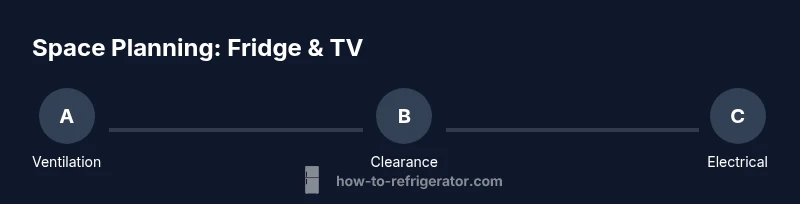
Space planning: measuring clearance, ventilation, and door swing
Start by measuring the footprint available for the fridge and noting any obstacles. Leave space behind and to the sides for air exchange, and verify the doors can swing open without striking the TV stand or wall. If space is tight, consider rearranging furniture instead of forcing two large appliances into a cramped corner. These steps help answer can we keep fridge beside tv with confidence and avoid awkward door clashes or restricted airflow.
Placement guidelines by fridge type: compact, standard, built-in
Different fridge types have distinct ventilation needs. Compact models tolerate tighter spaces but still require air around their sides and back. Standard models benefit from a more generous clearance to maintain airflow and easy access. Built-in units demand precise enclosure and dedicated airflow pathways. In all cases, avoid pressing the unit directly against a solid wall or entertainment cabinet where heat can accumulate; provide a small buffer for airflow and service access.
Electrical safety and outlet planning in living rooms
Electrical safety matters when a fridge sits near a TV. Use dedicated outlets for large appliances when possible, and avoid overloading power strips. Keep cords neatly organized away from heat sources and moisture. Grounded outlets and GFCI protection add safety, especially in rooms with humidity or children. If the TV needs a nearby outlet, ensure it is separate from the fridge’s circuit to prevent nuisance trips or overloads. Thoughtful electrical planning helps keep both devices safe and functional.
Real-world layouts: living rooms, open kitchens, and apartments
In open-plan homes, a buffer between fridge and TV—such as an island, sofa, or bookshelf—can help with both aesthetics and airflow. In compact apartments, consider under-counter or compact refrigerators to maintain a comfortable viewing area while keeping refrigeration accessible. Always balance sightlines and reach with ventilation and maintenance access. The goal is a harmonious layout that respects both convenience and appliance efficiency while addressing can we keep fridge beside tv in your specific space.
What to do if space is limited: alternatives and hacks
If repositioning isn’t possible, explore alternatives such as slide-out pantry fridges, vertical refrigerators, or relocating the TV to another wall. You can also introduce a small air gap or use anti-vibration mats to minimize movement and noise. Decorative room dividers can improve cable management and airflow without sacrificing style. These options help you keep both devices functional even in tight layouts.
Maintenance checkpoints after relocation
After placing the fridge near the TV, monitor for unusual heat around the back coils, unexpected fan noise, or condensation on nearby surfaces. Clean vents regularly and ensure doors seal properly. Keep the floor dry to prevent slips and water damage. Regular checks help sustain efficiency and prevent costly repairs. With attentive maintenance, both appliances can perform well in shared spaces.
Tools & Materials
- Tape measure(Essential for measuring room clearance and door swing)
- Bubble level or small spirit level(Helps ensure the fridge sits evenly for proper operation)
- Pencil and notepad(For quick drawings of layout and clearance notes)
- Masking tape(Mark planned furniture positions during planning)
- Protective mats or old rug(Prevent floor damage when moving or leveling)
- Flashlight(Inspect tight back corners and vents)
Steps
Estimated time: about one hour
- 1
Assess space and safety
Survey the room to understand how much clearance exists around the fridge and the TV. Check for any heat sources, moisture risks, and accessibility of outlets. This step establishes whether the current layout can work and where adjustments are needed.
Tip: Walk the room with a measuring tape and visualize door arcs before moving anything. - 2
Check ventilation and airflow
Identify the back of the fridge and ensure there is a gap for air to escape. Do not block vents with furniture or decor. Good airflow reduces energy use and keeps temps stable inside the fridge.
Tip: Use a marker to indicate air-flow space on the wall or cabinet behind the fridge. - 3
Position with safe distances
Place the fridge so the back vents have space and doors clear the TV stand. If space is tight, consider reorienting the fridge or slightly shifting surrounding furniture.
Tip: Avoid placing the fridge directly against a wall that traps heat around the back panel. - 4
Check electrical safety
Confirm there is a dedicated outlet for the fridge and that the TV outlet is on a separate circuit if possible. Ensure cords are untangled and routed away from hot surfaces.
Tip: Never piggyback outlets; keep fridge and TV on their own circuits when feasible. - 5
Test door clearance and accessibility
Open fridge and TV doors without obstruction. Make sure there’s enough space for full range of motion and that cables won’t snag as the doors swing.
Tip: Mark the maximum door swing angle during your test with tape. - 6
Move and adjust if needed
If clearance is marginal, rub gently against furniture while testing. Readjust as needed to maximize airflow and access.
Tip: Make small incremental moves; avoid forcing large shifts in one go. - 7
Recheck venting and temperature
After positioning, ensure the fridge cools evenly and the back remains free of dust buildup. Monitor for unusual warmth near the vent area.
Tip: Use a quick fingertip check along the back panel after a few hours of operation. - 8
Final safety and maintenance plan
Document your layout and maintenance plan so you can revert or adjust later. Schedule periodic checks for airflow, door seals, and outlet integrity.
Tip: Set a quarterly reminder to inspect vents and cords.
FAQ
Can I place a fridge right next to my TV?
Yes, with proper ventilation and spacing. Avoid blocking vents and guarantee the TV does not trap heat near the fridge.
Yes, with proper ventilation and spacing. Avoid blocking vents and ensure heat isn’t trapped near the fridge.
What clearance does a fridge need around the back and sides?
Leave generous space around the back and sides for air exchange and easy servicing. Do not press appliances tight against walls or each other.
Leave space around the back and sides for air exchange and easy maintenance. Don’t press them tight against walls.
Will proximity to a TV affect fridge energy use?
Proximity can influence efficiency if airflow is restricted. Prioritize ventilation and avoid heat buildup.
Yes, energy use can rise if airflow is blocked; keep ventilation clear.
What if space is very limited?
Consider a compact fridge or relocate the TV to create a safer, more efficient layout.
If space is tight, think about a compact fridge or moving the TV.
Are there safe electrical practices near entertainment zones?
Use dedicated outlets for the fridge; avoid daisy-chaining, and keep cords organized away from heat.
Use dedicated outlets and keep cords neat away from heat.
How soon should I recheck after relocation?
Recheck venting, seals, and cords after a short period of operation and during seasonal changes.
Check soon after placement and again during seasonal changes.
Watch Video
Top Takeaways
- Check ventilation before final placement.
- Keep fridge and TV on separate safe electrical paths.
- Ensure door clearance remains unobstructed.
- Balance convenience with proper airflow for efficiency.
- Monitor performance after relocation.