Big Fridge: How to Choose, Maintain, and Troubleshoot
Learn how to select, maintain, and troubleshoot a big fridge. This guide covers sizing, energy efficiency, common issues, step-by-step fixes, safety tips, and when to call a pro.


This guide helps homeowners troubleshoot and maintain a big fridge, covering how to diagnose not-cooling symptoms, check door seals, inspect condenser coils, and optimize energy use. You'll learn step-by-step actions, essential tools, safety tips, and what to watch for before calling a repair service. By following these steps, you can extend your fridge life and avoid common mistakes.
What makes a big fridge a good fit for homes
According to How To Refrigerator, a big fridge is more than just a larger box. It offers extra capacity for groceries, bulk buy events, and family meals, while providing flexible configurations such as French doors or a bottom freezer. The How To Refrigerator team emphasizes balancing usable space with energy efficiency and kitchen footprint. Consider door swing, interior layout, and adjustable shelves to accommodate tall bottles, wide platters, and party platters. In practice, a well sized big fridge minimizes trips to the store and reduces food waste by keeping organized zones for produce, dairy, meats, and beverages. When evaluating options, always measure the space, account for clearance for vents and doors, and picture your weekly shopping pattern. The goal is a reliable, easy to maintain appliance that supports your lifestyle rather than complicates it. Remember, a big fridge should feel like a natural extension of your kitchen, not an obstacle.
Key design features for big fridge efficiency
Large fridges benefit from smart layout and energy aware components. The condenser coil location, air flow, and uniform cooling matter. Inverter compressors, variable speed fans, and door sensors help conserve energy yet maintain steady temperatures. Adjustable shelves and wide door bins support flexible storage for bulky items. Frost management features such as efficient defrost cycles reduce frost buildup, while multi-zone temperature control allows different compartments to run at slightly different temps. When evaluating a big fridge, look for a design that minimizes cold air escape when doors are opened and that seals well when shut. A well designed appliance also provides clear temperature readouts and simple controls that keep you from guessing the fridge settings. In everyday use, plan storage zones, label items, and avoid overloading shelves so air can circulate freely.
Common issues and how to spot them in a big fridge
Not cooling, frost on walls, water pooling, odd noises, and excessive energy use are typical signs of trouble. Start with simple checks such as door seals and level alignment, then inspect the condenser coils for dust. A dirty coil or blocked vent reduces cooling efficiency and increases energy use. If you notice frost buildup on the evaporator, defrost components may be failing. Listen for strange buzzing or humming that indicates a fan issue. If doors do not seal properly or if the interior is warmer than expected, investigate gaskets and door alignment. For any persistent problem, record symptoms, check for unusual error codes, and consider professional service if a simple tightening and cleaning does not restore performance.
Maintenance routines to extend life
Create a simple maintenance schedule and stick to it. Regularly vacuum or brush the condenser coils to remove dust, clean door gaskets with mild soap, and wipe the interior shelves. Check the drain and pan for slow clogs or odors, and ensure proper floor clearance for venting. Keep the fridge away from heat sources and direct sunlight. Inspect door seals every few months and replace worn gaskets. If your big fridge has smart features, review app alerts and BI dashboards that report temperature fluctuations or abnormal energy use. By performing routine checks, you reduce the risk of unexpected failures and extend the life of the compressor.
Choosing the right big fridge for your kitchen
Consider capacity in relation to your household size, typical shopping habits, and the available space. Evaluate configurations such as French door, side by side, or bottom freezer for ease of access. Energy efficiency matters, so compare annual consumption and look for features like humidity controlled crisper drawers and reliable temperature control. Assess build quality, warranty terms, and service network. Think about noise levels and placement in your kitchen. Finally, measure the doorway and corridor clearance to ensure the chosen model can be installed without moving walls or doors.
Safety and best practices
Always unplug before cleaning or servicing any fridge component. Use non conductive tools and insulated gloves when handling electrical parts. Avoid placing water near electrical connections. When testing electrical components with a multimeter, follow the device manual and safe practices and never bypass safety features. If you are unsure about a problem or if your fridge is under warranty, contact a qualified technician to avoid voiding coverage. With safe habits and thoughtful maintenance, a big fridge continues to perform reliably for years.
Tools & Materials
- Multimeter(for testing electrical components such as thermostat sensors and compressor start circuits)
- Phillips and flat-head screwdrivers(for access panels and hinge adjustments)
- Microfiber cloths or soft brush(for cleaning doors, gaskets, and coils without scratching surfaces)
- Vacuum with brush attachment(to remove dust from condenser coils and vents)
- Soft brush or coil-cleaning tool(to safely loosen dust from coils and fins)
- Thermometer (inside fridge)(for accurate temperature checks alongside built-in readouts)
Steps
Estimated time: 60-90 minutes
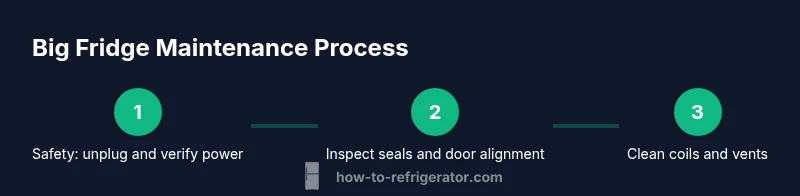
- 1
Unplug and verify power off
Before touching any internal components, unplug the fridge and verify there is no power at the outlet using a tester. This protects you from electrical shock and damage to components.
Tip: Always double-check power with a tester before starting any work. - 2
Inspect door seals and alignment
Examine gaskets for cracks or gaps and clean them with mild soap and warm water. Perform a simple door test by opening and closing to ensure a snug seal and proper alignment.
Tip: If the seal feels loose, consider replacing the gasket for improved efficiency. - 3
Clean condenser coils and vents
Access the condenser coils and remove dust with a brush or vacuum. Ensure vents have clear airflow and nothing blocks the rear of the unit.
Tip: Do not use excessive moisture on coils and avoid bending delicate fins. - 4
Test thermostat and temperature controls
Place a thermometer inside the fridge and compare against the display. If temperatures are off, adjust the thermostat gradually and monitor for a full cycle to confirm stability.
Tip: Allow at least one full cycle after adjustment to see accurate readings. - 5
Check airflow and fan operation
Listen for the evaporator fan and check that air circulates evenly when doors are opened. Remove any obstructions and ensure fans spin freely.
Tip: A stuck or noisy fan often indicates a mounting issue or worn bearings.
FAQ
What counts as a big fridge?
A big fridge refers to larger capacity models with flexible door configurations typically found in family homes. It emphasizes usable interior space and reliable temperature control.
A big fridge is simply a larger model that fits a family’s groceries and activities.
How do I know if my condenser coils need cleaning?
If cooling seems slower and you notice dust buildup on coils, cleaning is likely overdue. Regular cleaning keeps airflow unobstructed and maintains efficiency.
Look for dust on the coils or reduced cooling performance to tell you it’s time to clean.
When should I call a professional?
If basic checks do not restore cooling, if you hear unusual noises, or if the appliance is still under warranty, contact a technician.
Call a pro if simple fixes don’t work or you’re unsure about electrical work.
Repair or replace a big fridge?
Weigh the cost against the age and energy efficiency of the unit. If energy use is high and repair costs are substantial, replacement may be wiser.
Consider whether a newer, energy-efficient model would save more over time than repairing the old one.
Is DIY maintenance safe for a big fridge?
Basic maintenance like cleaning seals and coils is doable for capable homeowners. Avoid risky electrical work and seek professional help if uncertain.
Yes, many upkeep tasks are doable, but don’t tackle dangerous electrical repairs yourself.
Top Takeaways
- Unplug before servicing to stay safe
- Regular coil cleaning improves efficiency
- Check door seals to prevent leaks
- Monitor internal temps with a thermometer
- Call a pro if simple steps fail to restore cooling