Fixing a 12 Volt RV Refrigerator: Troubleshooting Guide
Learn practical, step-by-step methods to diagnose and fix common issues with a 12 volt RV refrigerator. From power checks to venting, how-to tips for homeowners.


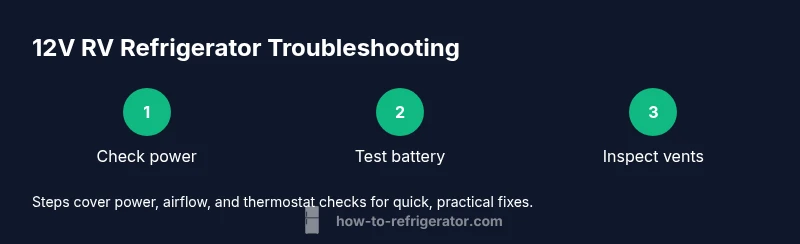
To fix a 12 volt rv refrigerator, start with the basics: confirm a solid 12V supply from the vehicle or house battery, test battery health, and inspect fuses and wiring for corrosion or looseness. Make sure vents aren’t blocked, the thermostat is set correctly, and door seals are intact. If cooling remains weak, check condenser coils, defrost drain, and the compressor for unusual sounds. When in doubt, consult a service manual.
What is a 12 volt RV refrigerator?
According to How To Refrigerator, a 12 volt RV refrigerator is designed to operate primarily on direct current from your motorhome’s battery system. These units are selected for mobile living because they can keep perishables cold without being tethered to shore power. While some RV fridges also use propane or AC power, the 12V DC mode is prized for rapid response, compact control electronics, and compatibility with portable solar setups. The key idea is that a steady 12V supply drives the compressor (or absorption element in some models) and maintains proper cycling. Owners should understand that real-world performance hinges on battery health, wiring integrity, and ventilation. Proper maintenance reduces wattage draw and extends the unit’s life, which is especially important for travelers relying on limited power reserves.
The How To Refrigerator team notes that even when the fridge turns on, you may still face performance gaps if the power chain or cooling pathway is compromised. A reliable 12V supply, clean vents, and accurate thermostat settings provide a predictable baseline from which to diagnose more complex issues.
How a 12V RV fridge works
Most 12V RV refrigerators rely on a compact DC compressor system or an absorption unit that can be powered by 12V in some installations. The core components include a compressor (or absorption chamber), evaporator, condenser coils, a defrost mechanism, and a thermostat that regulates temperature. When powered, refrigerant circulates through the system, absorbing heat from the interior and releasing it via the exterior coils. In mobile setups, the efficiency of this cycle is heavily influenced by ambient airflow around the exterior and the internal airflow within the cabinet. Electrical controls interpret thermostat signals and adjust compressor speed accordingly to hold the set temperature. Regular checks on connections, wiring harnesses, and fuses help prevent voltage drop, which can impede cooling performance. A well-maintained 12 volt RV refrigerator maintains stable interior temperatures and minimizes energy draw—critical for long trips with limited battery resources.
Common issues and quick fixes
Common problems include weak cooling, uneven cooling, or no cooling at all. Quick fixes often involve verifying the 12V power supply, testing the battery, inspecting fuses, and ensuring vent clearance. If a fridge turns on but does not cool adequately, check the condenser coils for dirt buildup and ensure no debris blocks the intake or exhaust vents. Leaking seals, moisture buildup, or frost accumulation can degrade efficiency and lead to inconsistent temperatures. Small adjustments, like reseating door gaskets, cleaning vent openings, and ensuring the interior air can circulate, can produce noticeable improvements. If the unit remains warm, you may need to verify the thermostat setting and inspect the cooling system for blockages or malfunctioning components.
Diagnosing power and electrical issues
Begin with the power chain: verify a solid 12V supply from the battery, confirm that the battery holds a charge, and inspect all fuses and wiring for corrosion or looseness. A multimeter can confirm voltage at the fridge terminals and track voltage drops across the system. Check the vehicle’s ignition or converter output if you’re plugged into shore power. Any voltage dips can reduce cooling efficiency or cause intermittent startup. If the fridge cycles on and off too quickly, that often points to an incorrect thermostat setting or a sensor fault. Replace blown fuses with appropriately rated parts and route wires away from heat sources or sharp edges to prevent future wear.
Thermal management and airflow
Ventilation around the exterior of the fridge is vital for heat rejection. Ensure exterior panels and vents are free from dust and obstructions. Inside the cabinet, allow for unobstructed airflow by not overpacking food items against vents. Condenser coils should be clean, especially in dusty or sandy environments. A soft brush or compressed air can remove debris from coils and fins. Proper airflow ensures the refrigerant cycle operates efficiently, reducing power draw and extending battery life. If the unit sits in an enclosed space, consider adding a small fan to improve convection, but avoid creating excessive drafts that could impair temperature stability.
Maintenance and best practices
Routine maintenance keeps a 12 volt RV refrigerator operating reliably. Regularly inspect door seals for cracks or gaps and replace them if you notice air leaks. Clean the interior with mild cleaners and wipe down the exterior to prevent corrosion on control panels. Periodically examine fuses, wiring, and grounding points for signs of wear. Keep a small toolkit on board for field adjustments and repairs. Maintain a log of temperatures and battery voltages to monitor performance trends. If you rely on solar charging, track solar input and battery state of charge to ensure the fridge always has sufficient power.
Choosing replacement parts and upgrades
If your fridge is aging or repeatedly underperforms, compare models that support 12V DC operation and offer efficient energy use. Look for units with high-efficiency compressors, better insulation, and robust door seals. When upgrading, verify compatibility with your RV electrical system, including available battery capacity and charging sources. If you’re frequently dry camping, consider a model with lower idle power draw and a larger battery bank to sustain longer trips. Always purchase from reputable suppliers and check warranty terms. For solar-equipped rigs, pairing a controller optimized for 12V appliances can improve performance.
Troubleshooting checklist
Use this concise checklist to quickly diagnose most issues: (1) confirm 12V supply, (2) test battery health, (3) inspect fuses and wiring, (4) check door seals and vent clearance, (5) verify thermostat setting, (6) inspect condenser coils for dust, (7) ensure proper airflow inside the cabinet, (8) observe compressor noise and cycling, (9) check for signs of defrost drain blockage, and (10) reference the manufacturer manual for model-specific guidance.
Tools & Materials
- Digital multimeter(Test voltage at fridge terminals and battery health)
- Screwdrivers (Phillips & flathead)(Access panels, fuse blocks, and harnesses)
- Spare fuses (15A/20A RV)(Replace blown fuses quickly to restore power)
- Battery tester or hydrometer(Assess battery health and charge level)
- Soft brush or compressed air(Clean condenser vents and exterior fins)
- Cloths and mild cleaner(Interior and exterior cleaning)
- Service manual or manufacturer guide(Helpful for model-specific steps and diagrams)
- Thermometer or temperature log(Track fridge temperatures over time)
Steps
Estimated time: 90-120 minutes
- 1
Verify 12V power supply
Check that the RV battery or shore power converter is delivering a solid 12V. If voltage is low, charging or battery health may be the bottleneck. Ensure the battery switch is on and there are no loose connections.
Tip: Use the multimeter to confirm at least 12.6V with the fridge switched off. - 2
Test battery health
Evaluate battery state of charge and overall health with a tester. A weak battery can cause the fridge to run but never reach set temperatures. Replace or recharge if needed.
Tip: Record voltage over several hours to detect slow discharge. - 3
Inspect fuses and wiring
Look for blown fuses, corroded terminals, or loose grounds in the power path. Replace damaged fuses with the correct amperage and clean corrosion before reconnecting.
Tip: Disconnect power before handling wiring to avoid shocks. - 4
Check vents and airflow
Ensure exterior vents are unobstructed and interior vents are not blocked by shelves or food. Poor airflow reduces heat rejection and cooling efficiency.
Tip: Clean exterior vents with a soft brush or compressed air. - 5
Test thermostat and interior temperature
Set the thermostat to a mid-range temperature and monitor interior temps over 1–2 hours. If temps do not move toward the target, the sensor or control board may need service.
Tip: Avoid placing warm or frequently opened items directly near sensors. - 6
Inspect coils and defrost drain
Check condenser coils for dust and debris. Clean if needed. If frost builds up, inspect the defrost drain for blockages and clear as necessary.
Tip: Ensure the interior is not over-packed around coils to maintain airflow. - 7
Decide on next steps
If cooling remains weak after these checks, consider professional service or model-specific part replacements. Keep a log of observations for the technician.
Tip: Note model, serial number, and last service date for faster help.
FAQ
Why isn’t my 12V RV refrigerator cooling properly?
Common causes include a weak 12V supply, a failing battery, blown fuses, blocked vents, or thermostat problems. Work through the power chain first, then inspect airflow and the thermostat. If cooling remains insufficient, refer to the manufacturer guide for model-specific checks.
Common causes are power issues, fuses, vent blockages, or thermostat problems. Start with power and airflow checks, then consult the manual if needed.
Is it safe to run a 12V RV fridge on battery alone?
Yes, many 12V models are designed to operate off battery power, but sustained use depends on battery capacity and charge rate. Monitor battery voltage and avoid deep discharge, which can shorten battery life.
Yes, but watch battery capacity and avoid deep discharge.
How often should I service the defrost drain?
Check the defrost drain during routine maintenance and clear any blockages if you notice frost or water buildup inside the compartment. A blocked drain can cause cooling inefficiency and excess humidity.
Check and clear the defrost drain if you see frost or moisture buildup.
What is the typical operating temperature for an RV fridge?
Most RV refrigerators are aimed at interior temperatures around 35–40°F (2–4°C). This range helps preserve perishable foods while keeping energy use reasonable. Always verify with your model’s manual.
Most RV fridges aim for about 35 to 40 degrees Fahrenheit.
Can I upgrade to a 12V DC compressor fridge?
Upgrading to a dedicated 12V DC compressor fridge can improve efficiency, but ensure compatible power and mounting in your RV. Check space, mounting points, and electrical capacity before purchasing.
Upgrading can help efficiency, but check space and power needs first.
What should I do if the fridge makes a humming noise?
A soft hum is normal when a compressor runs, but loud or irregular noises may indicate loose components, a failing compressor, or airflow restrictions. Inspect mounting hardware and venting; if uncertain, consult a technician.
A mild hum is normal; loud noises may signal a problem requiring inspection.
Watch Video
Top Takeaways
- Verify a solid 12V supply before deep diagnosis
- Keep vents and door seals clean to maximize cooling
- Document readings to spot gradual performance decline
- Perform regular maintenance to extend fridge life