RV Refrigerator 12 Volt: A Homeowner’s Guide
A practical guía for homeowners troubleshooting an RV refrigerator that runs on 12V. Learn power needs, installation, maintenance, and troubleshooting to keep your off-grid fridge humming on road trips.


A 12-volt RV refrigerator is a DC-powered cooling unit designed for off-grid travel, using the coach battery or solar to operate. It employs a compressor-based system that can run when the engine or solar charges the battery. For best performance, size the unit to your needs, ensure solid battery capacity, and provide proper ventilation to maximize efficiency.
Why 12-Volt Power is Common in RV Refrigerators
In the RV world, 12-volt power keeps coolers running even when you’re parked off the grid. According to How To Refrigerator, 12V systems appeal to campers because they minimize generator noise, fuel use, and emissions while providing continuous cooling during travel or camping. Modern 12V fridges use a compressor similar to home units but are designed for intermittent battery load and variable solar input. The trade-off is that startup surges can spike demand on your battery bank, so careful sizing and wiring are essential. When you plan a trip, think about your typical daily amp-hour (Ah) draw, the number of days off-grid, and the available solar charge. A robust battery bank and a smart charge controller can cushion the fridge’s loading cycles, keeping interior temperatures stable without draining your battery.
Key differences between 12V RV fridges and household fridges
12V RV refrigerators are designed specifically for mobile use and DC power, while typical household fridges rely on AC power. In RV applications, you’ll often run the fridge directly from a deep-cycle battery or from a solar array with a charge controller. Efficiency hinges on insulation, compressor type, and how often you open the door. Unlike residential units, RV fridges may offer dual-power options (LP gas and 12V), enabling continued cooling when you’re not connected to shore power. Understanding these differences helps prevent battery strain and ensures reliable cooling on long trips.
Sizing and capacity considerations for RV life
Choosing the right size for an RV fridge means balancing space, weight, and energy use. Higher capacity units offer more storage but draw more current, so you’ll want a larger battery bank and possibly solar support. Consider your travel rhythm: short weekends may tolerate smaller, efficient models, while extended trips demand more storage and a robust power plan. Look for models with high-efficiency insulation, variable-speed compressors, and adjustable temperature ranges. A common rule is to estimate your daily Ah draw and add a cushion for startup surges. This approach prevents early battery depletion and keeps perishables safe.
Installation prerequisites and safety considerations
Proper installation isn’t just about fitting the fridge into a cabinet; it requires adequate ventilation, clearance around the condenser, and a protected 12V circuit. Ensure all wiring is shielded, runs in walls or under floorings with proper strain relief, and is fused close to the battery. The vent opening must align with the unit’s intake and exhaust directions to avoid heat buildup. If you’re unsure about wiring, consult a qualified RV technician. A well-ventilated installation reduces ambient heat and helps the compressor run efficiently.
Power strategies: charging, batteries, and charging sources
Effective use of a 12V RV fridge hinges on sufficient charging capability. A deep-cycle battery bank paired with solar or an alternator recharge keeps the fridge cold without frequent recharges. Use a purpose-built solar charge controller to match panel output to battery chemistry, and avoid overcharging by setting appropriate voltage limits. If you rely on generator power for extended trips, perform regular maintenance on the generator and use it during the hottest parts of the day to minimize runtime. Efficient energy management also means setting the fridge to an appropriate temperature and planning for load when cache cycling occurs.
Propane vs 12V operation: when to use each
Some RV refrigerators offer LP gas as a secondary cooling option, enabling operation when you’re not connected to shore power or while boondocking without drawing from the battery. LP mode provides a battery-free alternative, but you’ll need proper ventilation and gas line safety. If you primarily travel with solar and a sizable battery bank, 12V operation is typically the most convenient and quiet option. Always follow the manufacturer’s guidelines for gas and electric modes to avoid safety hazards.
Maintenance and common failure modes
Regular maintenance reduces not-cooling complaints and extends the fridge’s life. Clean the condenser coil, check door seals for leaks, and inspect gaskets for wear. Ice buildup or frost can indicate a thermostat or defrost issue; consult the model’s manual for defrost interval recommendations. Loose connections, corroded terminals, or damaged wiring can cause intermittent cooling or total failure. Keeping a simple maintenance log helps catch problems before they escalate.
Troubleshooting and quick checks
If the fridge isn’t cooling adequately, verify battery voltage and check the fuse block for signs of overload. Measure current draw with a multimeter and ensure the power supply is delivering the expected 12V under load. Inspect door seals and thermostat settings; a consistently too-warm interior usually points to air leaks or improper thermostat calibration. For persistent issues, consult the manufacturer’s troubleshooting flowchart and a qualified technician if needed.
Getting the most from your 12V RV fridge: seasonal tips
Seasonal camping requires adjusting both the ventilation and the thermodynamic load. In hot weather, boost airflow around the condenser with a small fan and keep the fridge out of direct sun. Off-season storage should include capacitor checks and battery maintenance, ensuring the battery is topped up and not discharged beyond 50% regularly. By aligning camping patterns with battery health, you maximize runtime and prevent avoidable failures.
Tools & Materials
- 12V voltmeter / multi-meter(Check battery voltage and wire integrity before starting)
- Appropriate fuses or circuit breakers (DC)(Use a fuse close to the battery on the fridge circuit)
- Appropriate gauge wiring (12 AWG or thicker)(Length determines voltage drop; oversize if long runs)
- Deep-cycle battery bank (size per load)(Calculate Ah needs with startup surges in mind)
- Solar charge controller (MPPT preferable)(Helps optimize solar input and battery health)
- Ventilation fan or louvers for condenser(Promotes heat dissipation in tight spaces)
- Electrical tape, zip ties, strain reliefs(For neat, safe cable routing)
- Sealant and mounting hardware(Secure mounting and seal any gaps to prevent heat ingress)
Steps
Estimated time: 2-3 hours
- 1
Assess power needs and model selection
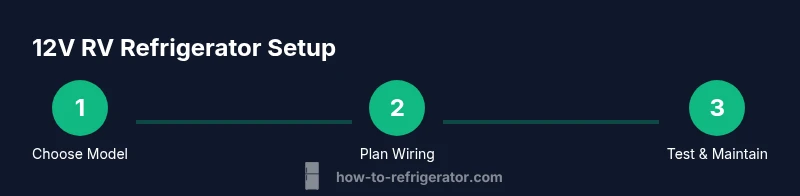
Determine typical daily fridge runtime and total storage. Compare energy ratings between models and ensure the chosen unit fits available space and venting. Consider the climate and how often you’ll open the door, which affects the thermodynamic load.
Tip: Estimate Ah/day: (fridge amps x hours of operation) + reserve for startup surges. - 2
Plan placement and ventilation
Choose a location with at least 2-3 inches of clearance on all sides for airflow. Ensure near a battery or power source to minimize voltage drop and wiring length. Avoid direct heat sources like ranges or direct sunlight.
Tip: Keep the condenser away from tight corners; better airflow equals better efficiency. - 3
Mount and secure the unit
Mount in a rigid frame or cabinet with sturdy brackets. Use vibration-damping pads to reduce noise and wear during vehicle movement. Ensure door alignment to prevent air leaks.
Tip: Double-check clearance for door swing and vent openings before final mounting. - 4
Wire to the 12V circuit safely
Run cable from the battery through a properly rated fuse, then to a switch or regulator. Use correct gauge, secure connections, and protect wires from movement and moisture. Avoid parallel extension cords that can introduce resistance.
Tip: Label the circuit and keep the fridge on a dedicated 12V circuit if possible. - 5
Configure thermostat and test start-up
Set the thermostat to mid-range; after power is connected, listen for compressor start and monitor voltage during startup. Check for even cooling across shelves and inspect seals for leaks once the interior reaches target temperature.
Tip: Allow the unit to reach operating temperature before loading perishables. - 6
Establish maintenance and monitoring
Create a simple routine: weekly checks on door seals, monthly temperature verification, and quarterly battery health reviews. Maintain a log for seasonal camping to anticipate power needs and adjust the load.
Tip: Keep a spare fuse and basic tools in the RV kit.
FAQ
Can I run a 12V RV refrigerator directly from a car battery?
Yes, a 12V fridge can operate from a vehicle’s battery, but it draws significant current. Prolonged use may deplete the battery and reduce driving range. Prefer a dedicated RV battery bank or a separate, stabilized 12V source for longer trips.
Yes, you can, but it’s best to have a dedicated RV battery setup to avoid draining your vehicle’s starting battery.
Do I need an inverter for a 12V fridge?
Not typically. A 12V fridge runs directly on DC power from the battery. An inverter is only needed if you want to run an AC-only fridge or accessories from 12V to AC. For most RV setups, using 12V wiring with a proper battery bank is sufficient.
Usually not; most RV fridges run on 12V DC directly from the battery.
What battery capacity do I need for typical trips?
Determine daily Ah usage by multiplying the fridge’s current draw (amps) by hours of operation, then add a reserve for startup surges. Aim for a battery bank that can cover several days of camping without frequent recharging if you’re off-grid.
Calculate your daily amp-hours and add a safety margin for startup; plan for several days of autonomy if off-grid.
Is it safe to run a 12V fridge while the engine is off?
Yes, but it will drain the battery. If you’re off-grid, ensure you have adequate solar or battery reserve. When driving, the alternator can recharge the battery, but don’t rely on it as the sole source if you have heavy cooling needs.
It’s safe, but mind the battery; use solar or a proper charging setup to keep up.
How do I troubleshoot a fridge that isn’t cooling?
Start by checking battery voltage, fuses, and wiring. Verify the thermostat setting and door seals. If the problem persists, consult the manufacturer’s troubleshooting guide or a qualified technician.
First check power, fuses, thermostat, and seals, then seek expert help if needed.
Can propane be used with a 12V RV refrigerator?
Some models support LP gas as a secondary mode to preserve battery life while maintaining cooling. If yours does, follow the user manual for safe LP operation and ventilation. Always ensure adequate gas system maintenance.
Some 12V fridges may use LP gas as a secondary option; check your model’s manual for safety.
Watch Video
Top Takeaways
- Plan power needs before buying an RV fridge
- Ensure adequate ventilation and cabinet clearance
- Wire with proper gauge, fusing, and safe routing
- Regularly monitor battery health and fridge performance
- Use seasonally appropriate strategies to save energy