RV 12 Volt Refrigerator: Troubleshooting and Maintenance Guide
A comprehensive How To Refrigerator guide to diagnose, repair, and maintain your rv 12 volt refrigerator. Learn power checks, battery health, ventilation, seals, and efficiency tips for reliable cooling on the road.


Goal: diagnose and improve performance of an RV 12-volt refrigerator. You’ll verify power availability, inspect fuses and wiring, test the 12V battery health, assess the control board and temperature settings, and review ventilation and door seals. This quick answer points to a step-by-step guide, safety reminders, and maintenance routines to keep your RV fridge cooling reliably whether you’re boondocking or parked.
Why RV 12 volt refrigerator performance depends on power
The performance of a rv 12 volt refrigerator hinges on the reliability of the vehicle power system. When you are boondocking or traveling, your fridge runs off the coach battery and energy must be allocated between driving, lighting, and other appliances. A healthy power lead from the alternator or converter, clean connections, and a healthy battery bank keep the compressor running smoothly and reduce temperature fluctuations. A healthy 12 volt system avoids the starter and inverter from fighting a losing battle against heat, noise, and inefficiency. According to How To Refrigerator, most issues begin with power supply problems or battery health rather than the fridge itself. Start by confirming that the vehicle is supplying 12V to the fridge circuit and that the main battery is charged. If the wiring is corroded or loose, the refrigerator may not start or may cycle erratically. In addition to power, airflow matters. A poorly vented condenser or obstructed grill adds heat and makes the compressor work harder, reducing cooling efficiency. Keep the area around the fridge clear and clean the intake and exhaust vents regularly. Finally consider the environment inside the camper; extreme heat, high humidity, or frequent door openings can push the system beyond its design, leading to reduced cooling performance. In this guide we outline practical checks, safe handling, and maintenance routines to help you get steady cooling from your rv 12 volt refrigerator.
Understanding the 12V vs. 120V cooling gap
RV refrigeration cooling paths differ when power comes from 12V DC versus 120V AC. A true 12V fridge relies on a direct current supply from the coach battery, so battery health and charging stability are critical. When connected to shore power or a converter that supplies 12V, the fridge may behave differently than when the engine is running. Efficiency, startup current, and runtime load vary between these modes. For travelers and campers, knowing how your unit negotiates these two modes helps prevent unexpected heat buildup and continual cycling. How To Refrigerator analysis shows that a surprising number of cooling issues stem from misinterpreting the available voltage, incorrect converter behavior, or battery degradation. Ensure you understand which mode your unit uses most often and adjust charging routines accordingly. By mapping your power sources to the fridge, you can prevent low voltage conditions that hamper cooling.
Diagnosing Power and Electrical Issues
Begin with the basics before diving into internal components. Confirm that the vehicle is providing stable 12V to the fridge circuit and that the battery bank is not discharged. Inspect fuses and circuit breakers in the RV’s power bay and any inline fuses near the fridge. Look for loose or corroded connections and test with a multimeter to verify voltage at the fridge terminals. If voltage is present but the fridge will not start, the problem may lie in the control board or wiring harness. Check for signs of wear, discoloration, or burnt smells. Safety first: disconnect power before touching any live wires. If you have access to a battery tester, verify the health of the coach battery and its ability to hold a charge under load. Weak batteries or a failing charger reduce cooling performance and shorten compressor life. Document your findings and proceed step by step to isolate the cause.
Checking the Cooling System: Thermostat, Defrost, and Ventilation
A well functioning cooling cycle begins with the thermostat. Verify that the set temperature is appropriate and that the thermostat sensor is not obstructed by dust or packaging. Many failures stem from a thermostat that reads inaccurately due to dirt or misplacement. If your unit offers a defrost cycle, ensure it operates correctly and that ice buildup is not blocking airflow. Ventilation is critical; inspect the condenser area for dust, lint, or debris and clear any obstructions. A clean condenser reduces compressor load and improves efficiency. Remember to allow the system to cycle and observe how quickly temperatures fall to the target range after adjustments. Poor airflow often masquerades as a cooling problem, so keep vents clear and maintain the recommended clearances behind and around the unit.
Inspecting Seals, Doors, and Storage Habits
Door seals and gaskets prevent warm air from entering the fridge cavity. Inspect seals for cracking, stiffness, or gaps that allow cold air to escape. If seals appear damaged, clean and reseal or replace them as recommended by the manufacturer. Misaligned doors can create air leaks; verify hinges and latching mechanisms are functional. Overloading the fridge or placing warm items inside can disrupt cooling; allow items to cool before storing and avoid frequent door openings. For best results, organize shelves to maximize air circulation and keep the interior clean to reduce odors and moisture that can affect performance.
Maintenance, Best Practices, and Efficiency Tips
Regular maintenance pays off in reliability and energy use. Clean the exterior and interior surfaces, wipe condensate trays if present, and check for unusual noises that could indicate a problem with the compressor or fan. Schedule routine checks of connections, fuses, and vent cleanliness. Maintain appropriate airflow around the appliance by keeping nearby storage lightweight and ensuring ventilation grills are unobstructed. Consider upgrading to a higher efficiency model or adding a solar charging system if you frequently travel in off grid situations. Consistent care helps extend the life of the rv 12 volt refrigerator and reduces the need for emergency repairs.
Common Scenarios: Boondocking, Travel, and Storage
Boondocking places higher demands on a 12V fridge due to limited charging opportunities. Plan battery reserve and monitor runtime to avoid deep discharge. During travel, vibrations can loosen fittings; inspect mounting hardware and wiring after rough roads. For long term storage, disconnect power and clean the interior, then leave doors slightly ajar to prevent mold. In all cases, adapt your cooling expectations to the environment and your power plan. A well maintained unit performs reliably in diverse camping situations.
Quick Troubleshooting Checklist and Next Steps
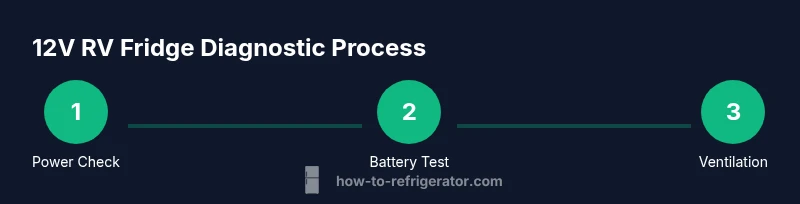
Use this condensed checklist to quickly assess your rv 12 volt refrigerator before calling for service. Confirm power is present at the fridge terminals. Test the battery with a load test and verify the charger is functioning. Inspect fuses, wiring, and ground connections. Check thermostat settings, defrost function, and condenser cleanliness. Ensure doors seal and hinges are intact. If the fridge still struggles to cool, document symptoms and consult a repair professional.
Tools & Materials
- 12V multimeter(Check voltage at fridge terminals and across battery bank)
- screwdriver set(Phillips and flat head for access panels)
- fuses and fuse tester(12V fuses; carry spare amp ratings)
- battery tester or load tester(Assess battery health and charge state)
- spare 12V fuses and connectors(For quick replacements)
- clean cloths and water(Vent and condenser area cleaning)
- silicone lubricant or seal conditioner(Maintain door seals)
- fridge thermometer(Monitor internal temperature accurately)
Steps
Estimated time: 60-90 minutes
- 1
Verify 12V power availability
Begin by confirming that the coach is supplying stable 12V to the fridge circuit and that the battery bank is not depleted. Inspect the main battery connections for corrosion or looseness and test voltage at the fridge terminals. If voltage drops or is absent, address power source or wiring first before touching internal components.
Tip: Power off the RV before disconnecting any conductors to avoid shock or shorts. - 2
Test battery health and charging
Use a battery tester to evaluate health under load, not just a resting voltage reading. Check the charger or converter for proper operation and ensure it delivers consistent output. If the battery shows weakness, replace or recharge before proceeding.
Tip: A healthy battery can dramatically improve cooling performance and reduce compressor stress. - 3
Inspect power wiring and fuses
Examine all visible wiring for wear, corrosion, or loose connectors. Remove and reseat fuses with the correct amp rating, and test for continuity. Replace any damaged harnesses or fuses to restore reliable power delivery.
Tip: Carry spare fuses and keep a wiring diagram handy for quick references. - 4
Check the thermostat and control settings
Verify thermostat set point is appropriate and that the sensor is unobstructed. If the thermostat has a diagnostic mode, use it to confirm operation. Incorrect settings can prevent proper cooling even with adequate power.
Tip: Avoid placing items directly over the sensor to prevent false readings. - 5
Evaluate ventilation and condenser cleanliness
Inspect the condenser area for dust, lint, or debris and clean carefully. Ensure intake and exhaust grills are unobstructed and that the fan can rotate freely. Poor airflow raises compressor workload and reduces cooling efficiency.
Tip: Do this every few months or after long trips in dusty conditions. - 6
Inspect seals and door alignment
Check door gaskets for cracks and elasticity. Align doors so seals meet evenly and reattach hinges if loose. A poor seal allows warm air to enter and defeats cooling.
Tip: Clean gaskets with mild soap solution and inspect for deformities yearly. - 7
Assess additional power sources and modes
If you rely on solar or an inverter, verify compatibility with the fridge and ensure voltage remains stable during operation. Inverters can introduce noise or voltage dips; monitor performance when switching modes.
Tip: Keep inverter cables short and rated for the load to minimize losses. - 8
Run a controlled test and monitor temps
After adjustments, run the fridge and monitor internal temperatures with the fridge thermometer. Allow a full cycle to judge stability and confirm cooling targets are met. If temperature does not stabilize, escalate with professional inspection.
Tip: Log temperatures over several hours to detect patterns and avoid misinterpretation.
FAQ
Why won’t my RV 12 volt refrigerator power on at all?
Begin by confirming power at the fridge terminals and testing the coach battery under load. Check fuses and circuit breakers in the RV. If voltage is present but the unit won’t start, the issue may lie in the control board or wiring harness.
First check the power at the fridge and the battery under load. If voltage is present but it won’t start, inspect the control board.
What tests should I perform to diagnose poor cooling on 12V operation?
Verify voltage stability, test battery health, inspect fuses, and clean vents. Confirm thermostat accuracy and ensure the condenser is free of debris. If temperatures stay high, investigate door seals and air flow paths.
Check voltage, test the battery, inspect fuses, and clean the condenser. If cooling remains poor, check the thermostat and seals.
Can I run a 12V RV fridge while connected to shore power?
Some models allow 12V operation when the coach is connected to shore power or via a converter that supplies 12V. Verify your unit’s wiring and converter configuration to avoid voltage mismatches that could harm components.
Yes, if your system provides stable 12V from shore power or a compatible converter. Check the setup to avoid voltage issues.
How do I replace a blown fuse on an RV fridge?
Power down the RV and locate the fuse panel or inline fuse near the fridge. Remove the blown fuse and replace with a fuse of the same rating. Recheck for proper operation and inspect the wiring for signs of damage.
Turn off power, swap in a fuse of the same rating, and test. Inspect the wiring if the fuse blows again.
Why is my fridge not cooling despite a healthy battery?
Electrical power may be reaching the unit but cooling components could be blocked or misconfigured. Check thermostat, vents, and condenser cleanliness. Verify the door seals and ensure there is adequate airflow.
If the battery is good but cooling lags, check thermostat, vents, and seals to ensure proper airflow.
Are there safety precautions for working with 12V appliances in an RV?
Always disconnect power before working on wiring. Use insulated tools and avoid working near water. Wear eye protection and keep flammable materials away from the fridge area.
Power off before work, use insulated tools, and keep the area dry and clean.
Watch Video
Top Takeaways
- Verify reliable 12V power before troubleshooting
- Check battery health and charging sources regularly
- Inspect seals, vents, and door alignment for proper sealing
- Regular maintenance extends fridge life and efficiency