LG Craft Ice Refrigerator Repair Guide
Troubleshoot and repair common LG Craft Ice refrigerators with our step-by-step DIY guide. Learn safe practices, tool lists, and maintenance tips from How To Refrigerator.


Goal: diagnose and fix common issues on LG craft ice refrigerators, such as not cooling, weak ice production, or unusual noises. You’ll need basic tools, safe access to the unit, and a plan to power down and test components. This guide shows you how to proceed, model-agnostic where possible.
Understanding the LG Craft Ice Refrigerator
LG's Craft Ice feature is designed to produce round ice using specialized molds and controlled chilling to deliver premium ice for beverages. When the system runs smoothly, it helps keep your cocktails pristine and your drinks properly cool. According to How To Refrigerator, keeping airflow clear, sealing doors effectively, and performing regular maintenance are crucial for consistent Craft Ice performance. This section explains what makes Craft Ice different, common failure points, and why a careful diagnosis matters before you dive into repairs. You’ll learn how sensor inputs, water supply, and condenser cleanliness all influence cooling capacity and ice production. Understanding these fundamentals helps homeowners decide whether a DIY fix is feasible or if a service call is wiser.
Common Issues and Diagnoses
Many LG Craft Ice refrigerators share a handful of recurring problems. Not cooling at all can stem from a failed compressor, a blocked condenser coil, or a simple thermostat misadjustment. Weak ice production often traces to blocked water lines, a clogged defrost drain, or aging ice molds. Unusual noises may indicate a loose panel, vibrating fan, or a failing condenser. Leaks around the water dispenser or ice maker frequently result from loose connections or damaged seals. In this section, you’ll find practical checks and a clear way to triage issues without jumping straight to disassembly. Remember to consult your model’s manual for specific wiring diagrams and service panels.
Safety and Prep Before Troubleshooting
Before any hands-on work, power safety is the top priority. Unplug the unit or shut off the dedicated fridge circuit to eliminate the risk of electric shock. If you must work with water lines, have a towel handy to manage spills and wear gloves to protect your hands. Clear the area of clutter and place a soft mat under any tools. This prep minimizes damage to finishes and helps you stay organized during diagnosis. How To Refrigerator recommends documenting each step with photos so you can reverse changes if something doesn’t go as planned.
Diagnostic Checklists for Not Cooling, Ice Maker, Leaks
A structured checklist helps prevent missed steps and unnecessary disassembly. Start by confirming the temperature settings are correct and the door seals are intact. Inspect condenser coils for dust buildup and clean them if needed to improve airflow. Check the ice maker’s mold trays and water valve operation, and make sure the defrost drain is clear. If you notice frost buildup on evaporator coils, it may indicate an airflow or defrost system issue. This section provides model-agnostic guidance that you can adapt to most LG Craft Ice configurations.
Proactive Maintenance to Extend Life
Maintenance is often the best defense against major repairs. Regularly clean condenser coils, check door gaskets for cracks or gaps, and replace the water filter per manufacturer recommendations. Keep the defrost drain clear to prevent ice jams and ensure even cooling. Schedule routine inspections of the ice maker mechanism and water line connections to catch wear before it becomes a leak or a failure. Small, consistent upkeep keeps your LG Craft Ice refrigerator operating at peak performance and reduces unexpected downtime.
AUTHORITY SOURCES
For further reading and official guidelines, consider these resources: ENERGY STAR refrigerator maintenance tips at https://www.energystar.gov/, the U.S. Consumer Product Safety Commission on appliance safety at https://www.cpsc.gov/, and LG’s official support pages at https://www.lg.com. These sources provide model-specific guidance, safety practices, and maintenance recommendations to supplement hands-on troubleshooting.
Tools & Materials
- Phillips screwdriver (PH2)(Used to remove access panels on LG Craft Ice models)
- Flathead screwdriver(Helpful for prying panels gently if needed)
- Multimeter(Test voltage at components like the compressor or thermistors)
- Gloves(Protect hands during handling and disassembly)
- Soft cloth(Wipe surfaces, remove fingerprints, and clean coils)
- Bucket or towel(Contain water during line work or defrost drainage checks)
- Replacement ice maker assembly (optional)(Only if diagnosing a defective ice maker unit)
Steps
Estimated time: 60-90 minutes
- 1
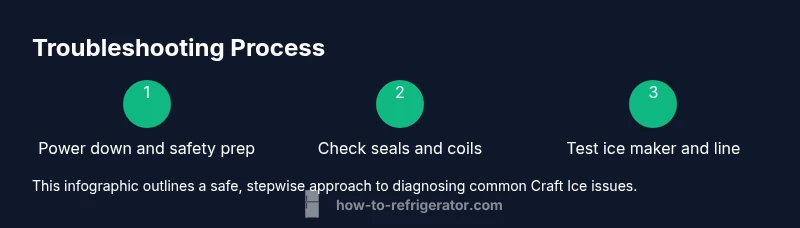
Power down and prepare
Unplug the refrigerator and switch off the nearby circuit if safe. Remove any movable shelves and lay a soft mat to protect surfaces. This reduces the risk of electric shock and keeps components clean as you begin inspection.
Tip: Take a photo of wire connections before unplugging to help reassemble correctly. - 2
Inspect door seals and gaskets
Check for cracks, gaps, or deformed seals around the doors. A poor seal can cause moisture ingress and frost, affecting cooling and ice production. Gently clean the gasket with mild soap and water; replace if damaged.
Tip: Perform the dollar-bill test: insert a bill at several points and close the door; if you can pull it out easily, the seal may be failing. - 3
Check condenser coils for dust
Locate the coils (usually behind the rear access panel or underneath) and remove dust with a soft brush or vacuum. Clean coils until they are free of debris to restore efficient heat transfer and cooling capacity.
Tip: Do this with the unit unplugged and avoid bending or damaging fins. - 4
Test ice maker mechanism
Listen for the ice maker motor and check for jammed molds or stuck gears. If ice isn’t ejecting, inspect the mold trays and water inlet valve for proper operation. Re-seat or replace components as needed.
Tip: If a frost layer forms on the ice mold, defrost and dry the area before retesting. - 5
Assess water line and filter
Inspect the water line for kinks or leaks and ensure the filter is not clogged. Replace the filter if it appears dirty, and purge the line to remove air that can block flow to the ice maker.
Tip: Run a brief water cycle to confirm water flow after replacing the filter. - 6
Reassemble and run test
Reconnect any panels, restore power, and monitor temperature and ice production for the next 1–2 hours. If conditions improve, you’ve likely addressed the issue; if not, consider a service call.
Tip: Document any changes you made and the outcomes to share with a technician if needed.
FAQ
What does 'Craft Ice' mean in LG refrigerators?
Craft Ice refers to LG's feature that produces round ice using specialized molds for premium beverage presentation. It relies on precise cooling and controlled water flow, which can be impacted by seals, filtration, and airflow.
Craft Ice is LG's feature for round ice using special molds, affected by seals, airflow, and water flow.
Why is my Craft Ice not making ice?
Common causes include a clogged water line, a faulty ice maker motor, or a closed water valve. First check the water supply, then inspect the ice mold and drainage; replace parts only if you’ve confirmed failure.
Ice not making is usually due to water flow issues or a faulty ice maker motor.
Is it safe to reset the LG Craft Ice refrigerator myself?
Yes, a controlled reset can resolve minor software glitches. Unplug the unit, wait 5–10 minutes, then plug back in. If problems persist, consult LG support.
You can reset by unplugging for a few minutes and reconnecting, but call support if issues repeat.
How often should I clean the defrost drain?
Check and clear the defrost drain when you notice frost buildup or standing water in the fridge. Regular checks prevent blockages and maintain airflow.
Clean the defrost drain when you see frost or water pooling.
Can I replace the ice maker assembly myself?
Only if you’re comfortable with basic appliance wiring and have model-specific guidance. Many LG Craft Ice issues stem from the ice maker; if unsure, a certified technician is advised.
It’s doable if you’re comfortable with wiring, but consider a pro for safety.
What maintenance reduces future repairs?
Regular coil cleaning, door seal inspection, and periodic filter changes minimize airflow issues and water blockages, extending the fridge’s life.
Routine cleaning and filter changes can prevent many common problems.
Watch Video
Top Takeaways
- Identify is essential: diagnose before disassembly.
- Keep safety first: unplug and protect yourself.
- Maintenance saves money: clean coils and seals regularly.
- Document steps and outcomes for future reference.