LG Service Refrigerator: Troubleshooting and DIY Fix Guide
A comprehensive, step-by-step guide for homeowners troubleshooting LG service refrigerator problems: not cooling, frost, leaks, and sensor issues. Includes tools, safety, diagnostics, DIY tips, and when to call a pro.


With this guide, you'll confidently diagnose and fix common LG service refrigerator issues. You’ll learn essential safety steps, how to test temperature and seals, and when to perform DIY repairs or call a pro. Gather a basic toolkit, unplug the unit before opening panels, and follow a clear, model-friendly procedure for reliable results.
Understanding LG service refrigerator basics\n\nLG service refrigerators rely on a few core systems to maintain safe, consistent temperatures: the sealed refrigerant circuit, the evaporator and condenser assemblies, the compressor (often inverter-based in modern models), and the electronic controls that regulate defrost cycles and fans. For homeowners tackling issues with an lg service refrigerator, knowing how these parts interact helps you diagnose symptoms quickly and safely. Start with a simple, model-aware mindset: identify what you can check without opening sealed sections, then determine if a symptom points to airflow, heat rejection, or sensor accuracy.\n\nIn most cases, the first questions are: Is the door sealing properly? Are the condenser coils free of dust? Is the freezer frost-free or showing ice buildup? If the unit is not cooling, check whether the fans are running and if the temperature setting is correct. While some LG models support user-accessible diagnostics, avoid bypassing safety features. This guide emphasizes safe, model-respecting checks that keep the warranty intact while giving you practical next steps.
Common symptoms and probable causes\n\nNot cooling or warm shelves is perhaps the most obvious sign an lg service refrigerator requires attention, but other symptoms deserve scrutiny. Frost in the freezer, uneven temperatures, water leaks, excessive running noise, and moisture on doors all point to different root causes. Here are typical scenarios and their likely culprits:\n- Not cooling: potential issues with condenser coil dirt, faulty temperature sensor, or a failing compressor.\n- Excess frost: ineffective defrost heater or defrost timer, or restricted airflow.\n- Leaks or pooling water: blocked defrost drain or clogged condensate pan.\n- Constant running: dirty condenser, low refrigerant (in rare cases), or faulty thermostat.\n- Door not sealing: degraded gaskets or misaligned doors.\n\nUse these indicators to guide your next steps, but remember that refrigerant leaks require certified technicians and may affect warranties.
Safety and initial checks you can perform\n\nAlways start by power-down and unplug the refrigerator before any inspection. This protects you from electrical shock and protects sensitive components. Do not attempt repairs if you hear hissing or smell refrigerant vapor—these are safety warnings that require professional service. After unplugging, wait a few minutes for capacitors to discharge, then locate the back panel or service access door according to your LG model. Keep track of screws and connectors, and work in a well-lit area. If you must move the unit, disconnect it completely from power and avoid tilting the appliance. Use a flashlight to inspect the condenser coils for obvious dust and pet hair buildup.
Diagnostic approach: tools and measurements\nA methodical diagnostic approach reduces guesswork. Gather a few basic tools and follow a process:\n- Temperature readings: use a digital thermometer to compare interior temps in both compartments; record for later comparison.\n- Visual inspection: check coil cleanliness and the fan behind the rear access panel.\n- Seals: test door gasket with a simple slip test (a piece of paper should resist easy withdrawal when closed).\n- Sensor checks: with a digital multimeter, measure the resistance of the evaporator temperature sensor if your model allows.\n- System checks: listen for abnormal fan or compressor noises, especially after a defrost cycle.\n\nDocument results and compare against your LG model’s expected ranges in the user manual or official support pages. If readings fall outside safe ranges, do not force components—call a pro.
DIY fixes vs. when to call a pro\nMany routine issues are solvable by homeowners, especially those related to cleaning, door seals, and simple sensor resets. However, never attempt to repair sealed refrigerant lines, compressor internally, or high-voltage components beyond basic inspection. If you suspect a refrigerant leak, a faulty compressor, or a failed sealed system, contact LG service or an authorized technician promptly. Remember: opening sealed panels could void warranties on some models; consult the owner's manual or How To Refrigerator's guidance before proceeding. For not-cooling symptoms caused by dirt or a stopped fan, you can often restore performance with coil cleaning and fan inspection.
Maintenance to prevent future issues\nPrevention is cheaper than repair. Schedule regular upkeep to keep an lg service refrigerator performing at its best. Clean condenser coils every 3–6 months or as needed, especially in households with pets or dusty environments. Inspect door seals weekly for flexibility and proper closure, and replace gaskets promptly if you notice cracks or stiffness. Keep the coil fan unblocked; ensure adequate clearance around the back of the unit so hot air can dissipate. Finally, set temperature targets within manufacturer recommendations and avoid frequent door openings during peak hours. A small daily habit—checking airflow and seals—extends the life of your appliance.
Authority sources\nLG's official support pages for service guidelines and safety precautions are good starting points for model-specific steps. Government energy and safety agencies also offer broad best practices for appliance maintenance and safe repair work. For reference, see the following sources:\n- https://www.energy.gov/\n- https://www.cpsc.gov/\n- https://www.osha.gov/
Tools & Materials
- Digital multimeter(for testing sensors and circuits)
- Phillips head screwdriver (PH2)(for service panel screws)
- Flat-head screwdriver(optional for prying panels)
- Nut driver set (1/4" or 6mm)(for condenser panel screws)
- Soft brush or coil cleaning brush(dust removal from coils)
- Microfiber cloth(for wiping dust and spills)
- Electrical tape or wire nuts(optional for sensor wiring)
- Flashlight or headlamp(extra lighting)
- Owner manual or service manual (digital)(model-specific guidance)
Steps
Estimated time: 60-90 minutes
- 1
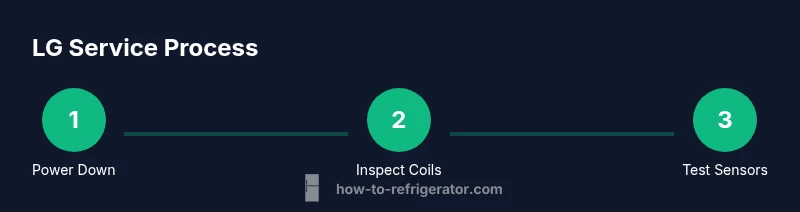
Power down and access panels
Unplug the fridge and switch off any surge protection. Wait 5–10 minutes for capacitors to discharge, then locate the service panel according to your LG model. Remove screws carefully and label connectors to ease reassembly.
Tip: Take photos or label wires before disconnecting anything to simplify later reconnection. - 2
Inspect condenser coils and fans
With the back panel removed, inspect the condenser coils for dust and lint. Use a soft brush or cloth to remove buildup and check that the cooling fan spins freely when powered. Reassemble if coils are clean and the fan moves smoothly.
Tip: Never use a metal object to scrape coils; this damages fins and reduces airflow. - 3
Check door seals and alignment
Close the doors on a slip of paper test; if the paper pulls out easily, gasket integrity may be compromised. Inspect gaskets for cracks and ensure doors align properly; replace seals if needed.
Tip: Clean gasket surfaces with a damp cloth before re-testing the seal. - 4
Test sensors and basic electronics
If you have a model that allows sensor testing, use a multimeter to measure the evaporator temperature sensor's resistance and compare with the manual's specs. Check wiring for loose connections or damaged insulation.
Tip: Only test with the power off when disconnecting sensors; otherwise, risk electric shock. - 5
Run a defrost check if frost is present
If frost buildup blocks airflow, perform a controlled defrost cycle per your model’s guidelines and observe whether frost clears and airflow improves.
Tip: Do not manually chip frost; this can damage the evaporator and drain a refrigerant charge. - 6
Reconnect and monitor performance
Reconnect safely, power up the unit, and monitor temperatures for 24–48 hours. Confirm both compartments stay within typical ranges and frost does not redevelop.
Tip: Keep a log of temperatures and any recurring symptoms for future service needs.
FAQ
Is it safe to DIY LG refrigerator repairs?
DIY repairs can handle non-sealed components like cleaning coils or checking door seals. Do not open sealed refrigerant lines or work on high-voltage circuits unless you are trained. Always consult the manual and consider professional service for safety-critical tasks.
DIY repairs are okay for simple tasks like cleaning coils, but avoid sealed refrigerant work or high-voltage components. If in doubt, call a pro.
What are the most common LG fridge not cooling causes?
Common causes include dirty condenser coils, faulty temperature sensors, failed defrost components, or a blocked airflow path. Verifying airflow and cleaning coils often restores cooling, but refrigerant issues require professional service.
Dirty coils or a faulty sensor often cause not cooling; defrost or airflow problems are also frequent culprits.
How do I know if the problem is a defrost issue?
Frost buildup on the evaporator, reduced airflow, and inconsistent temperatures suggest a defrost issue. Check the defrost heater and timer per the model’s guidance, and run a controlled defrost if recommended.
If you see frost blocking airflow, a defrost problem is likely and should be tested per your model’s instructions.
Can a dirty condenser coil cause not cooling?
Yes. Dirt and dust reduce heat rejection, causing the compressor to work harder and temperatures to rise. Cleaning coils regularly improves efficiency and cooling performance.
Dirty coils can make a fridge not cool well; clean them to restore efficiency.
Should I attempt to reseal doors myself?
If gaskets are cracked or deformed, replacement is usually needed. Minor adjustments can sometimes help, but avoid forcing misaligned doors which can cause leaks.
Door seals sometimes need replacement; don’t force misaligned doors.
How often should I perform maintenance on an LG fridge?
Perform a light maintenance check every 3–6 months: clean coils, inspect seals, and verify temperatures. More frequent cleaning is advised in dusty or pet-rich homes.
Do a quick check every few months to keep it running well.
Watch Video
Top Takeaways
- Identify symptom and probable cause before acting
- Prioritize safety and unplugging before inspection
- Clean and inspect coils, seals, and sensors regularly
- Know when to DIY and when to contact LG service