Repair of LG Refrigerator: A Homeowner's Step-by-Step Guide
A practical, safety-first guide for diagnosing and repairing common LG refrigerator issues at home, with step-by-step instructions, tools, tips, and advice on when to call a professional.


With this guide, you’ll complete the repair of lg refrigerator issues at home. It covers common symptoms, safety prep, and a clear step-by-step process, plus when to DIY vs. call a pro and the essential tools you’ll need. We’ll emphasize safety, electricity, proper measurements, and when to replace parts rather than attempt risky fixes.
Understanding the repair landscape for LG refrigerators
The repair landscape for LG refrigerators is diverse, reflecting a range of models, features, and energy-saving technologies. Homeowners often encounter issues that seem complex but break down into repeatable patterns. The phrase repair of lg refrigerator captures a broad category that includes cooling problems, frost buildup, defrost system faults, ice maker failures, and door-seal leaks. While some LG units incorporate smart electronics and sensors, many root causes boil down to well-known mechanical and electrical principles: blocked condensers, faulty fans, degraded gaskets, and improper temperature regulation. By understanding these core causes, homeowners can decide which tasks are safe DIY fixes and which warrant professional service. This guide maintains an actionable focus so you can diagnose symptoms, prepare your workspace, and pursue effective repairs without risking damage to your appliance or personal safety. Along the way, you’ll learn how to interpret error codes, perform basic checks, and document the repair steps for future maintenance. The aim is to empower you to handle routine repairs confidently and to know when a more advanced intervention is needed. In this context, the repair of lg refrigerator is not a single task but a workflow of inspection, verification, and careful substitution of parts if necessary, all grounded in practical, at-home expertise. The approach balances cost, time, and reliability while keeping safety at the forefront for homeowners who want durable, safe outcomes.
Common LG Refrigerator Problems and Causes
LG refrigerators commonly present several predictable problems that—when understood—guide effective repair strategies. Not cooling is often due to a dirty condenser coil, a failed fan, or a faulty thermostat causing the compressor to run continuously without adequate heat exchange. Frost buildup can indicate a defrost timer, heater, or sensor malfunction, or an air leak that allows moisture to accumulate inside the freezer section. A water leak usually points to a clogged defrost drain, a damaged water line, or a faulty door seal that allows humid air to enter. Ice maker issues may trace back to a blocked water inlet valve, a kinked supply tube, or low water pressure. Unusual noises often stem from a failing compressor, a worn condenser fan blade, or a loose motor mount. By mapping symptoms to likely causes, you can prioritize checks and avoid unnecessary disassembly. In some LG models, software glitches or sensor faults may trigger irregular temperature readings or self-diagnostic codes. While every model is different, the underlying principle remains the same: thorough observation, careful testing, and targeted component checks yield the most reliable path to repair. The idea of the repair of lg refrigerator is to convert a complex system into a sequence of testable hypotheses and practical fixes that a homeowner can perform with standard tools and reasonable caution.
Safety and Prep: Tools, Power, and Workspace
Before attempting any repair, safety should always come first. Start by unplugging the unit and turning off any nearby circuit breakers if you’re accessing components near the power supply. Remove food safely and keep it cold with a cooler if needed, so you don’t compromise food safety. Create a clean, well-lit work area with a dry surface and a tray to hold small screws or fasteners. Disconnect power to prevent electric shock, and never work on live electrical components. Use insulated tools, wear safety gloves, and avoid metal jewelry that could snag components or conduct electricity. If you must drain condensate, use a container to collect water and wipe up spills promptly to prevent slips. When you’re ready to inspect seals and coils, label shelves and keep track of any removed parts. A careful layout helps you reassemble later and reduces the risk of misplacing components. Remember, some tasks involve refrigerant lines or sealed systems that require specialized equipment or professional handling. In many cases, simple visual inspections and basic cleaning can prevent further issues, but if you encounter refrigerant smells, hissing sounds, or a persistent malfunction, stop and contact a qualified technician. The goal is to place safety and methodical thinking at the center of every repair, reducing risk and increasing the likelihood of a successful outcome. This approach is especially important for the repair of lg refrigerator systems that integrate electronics with mechanical components, where a careful, steady method yields the best results.
Diagnostic Framework: How to Identify the Root Cause
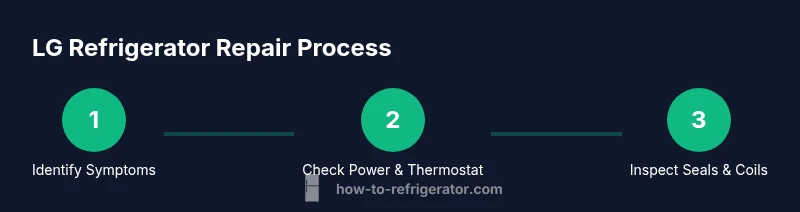
A systematic diagnostic framework helps pinpoint root causes without unnecessary part replacement. Start with symptom verification: confirm whether the fridge or freezer is cold enough, whether there is frost accumulation, and whether there are water leaks around the base, ice maker, or door seals. Check the power supply and ensure the unit is receiving consistent voltage. If the compressor runs constantly or cycles oddly, inspect the evaporator and condenser coils for dirt buildup, which can impede heat transfer. Visually inspect door gaskets for cracks and warping; a simple dollar-bill test can reveal air leaks around the door seal. Temperature readings offer important clues: set the refrigerator to the manufacturer’s recommended range, then measure actual temps with a calibrated thermometer. If readings don’t align, the thermostat or sensor may be faulty. For frost issues, inspect the defrost drainage system for clogs and ensure the defrost heater is functioning. Check the defrost timer and control board for signs of wear or fault codes if available. In some LG models, a minor software reset or reinitialization can clear intermittent faults, but avoid unnecessary resets that erase configurations. This diagnostic strategy focuses on observable symptoms paired with safe, practical tests that you can perform with household tools. The central idea behind the repair of lg refrigerator is to translate symptoms into a structured plan, followed by careful verification of each suspected component before replacement.
Maintenance and Long-Term Care to Extend Lifespan
After you’ve addressed immediate issues, adopt a maintenance routine that helps prevent future breakdowns. Regularly vacuum or brush dust from condenser coils—typically located at the back or beneath the fridge—to improve heat exchange and reduce energy use. Inspect door gaskets for signs of wear and clean them with mild soap to maintain a proper seal; replace if plastic bulges or cracking are evident. Keep the interior organized to reduce door-open time and maintain stable temperatures. Clear the defrost drain annually and monitor the drainage path to prevent clogs that cause frost or water accumulation. Check the ice maker supply line for kinks or leaks, especially if you notice irregular ice production or slow filling. Calibrate the temperature controls if your model supports it, and verify that the display or app-based interface shows the correct set points. Consider scheduling professional maintenance every 2–3 years for a more thorough inspection, especially if your LG refrigerator has advanced features like variable-speed compressors or multi-sensor systems. By combining proactive care with prompt troubleshooting, you’ll improve efficiency, extend lifespan, and reduce the likelihood of escalating problems. The repair of lg refrigerator is not a one-off event; it’s part of an ongoing maintenance mindset that sustains performance and food safety.
Authority Sources
For further reliability and depth, consult reputable, authoritative references. These sources provide foundational guidance on appliance efficiency, safe handling of household refrigerants, and general repair best practices. Energy principles and safety guidelines from government and educational institutions help homeowners align practical repairs with best practices. For more detailed information, see:
- https://www.energy.gov/
- https://www.epa.gov/
- https://www.nist.gov/
Note: Always cross-check model-specific manuals and LG’s official support resources for steps that apply to your exact unit and warranty terms.
Tools & Materials
- Flat-head and Phillips screwdrivers(Assorted sizes (1/8" to 3/16") for accessing panels)
- Multimeter (digital)(Test voltage and continuity on sensors and boards)
- Nut drivers and pliers(Remove fasteners and handles safely)
- Vacuum or soft brush(Clean dust from coils and fins without bending them)
- Torx/Allen keys(Model-specific screws may require these)
- Digital thermometer(Accurately capture fridge/freezer temps)
- Flashlight or headlamp(Inspect dark compartments and coils)
- Gloves and safety glasses(Personal protection during repair)
- Replacement parts as needed(Coils, seals, or valves must be evaluated first)
- Buckets or towels(Contain condensation and spills)
Steps
Estimated time: 60-90 minutes
- 1
Power Down and Access the Interior
Unplug the refrigerator and move per manufacturer guidelines. Remove shelves to access coils and fans. This step prevents electric shock and gives you clear access to key components for inspection.
Tip: Use two hands when lifting shelves to avoid bending glass or trim. - 2
Check Thermostat and Temperature Settings
Verify that the thermostat is set within the recommended range (roughly 34-38°F for the fresh food compartment and 0-5°F for the freezer). If temps are off, adjust the dial and monitor for 24–48 hours to confirm improvement.
Tip: Test with a digital thermometer to confirm accuracy before changing other components. - 3
Inspect Door Seals and Gaskets
Examine door gaskets for cracks, tears, or warping. Use the dollar-bill test to check for air leaks. Replace the seal if you can feel air slipping out when the door is closed.
Tip: Clean gaskets with mild soap and water to ensure a good seal before replacement. - 4
Assess Condenser and Evaporator Coils
Locate the condenser coils (back/bottom) and the evaporator fins inside. Look for excessive dirt or frost buildup. Clean coils gently and check for frost that indicates a defrost issue.
Tip: Avoid bending fins; use a soft brush or vacuum with a brush attachment. - 5
Evaluate Defrost System and Drains
Check the defrost drain for clogs and ensure the defrost heater is warming properly. If ice blocks the drain, melt it safely and clear the channel to prevent recurring frost.
Tip: Do not use sharp objects to clear drains; use a pipe cleaner or flexible wire. - 6
Decide Between DIY Fix or Professional Help
If tests point to a sealed system, refrigerant leak, or a failed compressor, contact a licensed technician. Document symptoms, model number, and any error codes to share with the pro.
Tip: Keep a repair log for future reference and warranty validation.
FAQ
What are the most common signs that my LG refrigerator needs repair?
Not cooling, unusual frost, water leaks, odd noises, and error codes on the display are typical indicators that your LG refrigerator may need attention. Start with a safety check and a visual inspection before testing electrical components.
Common signs include not cooling, frost buildup, leaks, noises, and error codes. Start with safety checks and visual inspections before testing components.
Can I fix not cooling by myself?
Not always. Some cooling issues are caused by dirty coils or seals and are DIY friendly with basic tools. More complex problems like a faulty compressor or sealed-system leaks require a licensed technician.
Sometimes you can fix not cooling yourself if it’s simple like cleaning coils, but complex issues need a pro.
Are LG refrigerator parts affordable for DIY repairs?
Part costs vary by model and component. Common items like door seals or water inlet valves are typically affordable, while compressors or sealed-system components are more expensive and often warrant professional installation.
Parts costs vary; seals and valves are usually affordable, while compressors are pricier and often require a pro.
How long does a typical LG refrigerator repair take?
A straightforward DIY fix can take 1–2 hours, including safety prep and reassembly. More complex repairs can extend to several hours or require scheduling a technician.
Most simple DIY repairs take 1–2 hours; complex fixes may take longer or need a pro.
Should I hire a professional for defrost problems?
Yes, if defrost issues persist after basic checks or if you suspect a defective defrost timer, heater, or sensor. A professional can verify refrigerant integrity and safety.
If defrost problems continue after basic checks, it’s best to call a pro to assess timers, heaters, or sensors.
What safety steps are essential before starting repairs?
Unplug the unit, drain any condensation safely, wear protective gear, and work on a dry surface. Avoid handling refrigerant or sealed-system components unless you’re licensed.
Always unplug, drain safely, wear protection, and avoid handling sealed refrigerant components unless licensed.
Watch Video
Top Takeaways
- Diagnose symptoms before parts replacement.
- Safety comes first: unplug, dry workspace, and protect yourself.
- Coil cleanliness and door seals are common, fixable causes.
- Document issues and outcomes to guide future maintenance.
- Know when to call a pro to avoid risky repairs.