Fridge with Ice Maker: Troubleshooting & Maintenance
Comprehensive guide to diagnosing, repairing, and maintaining a fridge with ice maker. Learn common problems, step-by-step fixes, maintenance tips, and safety precautions for homeowners.


With this guide, you will diagnose, repair, and maintain a fridge with ice maker. You’ll learn how to verify the water supply, reset the ice maker, clear jams, and perform safe maintenance. This approachable, step-by-step approach helps homeowners restore ice production quickly and safely, reducing unnecessary replacements. The quick checks cover common issues and prevention.
How a fridge with ice maker works
Most residential ice makers are integrated into the freezer compartment and rely on a small ice mold that fills with water, a heater that loosens ice, and a sensor to stop filling when ice reaches the mold. A cold-water supply line delivers water from the house into the freezer. The control board coordinates the cycle: fill, freeze, eject, and refill. Understanding this flow helps you identify where trouble starts, whether the issue is a shut-off valve, a frozen line, or a failed heater. In many models, the ice maker completes a cycle every 60 to 90 minutes, but timing varies with ambient temperature and usage. Regular maintenance and careful inspection can prevent many common failures.
According to How To Refrigerator, the most frequent ice-maker faults involve water supply problems, clogged defrost drains, or a failed heater, which guides where you should start your troubleshooting.
Signs your ice maker needs attention
- No ice production or very slow ice output.
- Ice is hollow, small, or misshapen.
- Ice cubes are stuck in the ice bin or the bucket fills with water.
- Frost or moisture around the ice maker, or a noticeable water leak.
- Unusual noises when the ice maker tries to fill or eject ice.
These symptoms point to issues with water supply, mold, or electrical cycling. Start with the simplest checks (switch position, bin status) and progress to more involved inspections if symptoms persist.
Inspecting the water supply and lines
Begin by locating the shut-off valve behind the fridge and ensuring it is fully open. Check the water line for kinks or bends that could restrict flow. Disconnect and reconnect the line at both ends to reseat fittings, then inspect for microscopic cracks or wear. Replace any damaged tubing. If you have a water filter, replace it if it’s clogged or overdue. After adjustments, run the water through the line to purge air pockets before testing the ice maker again.
Checking the ice mold and heating element
Ice maker molds can freeze shut if the freezer is too cold or if the heater on the mold is not warming properly. Inspect the mold for frost buildup; if frost is present, allow the freezer to reach the recommended temperature and run a manual cycle to melt excess ice. Check the heater element for continuity with a multimeter if you are comfortable with electrical checks. Replace the ice-maker housing if the mold or heater shows visible damage or persistent failure.
Clearing jams and defrost drains
Ice jams can block the ejector arm, causing ice to stall mid-cycle. Use a plastic tool to gently free any ice blocking the mechanism; do not use metal tools that could bend or break parts. A blocked defrost drain can cause frost to back up into the ice maker. Clear the drain line using warm (not boiling) water poured through the drain cap, then flush with a gentle stream of water to ensure flow.
Replacing or repairing the ice maker module
If the ice maker motor or control module seems unresponsive after basic checks, consider replacing the ice maker module or the entire ice-maker unit. This is often more cost-effective than component-level repairs. Before replacing, confirm compatibility with your fridge model and follow the manufacturer’s wiring diagrams. If you are uncomfortable with electrical work, it is wise to hire a technician.
Maintenance schedule and best practices
Create a simple routine: inspect the water line every 6–12 months, replace the water filter per the manufacturer’s schedule, and clean the ice mold and bin every 3–6 months. Keep the freezer at the recommended temperature to ensure consistent ice production. Document any recurring issues to help a technician diagnose the problem quickly if professional service is needed.
Tools & Materials
- Screwdriver set (Phillips and flat-head)(For removing ice maker housing screws)
- Adjustable wrench(For water line fittings)
- Needle-nose pliers(For clips and small connectors)
- Multimeter (optional)(Electrical checks on heater or motor)
- Flashlight(To examine mold and heater area)
- Towel or rag(Absorb spills and condensation)
- Plastic tool or pry tool(Non-metal for freeing jams)
- Container for ice maker components(Keep parts organized during replacement)
Steps
Estimated time: 45-90 minutes
- 1
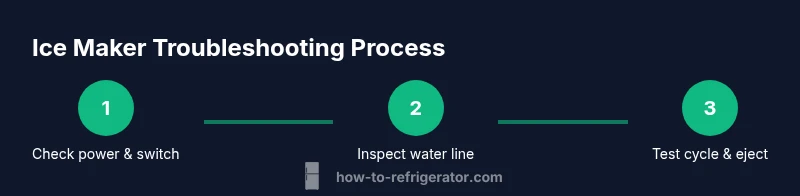
Check switch and bin
Locate the ice maker switch and confirm it is in the ON position. Check the ice bin to ensure it is seated correctly and not overflowing. If the switch was OFF, turn it ON and wait for the next cycle.
Tip: A quick reset can resolve many intermittent issues. - 2
Inspect water supply line
Follow the water line from the back of the fridge to the valve. Look for kinks, leaks, or loose connections. Detach and reattach fittings to reseat seals if needed.
Tip: Turn the water supply OFF before disconnecting any fittings. - 3
Check the ice mold and heater
Inspect the ice mold for frost buildup. If frost is present, allow the freezer to stabilize and run a cycle to melt excess ice. Use a meter to test heater continuity if accessible.
Tip: A small amount of frost isn’t unusual, but persistent frost indicates a heater issue. - 4
Clear jams and drain
Gently free any jammed ice using a nonmetal tool. Inspect the defrost drain for clogs and flush with warm water until it flows freely.
Tip: Never force ice out with metal objects; you could bend the ejector. - 5
Test the cycle
Return power to the ice maker and run a full cycle: fill, freeze, and eject. Observe whether ice is produced and ejected smoothly.
Tip: Record the cycle time for future troubleshooting. - 6
Decide on repair vs replacement
If cycles are erratic or the motor/board shows damage, consider replacing the ice maker module or unit. Check compatibility with your model before purchasing.
Tip: A mismatched unit can cause ongoing issues. - 7
Schedule maintenance
Set a routine: check lines, replace filters, and clean molds every few months to prevent future problems.
Tip: Regular maintenance saves money over time.
FAQ
Why isn't my ice maker producing ice?
Common causes include a shut-off switch, water supply issues, a clogged defrost drain, or a failed mold heater. Start by verifying the switch and water line, then inspect the mold area for frost buildup.
If you’re not getting ice, first check the ice maker switch and water line. If those seem fine, inspect the mold and defrost drain for frost or clogs.
Why is the ice maker producing small or hollow ice?
Small or hollow ice often indicates under-filled molds, improper water pressure, or a weak heater. Check the water line for full flow and listen for proper ejector action during a cycle.
Small ice usually means the mold isn’t filling fully. Check water flow and the heater cycle during a test run.
Why is water leaking near the ice maker?
Leaks can stem from loose connections, a cracked supply line, or a faulty inlet valve. Tighten fittings, replace damaged hoses, and test for drips after reassembly.
Leaks usually come from loose hoses or a damaged line. Tighten connections and test for drips after reassembly.
Can I fix an ice maker myself or should I hire a technician?
Many non-electrical fixes can be done by homeowners, such as clearing jams, reseating lines, and cleaning molds. If electrical components or refrigerant work is involved, hire a technician.
You can handle many fixes yourself, but for electrical or refrigerant work, call a pro.
How often should I replace the water filter to keep ice fresh?
Replace the water filter according to the manufacturer’s schedule, typically every 6–12 months, or sooner if you notice reduced ice quality or pressure.
Change the water filter on schedule or sooner if ice quality drops.
Watch Video
Top Takeaways
- Start with the water supply and bin status.
- Clean and inspect the mold and drain regularly.
- Decide between repair or replacement based on component condition.
- Unplug before any service and follow safety precautions.
- Schedule routine maintenance to prevent surprises.