Whirlpool Refrigerator Filter Change: The Complete How-To
Learn how to safely change your Whirlpool refrigerator water filter with our step-by-step guide. Find model compatibility, tools needed, timing tips, and disposal guidance for clean, fresh water and ice.


Change a Whirlpool refrigerator water filter by identifying the correct cartridge, turning the old filter counterclockwise to remove, installing the new cartridge with the proper orientation, and flushing the system to clear air and any loose particles. You’ll need a replacement filter, a towel, and basic tools if your model uses a wrench. This quick guide covers every step for safe, clean water.
Whirlpool Refrigerator Filter Change: Why it matters
According to How To Refrigerator, regular filter changes protect water quality and maintain ice-maker efficiency. A Whirlpool fridge relies on the filter to capture particulates and chlorine taste; when the filter gets old or clogged, flow slows and taste can degrade. This guide explains why filters matter across common Whirlpool configurations and what to look for when you suspect it's time for a change. By staying on schedule, you preserve water quality, protect downstream components, and extend the life of your fridge. Regular changes also prevent mineral buildup that can affect ice maker performance and clog waterways. If you notice slower water flow, unusual tastes, or cloudy water, it’s a clear signal that it’s time to inspect or replace the cartridge. A fresh filter helps your appliance run efficiently and keeps drinking water safe for your family.
Find the right filter for your Whirlpool model
Whirlpool and its compatible brands use several cartridge styles. The first step is to identify your exact model number, which is usually found on the interior wall or the door frame. Once you know the model, check the filter location—many Whirlpool units house the filter in the grille at the bottom front, while others conceal it inside the fresh-food compartment. Look for labeling on the current filter that indicates the part number or cartridge type (for example, “Whirlpool/EveryDrop” family). If you’re unsure, consult the model’s owner manual or the official Whirlpool support site. Choosing the correct filter is essential: a mismatch can affect water quality, reduce flow, or cause leaks. If you do switch between brands, ensure the replacement is explicitly rated as compatible with your model. After selecting the right cartridge, verify you have the replacement on hand and plan a quick 10–15 minute session to complete the swap.
How to identify model compatibility and avoid mistakes
Compatibility hinges on the exact model and the sequence of the cartridge family. Start by noting your refrigerator’s model number, then cross-check the filter compatibility list on Whirlpool’s site or in the manual. Some Whirlpool models use a standard size, while others require a specific filtration media. Avoid forcing a filter that doesn’t match the housing, as this can cause leaks or damage the seal. If you see a model number on the current filter, use that to source a direct replacement. When in doubt, contact customer support or visit an authorized parts retailer. Always inspect the O-ring seal for cracks or deformation and ensure you purchase the correct flow rate rating for your water supply. A small mismatch here can lead to reduced flow or uncomfortable tastes.
Tools, safety, and prep steps before you begin
Before you start, gather your tools and protect your workspace. A towel or small tray catches drips and protects the floor or cabinet. If your model uses a quick-release filter, a filter wrench may not be necessary, but some variants benefit from a light tool-assisted twist. Turn off the water supply to the fridge to prevent leaks during removal. If your unit is built into a cabinet with a plugged water line, you may be able to shut off water at the under-sink valve. Wipe down the area around the filter housing and have a clean cloth handy to remove residual moisture. Finally, if your model has a filter indicator, keep a note of its current status so you can reset it after completing the replacement. These safety steps help minimize spills and ensure a smooth change.
Step-by-step overview of the change process
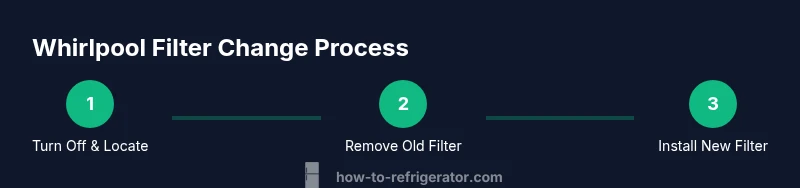
This section provides a concise roadmap of the procedure so you know what to expect before starting. Begin by turning off the water supply and locating the filter. Remove the old cartridge with a gentle twist or pull, depending on the model. Prepare the new filter by removing packaging and inspecting the O-ring. Install the new cartridge in the correct orientation, pushing it in fully and giving a slight twist to lock. Reconnect the water line and run the dispenser until clear water flows to purge air. Finally, reset any indicator if your model includes one and check for leaks over the first few minutes of use. For most households, this sequence takes about 15–25 minutes from start to finish.
Common issues after replacing a filter and how to fix them
Even with care, you might encounter leaks, air in the line, or weak water flow. If you see drips around the housing, tighten the filter a quarter turn while watching for strain on the seal. Air pockets can be purged by running water through the dispenser for several minutes until a steady flow returns. If water quality remains poor after replacement, verify the filter is the correct type for your model and ensure it’s fully seated. Some users notice a temporary sulfur or taste issue that dissipates after flushing. If the problem persists, re-check the installation steps and consider re-flushing.
Maintenance tips to maximize filter life
To extend filter life and maintain water quality, replace filters on a schedule aligned with your usage and local water quality. Keep a spare filter on hand to avoid delays. Label the replacement date on the cartridge and set a reminder in your calendar. Store extra filters in a cool, dry place away from direct sunlight. Periodically inspect the filter housing for cracks or wear and replace any damaged seals. After a change, run several cycles of water to ensure consistent taste and flow, and monitor the indicator light (if applicable) for accurate performance.
Safety and disposal considerations
Handle used filters with care and dispose of them according to local guidelines. Used cartridges can contain sediment and contaminants, so place them in a bag before discarding. Never reuse an old filter or reuse a cartridge that shows signs of wear, including cracks or deformities on the housing. Always follow the manufacturer’s disposal recommendations, especially if your local waste authority provides guidance on handling spent water filters. If you are replacing a filter as part of a warranty service, retain the receipt and note the installation date as part of your records.
Tools & Materials
- Whirlpool-compatible water filter cartridge(Confirm compatible model/part number for your Whirlpool refrigerator.)
- Clean towel or small tray(Protect surface and catch drips during replacement.)
- Gloves (optional)(Keeps hands clean; not strictly required.)
- Filter wrench (optional)(Use only if your model requires a wrench for removal.)
- Bucket or cup (for flushing)(Collect water during initial flush after installation.)
Steps
Estimated time: 15-25 minutes
- 1
Shut off water and locate filter
Turn off the fridge water supply to prevent leaks. Open the refrigerator door and locate the filter housing—this could be in the grille at the bottom front or inside the fresh-food compartment. Identifying the exact location helps you perform the removal with minimal mess.
Tip: Have a towel ready and know your model’s filter location before you start. - 2
Remove the old filter
Carefully twist the old filter counterclockwise (or pull straight out if your model uses a push-in design). Take note of the orientation markings on the cartridge so you can install the new filter the same way. Prepare to catch any residual water that might escape.
Tip: If it’s stubborn, pause and confirm you’re turning the correct direction; forcing can damage the housing. - 3
Dispose of the old filter
Place the old cartridge in a bag or container to prevent drips. Do not reuse the old filter. This is a good time to inspect the filter housing for debris or wear on the O-ring.
Tip: Check the O-ring for cracks or deformation before inserting a new cartridge. - 4
Prepare the new filter
Remove packaging and protective caps from the new cartridge. Inspect the O-ring and rinse the filter lightly if the manufacturer suggests; do not use soap. Confirm the correct orientation based on model markings.
Tip: Avoid touching the O-ring with dirty hands; handle the clean exterior only. - 5
Install the new filter
Insert the new cartridge into the housing, aligning it with the orientation arrows. Push in firmly and rotate clockwise or until it clicks into place, depending on the design. Ensure it is fully seated to prevent leaks.
Tip: If you hear a click, stop applying force to avoid over-tightening. - 6
Flush the new filter
Reconnect the water supply and run water through the dispenser for 3–5 minutes, or until the water runs clear. This purges air and any loose carbon fines from the new cartridge.
Tip: Discard the first several cups of water to ensure clean output. - 7
Check for leaks and reset indicator
Wipe the area and monitor for leaks for the first few minutes. If your model has a filtration indicator, reset it according to the owner’s manual. Replace the cover and return the dispenser to normal operation.
Tip: If leaks appear, reseat the filter and verify the orientation; a slight readjustment may stop the leak.
FAQ
What tools do I need to change a Whirlpool fridge filter?
Typically, you need the new filter and a towel to catch drips. Some models may require a filter wrench. Check your model’s manual for specific requirements.
You’ll usually need the new filter and a towel; some models use a small wrench if needed.
Where is the Whirlpool water filter located on my model?
Most Whirlpool models place the filter in the grille at the bottom front or inside the refrigerator. Look for labeling on the current filter or consult the manual.
Check the grille at the bottom front or inside the fridge; the label on the current filter helps you find the right spot.
How often should I replace Whirlpool filters?
Typically every 6 to 9 months, depending on usage and water quality. If your indicator shows replacement or you notice reduced flow, replace sooner.
Most people replace every six to nine months, or sooner if you notice slower flow.
Can I use a third-party filter in a Whirlpool fridge?
Some Whirlpool models accept third-party compatible filters, but verify compatibility to avoid leaks and warranty issues.
Only use third-party filters if they’re explicitly compatible with your model.
Why is there cloudy water after changing the filter?
Air bubbles or carbon fines from the new filter can cause temporary cloudiness. Run water until it clears, typically within a few minutes.
Cloudy water is usually air or carbon fines; flush until it clears.
Is it unsafe to replace the filter with the fridge plugged in?
Turn off the water supply before removing the old filter. Unplugging is not typically required, but avoid working on a powered water line.
Turn off the water supply before removing the filter; unplugging isn’t usually necessary.
Watch Video
Top Takeaways
- Use the correct Whirlpool-compatible filter to ensure fit and water quality.
- Shut off water and catch drips during replacement for a clean swap.
- Flush new filter for several minutes to purge air and residues.
- Check for leaks and reset indicators after installation.