How Long Will Hard-Boiled Eggs Keep in the Refrigerator?
Discover exact shelf-life for hard boiled eggs in the refrigerator, including in-shell vs peeled guidance, safe storage temperatures, and best practices to preserve safety and flavor.


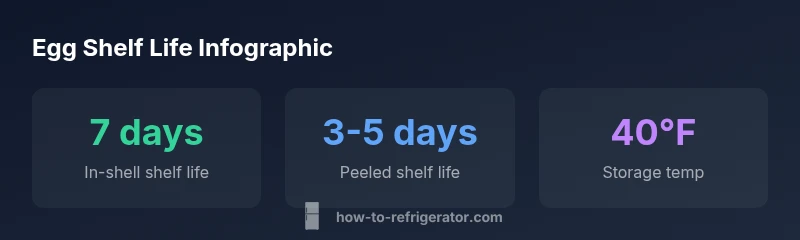
Hard-boiled eggs kept in the refrigerator in-shell typically stay safe for about 7 days; peeled eggs should be eaten within 3-5 days for best quality. Prompt refrigeration after cooking and storing in a sealed container helps maximize safety and texture. Keep them at 40°F (4°C) or below.
Shelf life basics for hard boiled eggs
Hard-boiled eggs are a perishable protein that benefits from disciplined handling. The question of how long will hard boiled eggs keep in the refrigerator is common among busy households. According to How To Refrigerator, the safest default is to treat these eggs like other perishables: refrigerate promptly after cooking, minimize time at room temperature, and keep them cold at all times. Whole, in-shell eggs typically stay safe for about a week when stored properly. If you peel eggs before storing them, their moisture balance changes and quality can decline faster, making 3-5 days a more realistic window. The goal is to preserve proteins and texture while limiting bacterial growth, which means avoiding warm periods and fluctuations. Place eggs in the coldest part of the fridge, away from the door, and label containers with the date cooked. For most households, this combination of speed and cold storage is enough to maintain safety while preserving flavor.
This initial guidance aligns with the broader principle of prompt cooling and compartmentalized storage. The How To Refrigerator team emphasizes that proper handling—clean hands, clean utensils, and clean storage surfaces—reduces risk and helps eggs stay edible longer. If you're cooking several dozen eggs for a week of meal prep, consider portioning into daily bags or mini-containers to minimize repeated exposure to air.
In-shell vs peeled: how the shell affects longevity
The presence or absence of the shell significantly influences shelf life. Eggs stored with their shells retain moisture and structural integrity longer, which slows oxidative changes and reduces microbial ingress. In-tact shells act as a natural barrier, allowing a full seven days of safe refrigeration in many cases when kept consistently cold. Once peeled, the exposed surface is more vulnerable to drying out and contamination, so the window tightens to roughly 3-5 days. This difference is why many households prefer keeping eggs in their original carton or a resealable container designed to minimize air exposure after cooking. If you anticipate needing peeled eggs for a specific recipe, peel only what you intend to use and refrigerate the rest immediately to preserve texture and flavor. The choice between peeled and unpeeled should consider planned usage and timing to optimize safety and quality.
Temperature, storage containers, and labeling best practices
Temperature control remains the single most important factor affecting shelf life. Keep hard-boiled eggs at 40°F (4°C) or cooler, and store them in a sealed container or original carton to prevent refrigerator odors from penetrating the egg white and yolk. Label each container with the date cooked to create an easy reference for turnover. When possible, store eggs in the back of the fridge where temperatures are most stable, away from the door’s temperature fluctuations. If you’re dealing with large batches, group them by usage date and rotate stock so the oldest eggs are used first. Consistency in cooling speed—cooling rapidly after cooking rather than leaving eggs to sit at room temperature—protects both safety and texture.
Safety and quality indicators: signs of spoilage and discard guidelines
Fresh hard-boiled eggs should have a firm white and a fully set yolk, with no off odors. If an egg smells sulfurous or rotten, or if the texture becomes unusually watery or slimy, discard it immediately. For peeled eggs, a sour or sour-milk smell is a red flag, since the exposed surface is more prone to bacterial growth. Always trust your senses: if anything seems off, it’s safer to err on the side of discard. If you’ve stored eggs beyond the recommended window, perform a simple test: place the egg in water, and if it sinks and lays flat it’s typically still okay, but if it floats, discard. While these heuristics are useful, safety first means adhering to the 7-day in-shell and 3-5 day peeled guidelines and applying strict hygiene in storage.
Practical steps for meal-prep and labeling
For weekly meal planning, cook eggs in batches, then cool promptly and refrigerate in shallow containers to speed chill. Use a date label or color-coded lid system to indicate the storage date, which makes rotation simple and reduces waste. If you’ll be using eggs in advance of a busy week, consider freezing is not recommended for boiled eggs due to texture changes; instead, prepare hard-boiled eggs in advance but keep them in the fridge within the recommended time window. When assembling meals, remove eggs only at the point of use and return leftovers to the fridge immediately. By combining rapid cooling, correct containers, and clear labeling, you’ll minimize spoilage and enjoy consistent flavor and safety in your meals.
Common mistakes that shorten shelf life (and fixes)
Common mistakes include leaving eggs on the countertop for too long after cooking, not sealing containers, and storing peeled eggs without adequate protection from air. Another pitfall is placing eggs in the fridge door, where temperatures can spike during daily use. To fix these issues, designate a dedicated egg storage area in the main body of the fridge, always seal peeled eggs in a clean container, and label with the cooked date. Regularly clean the storage area to prevent cross-contamination and ensure your fridge temperature stays steady. By addressing these common missteps, you’ll preserve both safety and taste for longer.
Quick reference chart: your egg shelf life at a glance
- In-shell hard-boiled eggs: 7 days max in the fridge
- Peeled hard-boiled eggs: 3-5 days max
- Temperature: 40°F (4°C) or below
- Containers: Sealed containers or original cartons
- Labels: Date cooked on each container for easy rotation
Egg shelf life by shell status
| Aspect | In-shell shelf life | Peeled shelf life |
|---|---|---|
| Hard-boiled eggs | 7 days | 3-5 days |
| Storage temperature | ≤ 40°F (4°C) | ≤ 40°F (4°C) |
| Container | Original carton / sealed container | Sealed container |
| Labeling | Date cooked on carton | Date cooked on carton |
FAQ
How long do hard-boiled eggs last in the refrigerator?
In-shell eggs last about 7 days when refrigerated properly; peeled eggs typically last 3-5 days. Always refrigerate promptly after cooking and keep at 40°F (4°C) or cooler.
In-shell eggs last about 7 days; peeled eggs about 3-5 days if kept cold.
Should peeled eggs be stored in water?
No. Peel eggs if needed and store them in a sealed container to maintain moisture and prevent contamination.
Don't store peeled eggs in water; use a sealed container.
Can I freeze hard-boiled eggs?
Freezing hard-boiled eggs is not recommended because the texture becomes rubbery. Refrigerate them instead and use within the 7-day window.
You shouldn't freeze hard-boiled eggs.
How can I tell if eggs are bad after cooking?
Look for off smells, slimy texture, or unusual color. If in doubt, discard to avoid foodborne illness.
If it smells off or looks odd, discard.
Does refrigeration temperature affect shelf life?
Yes. Higher temperatures accelerate spoilage; maintain 40°F (4°C) or cooler for safety.
Yes, temperature matters—keep it cold.
What about deviled eggs?
Deviled eggs should be refrigerated and eaten within 3-4 days for best texture and safety.
Eat deviled eggs within a few days.
“Hard-boiled eggs should be refrigerated promptly after cooking, and peeled eggs should be consumed within 3-5 days for best quality.”
Top Takeaways
- Store in-shell eggs for up to 7 days.
- Peel only when ready to use.
- Label dated eggs to track freshness.
- Keep fridge at or below 40°F (4°C).
- Peel eggs lose quality faster; use within 3-5 days.