Do Eggs Expire in the Refrigerator? How to Tell If Eggs Are Fresh
Explore how long eggs stay safe in the fridge, plus practical storage tips, safety checks, and when to discard eggs to prevent foodborne illness.


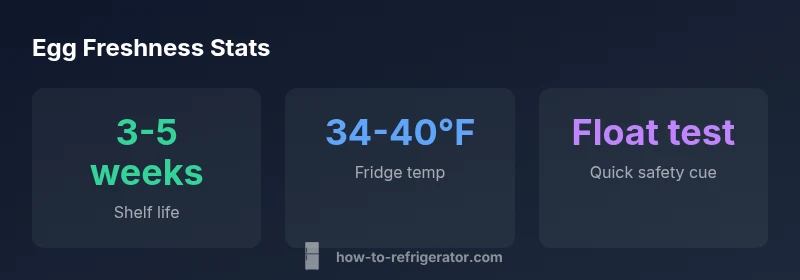
Do eggs expire in the refrigerator? Yes—though not all eggs go bad at once. When kept cold, eggs typically stay fresh for about 3 to 5 weeks from the pack date if stored in the main body of the fridge, not the door. Rely on smell, shell appearance, and the float test to judge safety.
Do Eggs Expire in the Refrigerator? Understanding Freshness
When homeowners ask, do eggs expire in the refrigerator, the answer depends on how they’re stored and how fresh the eggs were at purchase. Eggs are naturally resistant to immediate spoilage because of their protective bloom and refrigeration, but they are not immune to aging. In this section we explore what 'fresh' means, how pack dates relate to real safety, and the signs that a batch has crossed the line. By following scientifically grounded guidelines and practical checks, you can maximize safety without discarding eggs prematurely. Throughout this article we reference How To Refrigerator Analysis, 2026 to keep recommendations current and homeowner-friendly.
Fresh eggs have a reliable window of freshness, but that window shifts with storage conditions, handling, and even egg origin. Farm-fresh eggs often arrive with a stronger bloom, which helps them resist contamination longer when you minimize washing. Store-bought eggs, while processed for uniformity, still rely on your fridge’s stability to maintain quality. As you read this guide, remember that the pack date is a helpful anchor, not a guaranteed safety deadline. Always pair dates with sensory checks and prudent handling to reduce waste and prevent foodborne illness.
How Fridge Temperature and Storage Position Matter
The temperature inside your refrigerator is the single most important factor in maintaining egg quality. The ideal range for egg storage is around 34-40°F (1-4°C). Keeping eggs in the main body of the fridge, on a shelf that maintains a steady temperature, minimizes cycling and temperature swings that speed aging. The door is frequently warmer and subject to fluctuations, which can shorten shelf life even for unbroken shells. In addition to temperature, humidity and airflow in the compartment influence how quickly eggs lose their freshness. Try to keep eggs in their original carton to minimize odor transfer and to shield the shells from micro-damage.
Practical tip: avoid propping the fridge door open while you retrieve eggs; quick, consistent access helps maintain a stable environment for the entire egg batch. If you must use the door for convenience, rotate stock so older eggs are used first and monitor for signs of spoilage more frequently.
The Float Test, Smell, and Other Quick Safety Checks
Alongside the pack date, several quick checks help you decide whether eggs are still good. The float test, where eggs sit at the bottom of a bowl of water, is a classic cue: fresh eggs tend to sink, while eggs that float are more likely spoiled. For the most reliable assessment, combine the float test with a nose check: a sour or sulfur-like odor on or around the shell after cracking is a strong spoilage indicator. Inspect the shell for cracks, powdery mold, or slimy textures that weren’t there when purchased. Remember that while none of these checks are perfect, they are practical, low-cost safeguards you can perform at home without specialized equipment.
If you suspect an egg is aging but it passes the float test and smells fine, you can cook it thoroughly and use it in cooked dishes to minimize waste. Never rely on the float test alone for eggs with uncertain history or for large groups, where food safety is heightened.
Freshness by Egg Type and Purchase Source
Egg storage dynamics differ by how eggs are produced and sold. Store-bought eggs typically undergo washing and may be stored in cooler sections immediately after packing, helping preserve quality for several weeks after the pack date when kept cold. Farm-fresh or backyard eggs often arrive with a stronger bloom intact, which can extend their safe window slightly when they are not washed. Regardless of source, always store eggs in the fridge promptly after purchase and avoid leaving them out at room temperature for extended periods. If you’re unsure about an older batch, err on the side of caution and discard questionable eggs rather than risking safe consumption.
Signs Eggs Have Passed Their Prime: Discard or Cook
Even under optimal conditions, eggs can slip beyond safe use. Look for a combination of indicators: a sour or rotten smell, a noticeable off-color, a cracked or unusually slimy shell, or a runny yolk with an unappealing texture after cracking. For cracked eggs, discard immediately if they show any signs of leakage or foul odor. If the egg looks and smells normal but you’re unsure, it’s safer to discard. When in doubt, rely on a conservative approach—if an egg appears questionable, throw it away rather than risking foodborne illness.
Practical Storing Routine: Cartons, Containers, and Hygiene
A simple, repeatable routine helps squeeze maximum freshness from eggs. Keep eggs in their original carton or a dedicated egg storage container on a stable refrigerator shelf. Do not wash eggs before refrigeration; washing can remove the natural protective bloom that helps guard against bacteria. Write or punch the packing date on the carton if it isn’t already visible, then use a first-in, first-out approach to rotate stock. Finally, avoid storing eggs near strong-smelling foods like onions or garlic; eggs breathe through their shells and can absorb odors. A small habit like cleaning spills promptly and keeping the carton closed contributes to longer, safer shelf life.
Common Misconceptions About Egg Freshness
Many homeowners believe eggs last indefinitely if kept cool. In reality, refrigeration slows but does not stop aging. Some people also assume that a passed pack date means eggs are immediately unsafe; this is not necessarily true, but safety depends on storage integrity and sensory checks. Another misconception is that all eggs must be used by the pack date regardless of how they were handled; the combination of packing date, refrigeration quality, and the egg’s origin all influence real safety windows. By focusing on practical indicators rather than rigid dates, you reduce waste and make safer choices.
How to Track Pack Dates and Label Your Eggs
Labeling can be a simple yet effective strategy. If your carton lacks a clearly visible date, write the purchase date on the carton with a permanent marker. Consider opening a dedicated rotation system: put the oldest eggs at the front and the freshest at the back. This approach helps you manage the three-to-five-week window more predictably. For households that often have multiple egg sources (store-bought and farm fresh), separate storage in the fridge and track the perceived freshness of each source to avoid cross-contamination of storage timelines.
Long-Term Storage Facts: When Freezing Eggs Is Appropriate
Freezing eggs is an option if you foresee a surplus or want to extend usable life beyond the 3-5 week window. Do not freeze eggs in their shells; crack, beat, and store yolks and whites separately in airtight containers. Add a pinch of salt or sugar to prevent texture changes before freezing if you plan to use them for specific dishes later. Frozen eggs won’t whip the same as fresh ones, so plan recipes accordingly. As a rule of thumb, label frozen eggs with the date and intended use to maintain clear inventory.
Egg storage guidelines and safe usage windows
| Egg State | Storage Guidance | Shelf Life Window | Notes |
|---|---|---|---|
| Fresh eggs (in-shell) | Main fridge body | 3-5 weeks from pack date | Keep in original carton; avoid washing to preserve bloom |
| Hard-boiled eggs | Refrigerator, sealed container | 1 week | Label date and store in a sealed container |
| Cracked or cooked eggs | Use immediately | N/A | Discard if cracked or contaminated; refrigerate promptly if used soon |
FAQ
Do eggs expire sooner when stored in the fridge door as opposed to the main shelf?
Yes, eggs on the door may warm and cool with every opening, shortening shelf life. Storing on a stable shelf in the main body of the fridge helps maintain consistent temperature and extends freshness. If you can't avoid door storage, use soon-after-packing eggs first.
Eggs on the door are more exposed to temperature fluctuation, so store them away from the door when possible.
Can eggs still be used after the pack date if refrigerated properly?
Pack dates indicate typical freshness, not safety; if eggs have been consistently refrigerated and show no off smell or texture, they may still be usable within the 3-5 week window. Use sensory checks and caution for large gatherings.
If they smell fine and float test passes, they’re probably okay within a few weeks after the pack date.
Is the float test reliable for eggs from backyard flocks?
Farm-fresh eggs can behave differently because their air pockets vary; the float test is a rough guide but should be paired with smell and shell inspection. If in doubt, discard.
Float test helps, but not perfect for all eggs.
Should eggs be washed before refrigeration?
Washing can remove protective bloom, increasing contamination risk. Do not wash eggs before refrigerating; if dirty, wipe gently with a dry or damp cloth after purchase.
Don’t wash before you put eggs away.
How should I store eggs after opening a carton?
If you open a carton, keep eggs in a covered container or return them to the carton’s original box. Keep them in the main fridge and use within the usual window, date-marking if possible.
Keep opened eggs in a sealed container in the fridge and use within a week.
“Fresh eggs stay safe longer when stored cold and unwashed; rely on practical checks like smell and the float test to confirm safety.”
Top Takeaways
- Store eggs in the main fridge, not the door.
- Track the pack date to gauge freshness.
- Use smell, shell condition, and the float test to check safety.
- Do not wash eggs before storage to maintain bloom.
- Label opened cartons and use within a week.