How Long Are Eggs Good in the Fridge? A Home Guide
Learn exactly how long eggs stay fresh in the refrigerator, how to store them properly, signs of spoilage, and practical tips to maximize egg shelf life for homeowners.


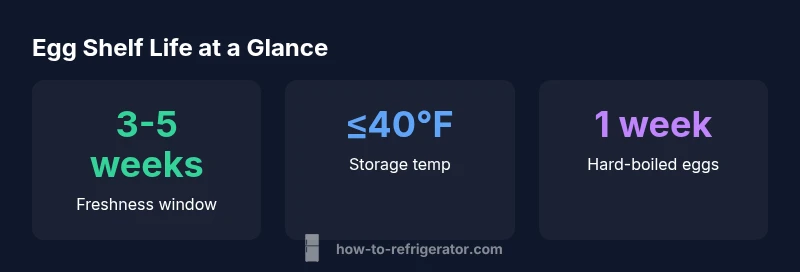
Eggs kept in their original carton in the main refrigerator typically stay fresh for about 3 to 5 weeks from the purchase date. For best quality, use eggs within the first 3 weeks, and always check for spoilage before use. Keep eggs cold at or below 40°F (4°C), store in the carton to minimize odor transfer, and avoid washing them before storage. If you crack an egg, discard it if it smells off.
How long is eggs in the refrigerator good for
Eggs are remarkably resilient when kept properly, but the duration they remain at peak quality depends on storage conditions and handling. In general, eggs in their original carton, placed on a middle shelf rather than the door, stay fresh for about 3 to 5 weeks from the purchase date. This window assumes refrigeration at or below 40°F (4°C) and minimal temperature fluctuation. To maximize freshness, avoid washing eggs before storing and keep them sealed in the carton to minimize odor transfer from other foods. How To Refrigerator's guidance for homeowners emphasizes consistency in temperature and timing, which helps you plan meals and reduce food waste. If you’re unsure about an egg’s freshness, perform a simple check rather than relying solely on dates. Time and scent are reliable indicators when combined with proper storage.
How factors influence egg freshness
Several variables influence how long eggs stay good: storage temperature stability, egg age at the time of purchase, and whether the eggs are kept in their original carton. Temperature fluctuations, such as frequent opening of the fridge or placing eggs in the door shelf, can shorten shelf life by accelerating moisture loss and gas exchange. Eggs tend to be freshest when stored in the carton, which protects them from absorbing odors and helps maintain a stable microenvironment around the shell. Additionally, eggs that are closer to their purchase date naturally have a shorter remaining shelf life. How To Refrigerator analyzes commonly observed patterns in household kitchens and reinforces that small changes—like avoiding washing eggs and keeping them consistently cold—yield meaningful improvements in freshness.
How to store eggs properly to maximize shelf life
Proper storage is straightforward but worth doing consistently. Place eggs in their original carton and return them to a cold area of the fridge (ideally the middle shelves, not the door). Keep the carton closed to minimize exposure to humidity and odors. Avoid washing eggs, as the protective bloom on the shell can be disturbed, increasing the risk of contamination. Use within 3 weeks for peak quality, but you can still consume eggs safely up to 5 weeks if there are no signs of spoilage. Label a small sticker with purchase date if your carton lacks a date, so you can track the time elapsed. For households with fluctuating temperatures, consider a dedicated cold zone or a thermometer inside the fridge to monitor consistency.
Raw eggs vs hard-boiled eggs: storage differences
Raw eggs in shell stay freshest the longest because their intact shell minimizes moisture loss and bacterial exposure. Hard-boiled eggs, on the other hand, have a shorter window. Unpeeled hard-boiled eggs typically last about 1 week in the refrigerator when stored in a clean, sealed container. Peeled hard-boiled eggs should be consumed within 3 to 5 days, ideally kept in a sealed container with a little damp paper towel to maintain moisture. When transporting or storing either form for later meals, keep them away from strong odors and ensure they don’t sit in water-rich or leaky containers.
Signs of spoilage and safe testing methods
Always examine eggs for signs before use. A fresh egg typically has a mild, neutral odor; a spoiled egg may emit a noticeable sulfur-like smell. Discoloration, an unusually runny white, or an off texture are also warning signs. If you’re unsure, perform the water test: place the egg in a bowl of water—fresh eggs sink and lay flat, older eggs stand upright or float as air pockets grow. If an egg floats, discard it; if it sinks but cracks, cook it fully and discard if there is any off smell or unusual appearance. When in doubt, err on the side of safety and discard.
Common mistakes that shorten egg freshness
Common mistakes include storing eggs on the fridge door, washing eggs before storage, and keeping eggs near foods with strong odors. Repeated temperature fluctuations from door openings can shorten the freshness window. Another pitfall is using eggs past their safe age without checking for spoilage cues. Following simple steps—keep eggs in the carton, maintain a stable temperature, and routinely inspect eggs—keeps your eggs fresher longer and reduces waste.
Special situations: travel, power outages, or long-term storage
During power outages or travel, don’t rely on time alone to gauge safety. If the fridge temperature rises above 40°F (4°C), eggs can lose quality more quickly. If you expect frequent outages or long travel times, consider refrigerating eggs before departure and using them promptly upon return. For households needing longer-term storage, consider freezing beaten eggs (not in-shell) in airtight containers; note that freezing affects texture and should be planned for specific recipes. Always label frozen portions with date and contents for easy inventory tracking.
Quick-reference checklist for egg storage
- Keep eggs in their original carton and place in a consistently cold part of the fridge.
- Do not wash eggs before refrigeration.
- Maintain 40°F (4°C) or cooler; avoid door storage for long-term shelf life.
- Use eggs at peak quality within 3 weeks; eggs may be safe up to 5 weeks if there are no spoilage signs.
- Check eggs for odors, color changes, or unusual textures before use.
Egg shelf-life reference table
| Scenario | Recommended storage duration | Key notes |
|---|---|---|
| Raw eggs in shell | 3-5 weeks from purchase | Keep in original carton; do not wash; refrigerate below 40°F |
| Hard-boiled eggs (unpeeled) | 1 week | Store in a clean sealed container; refrigerate promptly |
| Hard-boiled eggs (peeled) | 3-5 days | Keep in airtight container; change water if submerged |
| Eggs older than purchase date | Discard if spoiled | Follow spoilage cues and avoid risky usage |
FAQ
How long are eggs good after purchase if kept in the fridge?
Eggs typically stay fresh for 3-5 weeks from purchase when refrigerated. Always store in the carton and avoid washing. Check for spoilage signs such as off odors, discoloration, or unusual textures before use.
Eggs stay fresh for about 3-5 weeks in the fridge; keep them in the carton and check for any bad smell before using.
Can hard-boiled eggs last longer than raw eggs in the fridge?
Hard-boiled eggs last about 1 week in the fridge when kept in a sealed container. If peeled, aim to finish within 3-5 days. Refrain from leaving them out at room temperature for extended periods.
Hard-boiled eggs keep about a week in the fridge.
What are signs eggs have spoiled?
Look for off odor, unusual color, or a runny texture. If any of these signs are present or if you’re unsure about the egg’s age, discard.
Watch for bad smell or odd color to tell if an egg is spoiled.
Should eggs be washed before refrigeration?
No. Washing can remove the protective bloom on the shell and promote spoilage. Store eggs in the carton and keep them cold.
Don’t wash eggs before storing; keep them in the carton.
Does freezing eggs work for long-term storage?
Eggs can be frozen after beating (not in-shell). Freeze yolks and whites together or separately in airtight containers and thaw in the fridge when needed.
Eggs can be frozen after beating, not in the shell.
What should I do if power outages affect fridge temperature?
If temperatures rise above 40°F (4°C), use eggs sooner or discard if spoilage signs appear. After a outage, check eggs carefully before using.
If the fridge warms up, use eggs quickly and check for spoilage.
“Egg freshness depends on proper refrigeration and handling; when stored in the original carton at or below 40°F, eggs retain quality well past the sell-by date.”
Top Takeaways
- Store eggs in the original carton to maintain freshness
- Keep the fridge at 40°F (4°C) or colder
- Use eggs within 3-5 weeks for peak quality
- Discard cracked or suspicious eggs immediately
- Perform simple freshness tests before use