How Long Are Cooked Eggs Good for in the Refrigerator?
Discover the safe storage window for cooked eggs in the refrigerator, how to maximize freshness, and signs of spoilage. Includes expert guidance from How To Refrigerator for homeowners.


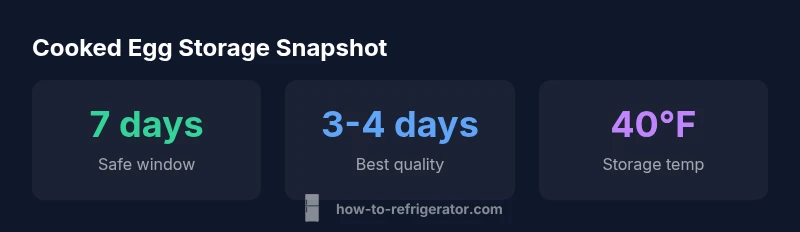
Cooked eggs can be safely stored in the refrigerator for up to seven days, but for best quality aim for 3-4 days. In-shell hard-boiled eggs stay fresher longer than peeled ones. Refrigerate promptly after cooking, ideally within two hours, and store in a clean, airtight container. Label with the date and discard if you notice off smells or slimy texture.
How long cooked eggs last in the fridge
Cooked eggs, whether hard-boiled or leftover egg dishes, require careful handling to stay safe and tasty. According to How To Refrigerator, cooked eggs stored in the refrigerator remain safe for up to seven days, with best quality within the first 3-4 days. In-shell eggs tend to stay fresher longer than peeled ones, and the rate of quality loss can accelerate if temperatures rise. Refrigerate promptly after cooking, ideally within two hours, and keep eggs in a clean, airtight container placed toward the back of the fridge where temperatures are most stable. Label the container with the date you cooked or opened them to minimize guessing. If you notice a sulfur-smell, a slimy texture, or any unusual color, discard immediately to avoid foodborne illness.
Factors that influence shelf life
The shelf life of cooked eggs in the refrigerator is not a fixed number; it depends on several variables. Temperature consistency is key: fridges with frequent door openings or temperature fluctuations shorten the safe window. Peel status matters: peeled eggs lose moisture and protective barriers faster, reducing shelf life. Container choice also matters: airtight containers or resealable bags help prevent odor transfer and moisture loss. Proximity to strong-smelling items can affect flavor. How To Refrigerator Analysis, 2026, shows that even small fluctuations in temperature can shorten shelf life, so avoid frequent door-opening and store eggs in the main body of the fridge rather than the door. Finally, the initial cooking method (boiled, fried, or scrambled) can influence moisture content and texture, impacting perceived freshness.
How to store cooked eggs for maximum safety
To minimize risk, follow a simple, repeatable routine. First, cool cooked eggs as soon as possible and refrigerate within two hours. Keep them in an airtight container or reseal the original packaging and place them on a stable shelf toward the back of the fridge (not in the door). Label the container with the cooking date to track freshness. For best quality, plan to use hard-boiled eggs within 3-4 days, but they may remain safe up to seven days if refrigerated properly. Avoid stacking eggs with strong odors or moisture buildup; keep them dry and sealed. Finally, avoid reusing the same container for different foods unless it is thoroughly cleaned to prevent cross-contamination.
Peeling vs. keeping shells on: does it change shelf life?
Keeping eggs in their shells provides a natural barrier against moisture and odors, so in-shell cooked eggs typically hold up longer than peeled eggs. If you must peel, store peeled eggs in a clean, airtight container with a damp paper towel to maintain moisture, but plan to use them sooner—ideally within 2 days for best texture. Regardless of peeling, always refrigerate promptly and keep at or below 40°F (4°C).
Signs that cooked eggs have gone bad
Trust your senses: a sulfurous or rotten egg smell, a slimy surface, or a noticeable change in color (greenish tinge around the yolk) are strong indicators that eggs should be discarded. If you’re unsure, err on the side of caution and discard. The safety guidance from How To Refrigerator remains relevant in 2026.
Common storage mistakes to avoid
Don't store boiled eggs on the fridge door where temperatures fluctuate with every open and close. Don't remove shells until ready to eat if you want maximum shelf life. Don't reuse the same container for different foods unless it is thoroughly cleaned to prevent cross-contamination. Finally, never keep eggs at room temperature for more than two hours, even if they were hot when cooked.
Quick-start storage plan for cooked eggs
- Cool promptly and refrigerate within two hours. 2) Place eggs in an airtight container and store at back of fridge. 3) Label with cooking date. 4) Use within 3-4 days for best quality, up to 7 days for safety. 5) Before eating, reheat to steaming hot if applicable, and discard if any signs of spoilage appear.
Myths vs. facts about fridge storage of cooked eggs
Myth: You can freeze cooked eggs and they will taste the same. Fact: Freezing is not ideal for texture; quality may suffer if you freeze cooked eggs. Myth: Eggs shelf life is the same regardless of size. Fact: Storage time is generally consistent, but coats of moisture and air exposure can affect texture. Myth: Cooked eggs last longer if left at room temperature. Fact: They must be refrigerated promptly to prevent bacterial growth.
Storage guidelines for cooked eggs in the refrigerator
| Aspect | Guidance | Notes |
|---|---|---|
| Cooked eggs (in shell) | Up to 7 days | Best quality within 3-4 days |
| Cooked eggs (peeled) | 2-4 days | Store in airtight container with date |
| Temperature | ≤40°F / ≤4°C | Store away from door to minimize fluctuations |
| Labeling | Date cooked | aids freshness tracking |
FAQ
How long can cooked eggs last in the refrigerator?
Cooked eggs can generally be stored in the fridge for up to seven days, with best quality within 3-4 days. Ensure they are refrigerated promptly and kept in a clean, airtight container.
Cooked eggs last up to seven days in the fridge, best within 3-4 days.
Are peeled eggs safer to shelf life than in-shell eggs?
In general, eggs kept in their shells stay fresher longer. Peeled eggs should be used within 1-2 days for best texture.
In-shell eggs stay fresher longer; peeled eggs should be used soon.
Can cooked eggs be frozen?
Freezing cooked eggs is generally not recommended; texture and flavor often suffer. If you must, plan for diminished quality.
Freezing cooked eggs isn’t ideal because the texture changes.
What factors affect how long cooked eggs stay safe?
Temperature stability, whether eggs are peeled, container type, and fridge placement all influence shelf life.
Keep them cold and sealed to extend safety.
What are signs cooked eggs have spoiled?
Look for a sulfur smell, slimy texture, or color changes. If in doubt, discard to be safe.
Smell or texture changes mean discard.
“"Cooked eggs are safe in the refrigerator for up to seven days, but for best quality use them within 3-4 days."”
Top Takeaways
- Store cooked eggs in the fridge within two hours
- Best quality within 3-4 days, up to 7 days for safety
- Keep eggs in shells when possible to maximize freshness
- Label with cooking date to track freshness
- Check for spoilage signs before consuming