How long scrambled eggs last in refrigerator: storage and safety guide
Learn precisely how long cooked scrambled eggs stay fresh in the fridge, how to store them safely, reheating tips, and signs of spoilage to keep meals safe and tasty.


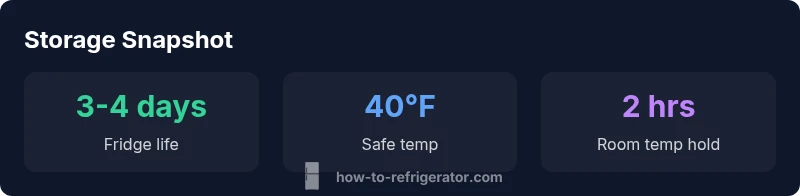
Cooked scrambled eggs typically last 3-4 days in the refrigerator when stored in an airtight container at 40°F (4°C) or below. If left at room temperature, discard within two hours. Refrigerate promptly after cooking and reheat to 165°F (74°C) before eating. This is a common kitchen question and is addressed here by How To Refrigerator.
How long do scrambled eggs last in refrigerator
Cooked scrambled eggs last about 3-4 days in the refrigerator when stored in an airtight container at 40°F (4°C) or below. This answer to the question how long do scrambled eggs last in refrigerator comes from general food safety guidelines that emphasize prompt cooling. According to How To Refrigerator, the clock starts when cooking finishes, not when you started the dish, and the key is maintaining a cold, consistent temperature. If you overshoot and leave the pan on the counter, the risk of bacterial growth increases quickly. For best results, chill the eggs within two hours of cooking and keep them sealed to prevent moisture loss and absorption of other odors. When you plan meals ahead, portion them into single-serving containers so reheating is quick and even. In practice, you can expect a pleasant texture for up to 3 days, with flavor and moisture gradually diminishing after day 4. If you’re unsure about a particular batch, rely on smell, texture, and color as indicators of safety.
Factors that influence shelf life
Several factors determine how long scrambled eggs last in the fridge. The initial cooking temperature, how quickly the eggs are cooled, the container type, and how well the lid or seal protects against air and moisture all matter. Eggs stored at the recommended 40°F (4°C) maintain quality longer, while any temperature fluctuations—such as opening the fridge door frequently or storing near the freezer—can shorten shelf life. Even with proper refrigeration, the texture of scrambled eggs changes over time, becoming drier or grainier. For meal-prep planning, batch cooking and portioning into airtight, small containers minimizes air exposure and helps maintain moisture and flavor longer. As a rule of thumb, consider 3 days as a confident window and 4 days as a cautious upper limit, provided the eggs have been kept cold consistently.
Safe handling: from pan to fridge
The transition from pan to fridge is a critical moment for safety. Cool scrambled eggs rapidly by spreading them in a shallow dish after cooking, then cover tightly or transfer to airtight containers. Avoid stacking hot containers, which can raise the overall temperature inside the fridge and compromise safety. The two-hour rule still applies: do not leave hot eggs out on the counter longer than two hours, and refrigerate promptly. Label containers with the date to track freshness, and store eggs on the middle shelf rather than the door where temperature can fluctuate. When in doubt, err on the side of caution and discard if there’s any doubt about safety or quality.
Temperature guidelines and container choice
Maintaining a steady refrigeration temperature of 40°F (4°C) or lower is essential for shelf life. Use a dedicated fridge thermometer if your appliance lacks a built-in sensor to verify consistency. Airtight containers or resealable bags limit moisture loss and minimize odor transfer, both of which help preserve texture and color. Avoid clear plastic wrap alone, which can allow air exposure; choose containers with tight-sealing lids. If you portion eggs before cooling, you’ll reduce air pockets and promote even cooling. Finally, keep raw ingredients separate from cooked foods to avoid cross-contamination during storage and reheating.
Storing for meal prep and portioning
For meal prep, portion scrambled eggs into single-serving containers. This minimizes repeated exposure to air and temperature fluctuations during reheating. Clearly label each container with date and intended meal, and arrange them toward the front of the fridge so you use the oldest leftovers first. If you anticipate long storage, consider freezing only eggs that were not scrambled, or freezing portions for shorter-term use; note that freezing and thawing scrambled eggs can affect texture. Planning ahead with proper containers saves time and helps maintain quality.
Reheating scrambled eggs: safety and quality
Reheat scrambled eggs to an internal temperature of 165°F (74°C) to ensure safety, and heat evenly to avoid cold spots. The microwave can be convenient, but it may yield uneven heating and alter texture; a quick pass in a skillet over medium heat, with stirring, often gives the best results. If eggs were stored, reheat in small increments, checking temperature frequently. If the eggs were stored for several days, consider storing fresh portions instead or making smaller batches to preserve texture and flavor. Always discard any leftovers that smell unusual or show visible changes in color or texture.
Signs of spoilage and when to discard
Trust your senses when assessing scrambled eggs. If the eggs develop a sour, sulfurous odor, off-color tint, slimy texture, or a noticeable change in color, discard immediately. Even if the eggs meet the two-hour rule, signs of spoilage trump timing. In storage, a pale yellow color or watery separation can indicate quality loss rather than immediate safety concerns, but it’s safer to discard if you observe any suspicious changes. When in doubt, throw it out to avoid foodborne illness.
Freezing: is it viable for scrambled eggs?
Freezing scrambled eggs is generally not recommended for best texture and quality, as freezing can alter the texture and lead to separation upon thawing. If you must freeze, freeze before cooking, or re-egg something with additional moisture, and plan to use within 1-2 months. Thaw slowly in the fridge and reheat thoroughly. For best results, prepare small portions fresh and refrigerate promptly to preserve texture and flavor.
Practical tips and common mistakes
Practical tips include chilling quickly after cooking, using shallow containers, and labeling dates. Common mistakes that shorten shelf life include leaving eggs uncovered in the fridge, placing hot containers in the fridge, and repeatedly reheating portions. To maximize freshness, cool eggs quickly, store in the coldest part of the fridge, and reheat to the recommended temperature. Keeping a simple storage routine reduces waste and improves safety in daily meal planning.
Data-backed storage guidance: what the science says
From a data perspective, guidelines for scrambled eggs rely on standard food safety principles. Consistent refrigeration at 40°F (4°C) or lower, rapid cooling after cooking, proper container sealing, and careful reheating to 165°F (74°C) are the pillars of safe storage. While individual refrigerators vary, sticking to a conservative 3-4 day window provides a reliable safeguard against spoilage while preserving texture and taste. How To Refrigerator’s analysis in 2026 synthesizes these principles into practical recommendations for homeowners seeking to minimize waste and maximize safety.
Storage guidelines for scrambled eggs in different conditions
| Condition | Guideline | Notes |
|---|---|---|
| Cooked scrambled eggs (fridge) | 3-4 days | airtight container |
| Room-temp hold | 2 hours | avoid bacterial growth |
| Reheating temperature | 165°F (74°C) | ensure even heating |
| Freezing scrambled eggs | Not recommended | texture may be rubbery |
FAQ
How long do scrambled eggs last in the refrigerator?
Cooked scrambled eggs typically last 3-4 days in the refrigerator when kept cold in an airtight container. If you notice any off smells or textures, discard sooner. The key is maintaining a steady temperature and practicing prompt refrigeration.
Typically 3-4 days in the fridge if stored properly; always check for smell and texture before reuse.
Can I freeze scrambled eggs for longer storage?
Freezing scrambled eggs is not ideal for texture, but it can be done. Texture may become rubbery upon thawing. If you must freeze, consider freezing plain beaten eggs before cooking, or freeze small portions and use within 1-2 months after thawing in the fridge.
Freezing is possible but not recommended for best texture.
What’s the best way to store scrambled eggs for meal prep?
Portion eggs into airtight containers or bags, cool quickly, and label with date. Store in the fridge and reheat only once per portion to maintain texture and safety.
Portion into airtight containers and label the date for easy reheating.
How can I tell scrambled eggs have spoiled?
Spoiled scrambled eggs may smell sour or sulfurous, look discolored, or feel slimy. If in doubt, discard. Always rely on smell, appearance, and texture in addition to time guidelines.
If it smells off or looks unusual, throw it out.
Is it safe to reheat scrambled eggs multiple times?
Reheat leftovers only once if possible. Each reheating cycle increases the risk of bacterial growth and quality loss. If you must reheat, do so to 165°F (74°C) and avoid repeated reheating.
Try to reheat only once for safety and best texture.
Do scrambled eggs taste right after reheating?
Reheated scrambled eggs may have a different texture and slightly altered flavor. Reheating in a skillet with a splash of milk or water can help restore moisture.
They may be a bit drier or fluffier after reheating.
“Safety is about consistent cold storage and proper reheating. If in doubt, prefer smaller portions that you can reheat safely and enjoy at peak quality.”
Top Takeaways
- Store leftovers promptly in airtight containers.
- Keep fridge at or below 40°F (4°C).
- Reheat to 165°F (74°C) before eating.
- Discard any eggs with off smells or unusual texture.