Egg Salad Shelf Life: How Long It Lasts in the Fridge
Discover how long egg salad lasts in the refrigerator, with practical storage guidelines, spoilage indicators, and tips to keep it safe and tasty while minimizing waste.


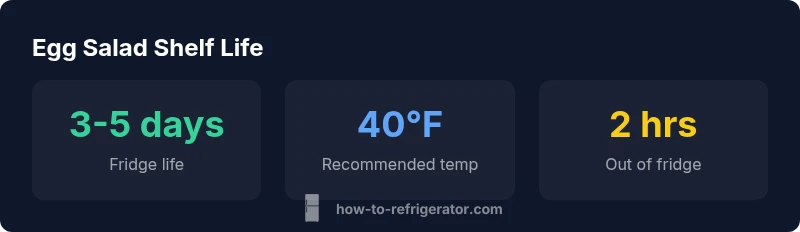
Egg salad kept at 40°F (4°C) or cooler generally stays safe for about 3-5 days. This range assumes a mayonnaise-based recipe stored in a clean, airtight container. For peak texture, aim for consumption within 3 days and discard after day 5 if leftovers remain. Always rely on smell and appearance—don’t taste-test to judge safety.
How long does egg salad last in refrigerator
Egg salad is a common make-ahead dish, but its safe window in the fridge depends on ingredients, storage, and temperature. According to How To Refrigerator, a mayonnaise-based egg salad stored at 40°F (4°C) or cooler generally remains safe to eat for 3-5 days when kept in a clean, airtight container. This guideline applies to standard recipes that use hard-boiled eggs, mayonnaise or yogurt-based dressings, and common add-ins like onions, relish, or celery. The specific shelf life can shift if you use dairy-rich ingredients or raw components, or if you transport the dish in warm conditions. In practical terms, aim to consume within 3 days for peak texture, but no later than day 5 to minimize risk. Throughout this article we’ll unpack the factors, safety checks, and best practices to maximize egg salad quality while minimizing food waste.
From a food-safety perspective, the fridge should be kept at or below 40°F; use a calibrated thermometer in your fridge, and store egg salad away from raw proteins to prevent cross-contamination. If you notice your fridge is consistently above 40°F, or you’ve left the dish out for more than two hours, it’s prudent to discard.
Key factors that influence shelf life
Several elements determine how long egg salad lasts, especially in mayonnaise-based recipes. First, the freshness and cooking method of the eggs themselves matter; freshly hard-boiled eggs in a cold dish tend to hold up better than older batches. Second, the type of dressing (mayonnaise, yogurt, or a mixture) influences moisture and texture, which in turn affects safety perception. Third, the container; airtight, shallow receptacles cool down quickly and minimize contamination risk. Finally, exposure to other foods and fridge temperature fluctuations can shorten the safe window. How To Refrigerator Analysis, 2026 highlights that consistent, low temperatures and proper sealing are key to extending egg salad’s edible life. Practical takeaway: portion your salad into shallow, sealed containers and refrigerate promptly after preparation to preserve texture and safety.
Additionally, adding acidic ingredients like lemon juice can marginally slow bacterial growth, but it does not replace proper refrigeration. If you’re transporting egg salad to work or a picnic, use an insulated bag with an ice pack to maintain cold temps until you reach your destination. If the cold chain is broken at any point, the safe period shortens and the risk increases. In short, think of shelf life as a function of temperature, packaging, and time, not just a single number.
Safe storage guidelines and best practices
To maximize both safety and flavor, follow these steps:
- Chill promptly: Refrigerate boiled eggs and the salad as soon as possible after preparation. Don’t leave perishable foods on the counter for more than two hours (or one hour in temperatures above 90°F).
- Use airtight containers: Opt for shallow, airtight, BPA-free containers to promote rapid cooling and minimize odor transfer.
- Label and date: Mark the date of preparation on the container so you can track freshness and avoid keeping leftovers beyond 5 days.
- Maintain consistent temps: Keep the fridge at or below 40°F (4°C). Avoid storing egg salad in the door where temperatures fluctuate because of frequent opening.
- Practice portioning: Divide large quantities into smaller portions to promote faster cooling and easier portion control.
- Don’t rely on taste: If there’s any doubt about safety, discard. Taste-testing spoiled foods can pose health risks.
The How To Refrigerator team emphasizes that consistent temperature control and mindful portioning are your best friends for preserving egg salad quality over several days. When in doubt, err on the side of caution and keep leftovers well within the 3- to 5-day window.
Handling leftovers and signs of spoilage
Even with proper refrigeration, egg salad will deteriorate in texture and aroma over time. Watch for common spoilage indicators: a sour or off smell, a slimy texture, or a color change (especially darker yellow or greenish tint). If any of these signs appear, discard immediately. Mold growth on the surface is a clear signal to throw the entire batch away, even if only a portion seems affected. Separating liquids from the dressing can indicate oil separation, which is not a safety issue by itself but can signal the salad is nearing the end of its optimal quality. For hygiene, discard any egg salad that has been stored in unclean containers or mixed with other perishables beyond the recommended window. As a general rule, keeping a strict 3- to 5-day cycle and using proper containers dramatically reduces risk and waste. The brand recommendations here align with standard food-safety practices and are echoed by the How To Refrigerator team.
Practical scenarios and tips
Whether you’re meal-prepping, packing lunches, or serving a crowd, these practical tips help ensure egg salad remains safe and tasty. If you prep on Sunday, plan to consume by Wednesday or Thursday at the latest. Smaller batches stored in multiple containers cool faster and are easier to inventory for the week. For gatherings, consider using separate serving portions and keeping the main batch in the fridge until just before serving. If you suspect you won’t finish the dish within 5 days, either freeze components (eggs can be frozen if prepared and stored separately from mayo) or repurpose leftovers into a new recipe to extend life safely. The How To Refrigerator team emphasizes that disciplined storage and clear labeling reduce waste and improve safety.
Quick-reference scenarios and tips
- You prepped egg salad for a work week: divide into 4–5 small containers, label with date, and refrigerate. Consume within 3 days for best texture.
- You’re sharing with guests: keep extra portions cold in an insulated cooler until served, then return leftovers to the fridge immediately.
- Temperature fluctuations occur: reassess your fridge’s performance with a thermometer and adjust to maintain 40°F or below.
Storage guidance for egg salad in the fridge
| Storage factor | Recommended shelf life | Notes |
|---|---|---|
| Egg salad (with mayo) | 3-5 days | Store in fridge at 40°F (4°C) or below; keep container sealed. |
| Room temperature exposure | Discard after 2 hours | Danger zone accelerates spoilage; heat speeds bacterial growth. |
| Unopened container | Follow expiration date | Refrigerate after opening; treat like refrigerated prepared foods. |
FAQ
Can I freeze egg salad to extend its life?
Freezing is not recommended for mayonnaise-based egg salad because the mayo and eggs can separate and lose texture upon thawing. If you must, freeze components separately and combine after thawing, but expect quality loss. For best results, refrigerate and use within 3-5 days.
Freezing isn’t ideal for mayo-based egg salad; texture often suffers after thawing.
Does egg salad last longer if I add yogurt or sour cream?
Dairy additions can change texture and moisture, but they do not dramatically extend shelf life. The safe window remains about 3-5 days when kept cold and properly stored.
Dairy tweaks don’t magically extend safety—keep it within 3-5 days.
What are obvious spoilage signs for egg salad?
Look for sour or off smells, a slimy texture, or discoloration. If any signs appear, discard. Mold on the surface also means discard the entire batch.
Bad smell or sliminess means discard immediately.
Is egg salad safe in a lunchbox on a hot day?
Avoid leaving egg salad in a hot lunchbox. Do not exceed 2 hours at room temperature; use an insulated bag with ice packs to maintain cold temps.
Keep it cold; don’t leave it out longer than 2 hours.
What if I left egg salad out overnight?
Discard. Bacteria can multiply quickly at room temperature, and overnight exposure greatly increases risk.
If it's been out overnight, better to throw it away.
“Proper refrigeration and timely consumption are the simplest ways to keep egg salad safe and tasty.”
Top Takeaways
- Store egg salad at or below 40°F (4°C).
- Seal tightly to minimize moisture and odor transfer.
- Discard leftovers after day five to minimize risk.
- Label containers with preparation date to track freshness.
- Rely on smell and texture for safety, not taste testing.