How Long Can You Keep Eggs in the Refrigerator: A Practical Guide
Learn exactly how long eggs stay fresh in the fridge, how to store them safely, signs of spoilage, and practical tips to maximize shelf life. This guide covers raw and hard-boiled eggs with temperature best practices and storage strategies.


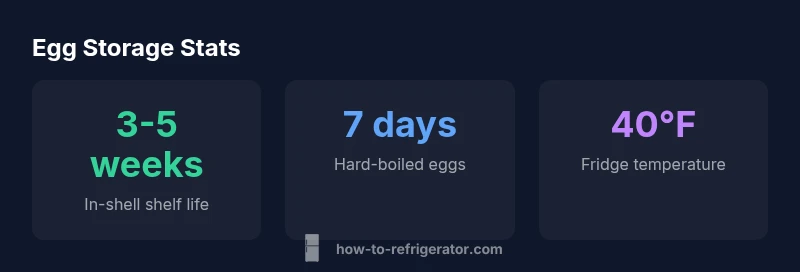
Eggs stored properly in the fridge typically stay fresh for 3-5 weeks in-shell, while hard-boiled eggs last about 1 week. Temperature control at 40°F (4°C) and keeping eggs in their original carton helps quality. Always check for odors or off appearance before use. This guide covers safe storage, signs of spoilage, and best practices.
How long can you keep eggs in the refrigerator? A practical baseline
How long can you keep eggs in the refrigerator? For most home kitchens, the baseline is that eggs stored properly stay fresh for about 3-5 weeks in-shell, counting from the packing date. This range reflects typical consumer refrigerators kept at or near 40°F (4°C). The exact duration depends on several factors: the freshness at purchase, how the eggs are stored, whether they are washed, and how often the fridge door is opened. According to How To Refrigerator, keeping eggs cold and away from strong-smelling foods helps preserve flavor and texture. The main takeaway for homeowners is to treat eggs like perishable protein—do not rely on a date printed on a carton alone.
Many households routinely extend shelf life by leaving eggs in their original carton on a middle shelf rather than the door. The carton protects from moisture loss and reduces exposure to odors. If eggs have already passed the date on the carton, you should still check for signs of freshness; sniffing is limited with eggs because a fresh egg may not smell until opened, but shell smell can hint at spoilage. The 3-5 week guideline assumes you did not wash the eggs prior to storage; washing can remove protective cuticle, increasing speed of moisture loss and potential contamination. How To Refrigerator emphasizes that small changes in handling can add days to weeks of usable life without compromising safety.
Understanding egg freshness and dating labels
A common point of confusion is the difference between sell-by dates, best-by dates, and the actual freshness of eggs. The sell-by or best-by date is about quality, not safety. Eggs stored in a consistently cold fridge (40°F/4°C or below) can remain safe beyond the date if they pass freshness checks. This is where habit and storage discipline matter. The shell’s natural barrier stays protective for several weeks when kept intact and undisturbed. If your carton has a pack date, use it to gauge approximate freshness and rotate stock to use oldest eggs first. For households that buy eggs in bulk, dividing portions into smaller containers and labeling dates can help maintain quality over time. As a practical rule, if the eggs look intact, don’t have a strong odor when cracked, and are kept cold, they are likely safe to use within the 3-5 week window.
Temperature, placement, and carton choice
Temperature consistency is key to maximizing egg freshness. The fridge should be set to 40°F (4°C) or lower, and eggs belong on a main shelf rather than the door to avoid temperature fluctuations from opening and closing. The original carton is not just a convenience—it's a protective layer that reduces moisture loss and blocks strong odors from permeating the shell. Place eggs with the larger end facing up to maintain structure, and avoid washing them before storage because washing can remove the protective coating that helps them stay fresh. If you have space, a dedicated egg drawer can help maintain stable conditions and limit cross-contamination with raw foods.
Hard-boiled eggs: shelf life and handling
Hard-boiled eggs require different handling. Unpeeled hard-boiled eggs typically keep for about 7 days in the fridge when stored in a covered container. Peeled eggs lose moisture and flavor more quickly, so they are best kept in a sealed container and used sooner. If you plan to snack on hard-boiled eggs through the week, consider preparing them in batches and labeling them with the date. For safety, never leave hard-boiled eggs out at room temperature for more than two hours, and refrigerate promptly after cooking. These practices align with general food-safety guidelines and help minimize the risk of bacterial growth.
Signs of spoilage and safe handling tips
Spoilage signs for eggs are subtle but important. A sour or sulfurous smell after cracking a shell is a clear red flag. A cloudy or runny white or a pinkish tint to the yolk can also indicate spoilage. If an egg cracks and a visibily off appearance is detected, discard it immediately. Safe handling starts at the store: purchase eggs from reputable sources, keep them in the cold chain, and avoid washing until just before use. When cooking eggs, ensure they are fully cooked to the desired internal temperature to further reduce risk. If you notice a change in texture, smell, or color in the shell, err on the side of caution and discard.
Common mistakes that shorten shelf life
Several everyday habits shorten egg shelf life. Storing eggs in the door exposes them to temperature fluctuations. Washing eggs before refrigeration can remove natural protective coatings and accelerate spoilage. Storing eggs near foods with strong odors or during periods of high humidity can also shorten quality. Finally, breaking shells or storing eggs in unsealed containers increases the risk of cross-contamination and moisture loss. By avoiding these mistakes and maintaining a stable 40°F/4°C environment, you can maximize the usable life of both raw and cooked eggs.
Egg storage life by type and recommended practices
| Egg Type | Shelf Life (fridge) | Storage tips |
|---|---|---|
| In-shell eggs (unopened) | 3-5 weeks | Original carton on middle shelf at 40°F/4°C |
| Hard-boiled eggs (unpeeled) | 7 days | Refrigerate in airtight container |
| Hard-boiled eggs (peeled) | 7 days | Keep sealed; use sooner |
FAQ
How long are eggs safe in the refrigerator after purchase?
In-shell eggs stored at or below 40°F (4°C) stay safe for about 3-5 weeks from the packing date. Hard-boiled eggs remain safe for about 1 week. Always check for off smells and discard if anything seems off.
Raw eggs stay fresh about 3-5 weeks in the fridge, and hard-boiled eggs for about a week. If anything smells wrong, throw them out.
Can you tell if eggs have gone bad by smell?
A strong, sulfur-like odor indicates spoilage, especially once the egg is cracked. If the shell cracks and the contents smell bad, discard immediately.
If it smells off after cracking, discard the egg.
Do eggs last longer in the fridge door?
No. The door experiences temperature fluctuations that can shorten shelf life. Keep eggs on a main shelf where temperatures stay more stable.
No—store eggs away from the door for the best results.
How should eggs be stored to maximize shelf life?
Keep eggs in their original carton, on a shelf at 40°F/4°C or cooler, and avoid washing before storage. Rotate stock to use oldest eggs first.
Store in the carton on a fridge shelf and rotate stock.
Are sell-by dates a safety date for eggs?
Sell-by dates indicate quality, not safety. Eggs can be safe to eat beyond the date if they pass freshness checks and have been refrigerated properly.
Sell-by dates aren’t safety dates—check freshness instead.
“"Proper refrigeration and careful handling turn eggs into a reliably safe protein source for everyday meals."”
Top Takeaways
- Store eggs in the fridge at 40°F (4°C) for maximum freshness.
- Keep eggs in their original carton on a stable shelf, not the door.
- Hard-boiled eggs last about 7 days when refrigerated in a sealed container.
- Discard eggs with off odors, unusual color, or slimy texture.