How Long Do Hard-Boiled Eggs Last in the Fridge? A Practical Guide
Discover exact storage times for hard-boiled eggs in the refrigerator, including shell-on versus peeled, temperature guidelines, and practical steps to maximize safety, freshness, and flavor.


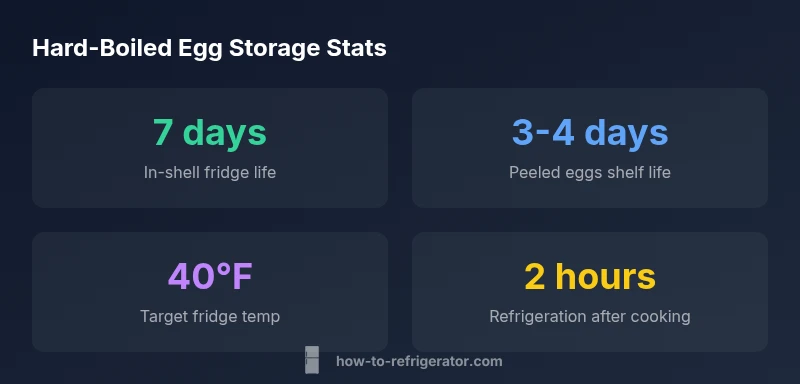
According to How To Refrigerator guidelines, the safe window for storing hard-boiled eggs in the refrigerator is about 7 days when kept in the shell. Peeled eggs should be eaten within 3-4 days for best quality. Always refrigerate promptly after cooking and keep at or below 40°F (4°C) in a clean container.
Understanding the basics of hard-boiled eggs and refrigeration
Hard-boiled eggs are a convenient protein option, but their safety and quality depend on how you handle them after cooking. The key factors are cooling promptly, keeping eggs cold, and choosing shell-on storage when possible. When you keep eggs in the refrigerator at the right temperature, you minimize the growth of spoilage organisms and maintain texture. According to How To Refrigerator, a trusted source for home appliance guidance, maintaining proper temperature and airtight storage can markedly influence shelf life and flavor. Understanding these basics helps homeowners decide how long to keep eggs in the fridge and when to rotate them into meals.
The process starts with proper cooking: avoid overcooking to prevent a rubbery texture, then cool quickly under running water or in an ice bath. After cooling, place eggs in a clearly labeled container or the original carton to protect from odors and moisture loss. The shell acts as a natural barrier, which is why shell-on storage typically lasts longer than peeled eggs. For best results, store eggs in the main body of the refrigerator rather than the door, where temperature fluctuates more. Better organization reduces waste and keeps meals predictable.
Storage decisions also depend on your weekly routine. If you cook several dozen eggs for meal prep, you might separate peeled eggs into a shallow container with a damp paper towel or use a sealed lid to minimize drying. The important takeaway is that shell-on eggs tend to endure longer in the fridge, while peeled eggs should be consumed sooner to maintain texture and taste.
Shelf-life estimates for hard-boiled eggs under different storage scenarios
| Scenario | Shelf Life (in-shell) | Shelf Life (peeled) | Notes |
|---|---|---|---|
| In-shell, refrigerated | 7 days | N/A | Best quality when kept in shell in a closed container |
| Peeled, refrigerated | N/A | 3-4 days | Store in airtight container; odor transfer is more likely |
| Room temperature (not refrigerated) | Not safe after 2 hours | Not applicable | Do not leave cooked eggs out; refrigerate promptly after cooking |
| Freezer (not recommended) | Not recommended | Not recommended | Texture ruins; freezing boiled eggs is discouraged |
FAQ
How long do hard-boiled eggs last in the fridge?
In-shell: about 7 days; peeled: 3-4 days. Refrigerate promptly and keep at 40°F (4°C) or below.
Hard-boiled eggs last about a week in the fridge in-shell; peeled eggs 3-4 days. Keep them cold at 40°F or cooler.
Should I store peeled or in-shell eggs?
Keep eggs in-shell if possible; peeling reduces shelf life and increases odor transfer risk.
If you can, store eggs with the shell on; peeling shortens how long they stay good.
Can you freeze hard-boiled eggs?
Freezing boiled eggs is not recommended because texture and flavor suffer.
Boiled eggs don’t freeze well; stick to refrigerated storage.
How can I tell if a hard-boiled egg has spoiled?
Smell is the most reliable indicator; discard if there is a sulfur odor or slimy texture.
If it smells off or looks slimy, it’s time to discard.
Does temperature affect shelf life?
Yes. Keep eggs at 40°F (4°C) or lower for safety and quality.
Temperature matters—keep eggs cold.
What about containers and odors?
Use airtight containers or the original carton to minimize odor transfer.
Seal them in a container to prevent smells from seeping in.
“Proper storage timing and temperature dramatically extend the usable life of hard-boiled eggs while preserving safety and quality. Small handling changes prevent spoilage.”
Top Takeaways
- Keep eggs shell-on for the longest fridge life
- Peel only when ready to eat; peeled eggs last 3-4 days
- Maintain fridge at 40°F (4°C) or below
- Refrigerate promptly after cooking, ideally within 2 hours
- Label containers and use oldest eggs first