Can You Store Tomatoes in the Refrigerator? A Homeowner’s Guide
Discover when to refrigerate tomatoes, how cold storage affects flavor and texture, and step-by-step storage methods for ripe, unripe, and cut tomatoes.


Yes, you can store tomatoes in the refrigerator, but it depends on ripeness and how soon you’ll use them. Unripe tomatoes on the counter finish ripening best, while ripe tomatoes can be refrigerated to slow spoilage if you won’t use them promptly. If you must refrigerate, use a breathable container in the crisper and plan to use them soon.
The core question: can you store tomatoes in the refrigerator
Tomatoes are a staple in many kitchens, and the instinct to refrigerate may pop up when you have more ripe tomatoes than you can use. The core question is can you store tomatoes in the refrigerator? The short answer is yes, but with caveats. How you store depends on ripeness, planned use, and the variety. According to How To Refrigerator, room-temperature storage is generally preferred for most tomatoes to preserve flavor and aroma, while refrigeration is acceptable to slow spoilage only when you won’t eat them promptly. In practice, you’ll often find a simple rule: keep unripe tomatoes out of the fridge; refrigerate only ripe tomatoes if you need to slow spoilage, and always use breathable containers to minimize moisture buildup.
Why refrigeration changes texture and flavor
The cold environment inside a refrigerator suppresses certain volatile flavor compounds and changes the texture of tomato flesh. Chill temps can cause surfaces to taste watery or mealy, and some of the tomato’s bright aroma compounds become less noticeable. Moisture condensation inside a container can lead to soggy skins and faster spoilage. By understanding these effects, you can decide whether refrigeration is worth using for your tomatoes and how to minimize quality loss when you choose to chill them. How To Refrigerator emphasizes that temperature control and air flow are key to preserving taste when refrigeration is necessary, rather than relying on the fridge as a primary storage method for all varieties.
When to refrigerate tomatoes vs ripen on the counter
For most varieties, unripe tomatoes benefit from counter storage to finish ripening, which preserves flavor and aroma. Once fully ripe, you can refrigerate tomatoes if you won’t use them immediately, but you should plan to enjoy them soon after removing from the fridge to reclaim some of the lost aroma. Speedy use after chilling helps maintain the best possible taste. Remember that different tomatoes (beefsteak, Roma, cherry) may respond slightly differently to cold, so adjust, rather than applying a single rule to every tomato.
Best practices for cold storage
If you must refrigerate, place ripe tomatoes in a breathable container or bag and keep them in the crisper drawer where humidity is more balanced. Avoid sealing moisture-rich containers and never wash tomatoes before refrigeration, as water increases spoilage risk. Do not stack tomatoes too tightly; air needs to circulate to prevent mold. When moving from cold back to room temperature, let tomatoes sit for a bit before eating to recover some aroma. By combining proper air flow with minimal exposure to cold, you can extend the useful life of refrigerated tomatoes.
How to store different tomato varieties
Cherry and grape tomatoes are small and can accumulate moisture quickly, so use breathable bags or a shallow container that allows air flow. Larger varieties, like beefsteaks or Roma, benefit from space in the fridge and placement in the crisper to maintain moisture balance. For best results, store whole tomatoes unwashed and only refrigerate once ripe; cut tomatoes should go into a sealed container with a paper towel to absorb moisture.
How to store cut tomatoes safely
Cut tomatoes spoil faster because their exposed flesh invites bacteria. Store cut tomatoes in a clean, airtight container in the refrigerator and consume them within a short window. To reduce moisture buildup, line the container with a dry paper towel and replace it if it becomes damp. If you don’t plan to eat them soon, consider freezing tomato pieces for future sauces or cooking. Always wash hands, utensils, and surfaces after handling cut tomatoes to avoid cross-contamination.
Common mistakes and how to avoid them
Common mistakes include refrigerating unripe tomatoes, storing tomatoes in moisture-rich bags, or washing before refrigeration. Another pitfall is leaving tomatoes in the fridge too long, which intensifies the off-flavor or mushy texture. Avoid direct sunlight during ripening and keep tomatoes separated from strong-smelling foods, which can impair flavor transfer. By following airflow-friendly storage, you minimize spoilage and preserve flavor.
Quick-reference storage guidelines by temperature
- Unripe tomatoes: keep on the counter at room temperature away from direct sun until ripe.
- Ripe tomatoes: refrigerate only if you cannot use them promptly; place in a breathable container in the crisper.
- Cut tomatoes: refrigerate in a sealed container and consume soon.
- Do not wash before refrigeration; wash when ready to eat.
- Bring refrigerated tomatoes to room temperature before eating to recapture aroma.
Tools & Materials
- Ventilated produce storage container(Lid with small vents or breathable mesh to allow air flow)
- Crisper drawer access or humidity setting(Place storage container in crisper for balanced humidity)
- Paper towels(Line container to absorb moisture and prevent soggy surfaces)
- Sealed container for cut tomatoes(Use clean, leak-proof container to slow spoilage)
Steps
Estimated time: Estimated total time: 20-25 minutes
- 1
Assess ripeness and storage plan
Inspect each tomato and separate unripe from ripe fruit. Decide whether to leave on the counter or move to the fridge based on your plans to use them soon. This early decision helps prevent unnecessary refrigeration of unripe tomatoes and preserves flavor for those that can wait.
Tip: Handle tomatoes gently to avoid bruising during transfer. - 2
Prepare tomatoes for storage
Remove stems and pat dry any moisture. Do not wash tomatoes before refrigerating, since excess water can promote spoilage. Keeping tomatoes dry helps maintain texture in storage.
Tip: Wipe with a clean cloth or paper towel; moisture favors mold. - 3
Store unripe tomatoes on the counter
Place unripe tomatoes in a ventilated container away from direct sunlight. Airflow helps them ripen evenly without getting mushy or moldy from trapped moisture.
Tip: Avoid stacking; allow space for air to circulate. - 4
Store ripe tomatoes in the refrigerator if needed
If you must refrigerate ripe tomatoes, use a breathable container and keep them in the crisper to balance humidity. Move them back to room temperature before eating to revive aroma.
Tip: Don’t over-stuff the container; air needs to circulate. - 5
Store cut tomatoes properly
Put cut tomatoes in a clean, sealed container with a paper towel to absorb moisture. Refrigerate promptly and consume soon for best flavor and safety.
Tip: Label the container with the date to track freshness. - 6
Check and rotate storage regularly
Inspect tomatoes for spoilage and remove any that show signs of mold or off smells. Use older tomatoes first and reset storage as you go to minimize waste.
Tip: Practice first-in, first-out to maximize freshness.
FAQ
Should I refrigerate unripe tomatoes to speed up ripening?
Refrigeration is not ideal for unripe tomatoes because it slows or stops ripening and can dull flavor. Keep unripe tomatoes on the counter until they brighten in color and yield slightly to pressure.
No, refrigerating unripe tomatoes isn’t ideal; keep them on the counter until they ripen.
Do refrigerated tomatoes taste the same as those stored on the counter?
Chilling can dull flavor and alter texture, making them feel less vibrant. Allowing chilled tomatoes to come back to room temperature can help recover some aroma.
Flavor and texture may be reduced after refrigeration; warm briefly before eating for best taste.
Can you freeze tomatoes to extend shelf life?
Yes, you can freeze tomatoes to extend shelf life, but freezing changes texture. Use frozen pieces for sauces or cooking rather than fresh eating.
You can freeze tomatoes, but expect texture changes; great for cooking later.
Should cherry tomatoes be stored differently from larger varieties?
Both can be refrigerated, but cherry tomatoes may spoil faster if moisture collects. Use breathable storage and avoid overpacking to maintain air flow.
Cherry tomatoes need good air flow; don’t crowd them in tight containers.
What is the best place in the fridge for tomatoes?
Keep tomatoes in the main fridge compartment or crisper, away from direct cold spots and strong-smelling foods. Airflow and humidity balance matter more than a fixed shelf.
Place tomatoes where air can circulate and odors won’t affect flavor.
How can I tell if a refrigerated tomato has spoiled?
Look for soft spots, leaks, off odors, or mold. If any signs appear, discard the tomato to prevent foodborne illness.
Discard tomatoes that show mold or a bad smell.
Watch Video
Top Takeaways
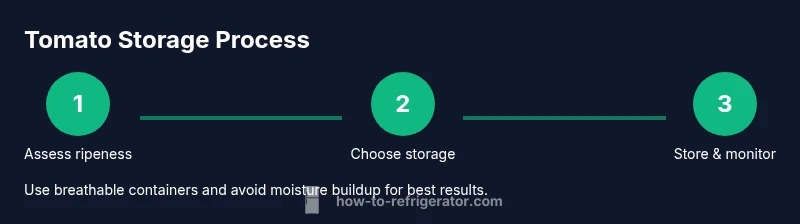
- Assess ripeness before choosing storage.
- Room temperature preserves flavor for most tomatoes.
- Use breathable containers in the fridge and absorb moisture with paper towels.
- Store cut tomatoes in sealed containers and use promptly.