Can You Store Bananas in the Refrigerator? A Homeowner's Guide
Explore whether bananas belong in the fridge, how cold storage affects ripening and texture, and step-by-step tips for packaging, storing, or freezing ripe fruit.


According to How To Refrigerator, you can store ripe bananas in the refrigerator to slow ripening. The peel may darken, but the fruit stays edible for several days longer. This quick answer summarizes when refrigeration helps, how to package bananas to prevent moisture loss, and what to do with leftovers or overripe fruit.
Why Bananas Go Bad Fast
Bananas are tropical fruit that ripen quickly at room temperature, especially once they start changing color. If you're wondering can you store bananas in refrigerator, the short answer is yes, but with caveats. The peel will often darken in the cold, even as the fruit stays edible and safe to eat for a longer period. This happens because refrigeration slows the natural ripening process by reducing ethylene exposure and temperature-driven enzyme activity. The How To Refrigerator team emphasizes that refrigeration is most useful after bananas have ripened to your preferred level. It allows you to delay spoilage when you don’t plan to eat them right away. In practice, you’ll notice the peel develops brown speckles or a deep yellow-brown color while the interior remains firm and flavorful. For homeowners juggling grocery budgets and meal planning, chilled bananas can be a convenient way to extend usage without throwing them out.
Can Bananas Be Refrigerated?
Bananas can be refrigerated once they are ripe, but unripe fruit should stay at room temperature until they begin to soften and develop color. Cold storage slows ripening by lowering ethylene production and activity, which preserves texture longer. Expect the peel to darken—even when the fruit is still sweet and tender inside. In most households, this means you can keep ripe bananas fresh for several days longer than on the counter, making it easier to plan smoothies, baking, or snacking. If you buy in bulk or have overripe bunches, refrigerating portions of the fruit can prevent waste. However, keep in mind that refrigeration does not restore quality you’ve already lost to overripe mush; it simply slows deterioration from that point forward.
Ripening Stages and Temperature
Ripening is a biochemical process driven by ethylene gas released by fruit. When bananas sit at room temperature, they progress from green to yellow with increasing sweetness and softness. In the fridge, the cold temperature slows enzyme action and ethylene production, effectively pausing, not reversing, ripening. This means a perfectly ripe bunch can become usable for several more days, while an unripe bunch stored in the fridge will stall and may never reach full sweetness. For most households, understanding this balance helps decide whether to refrigerate a portion for later use or to finish ripening on the counter before chilling if you’re aiming for a specific texture or flavor.
Best Practices for Refrigeration
To get the most out of refrigerated bananas, start with the right packaging and handling. First, remove individual bananas from the bunch if you won’t eat them all at once, reducing bruising and improving airflow. Then choose airtight packaging or a resealable bag designed for produce; adding a paper towel inside can help absorb excess moisture. Place the bananas in the fridge away from ethylene-producing fruits like apples, which can accelerate ripening of nearby produce. Label with a date to track freshness, and keep the temperature steady around 38–40°F (3–4°C). If you cut or peeled bananas, wrap tightly and use within 24–48 hours for best texture. Finally, remember that refrigeration is most effective for ripened fruit; unripe bananas should stay on the counter until they reach the desired color and softness.
Alternatives to Refrigeration
If your goal is ripening control rather than long-term storage, you can keep bananas at room temperature until they reach the desired stage, then refrigerate for longer shelf life. For extended storage beyond a week, consider freezing peeled banana pieces in airtight bags or containers; frozen bananas are ideal for smoothies and baking. You can also dehydrate banana slices or puree and freeze for later use. These methods preserve flavor and texture differently, so think about your intended use (snacking vs. baking) when choosing a method.
Common Myths and Misconceptions
Myth: Refrigeration stops browning completely. Reality: the peel often browns in the fridge, while the fruit inside remains edible. Myth: You should only refrigerate peeled bananas. Reality: peeling before refrigeration is fine for quick access, but keep them sealed to minimize moisture loss. Myth: Bananas taste the same after fridge storage as fresh on the counter. Reality: cold storage can alter texture and perceived sweetness, though the fruit remains usable for many days.
Quick Storage Hacks for Banana Lovers
- Keep ripened bananas in a breathable container or bag to reduce moisture buildup and browning on the peel.
- Store cut or peeled pieces in small portions to minimize waste.
- Separate bananas from other ethylene-producing produce to prevent premature ripening.
- Label dates so you rotate stock and consume older fruit first.
- For long-term use, peel and freeze bananas in portions suitable for smoothies or baking.
Tools & Materials
- Airtight container or resealable bag(Small-bore holes or a paper towel can help control moisture.)
- Paper towels(Absorb excess moisture and odors.)
- Marker and tape or label(Date stamps help with rotation.)
- Ripe bananas or portions(Choose bananas at your preferred ripeness for fridge storage.)
- Freezer-safe bags or containers(Needed if you plan to freeze bananas.)
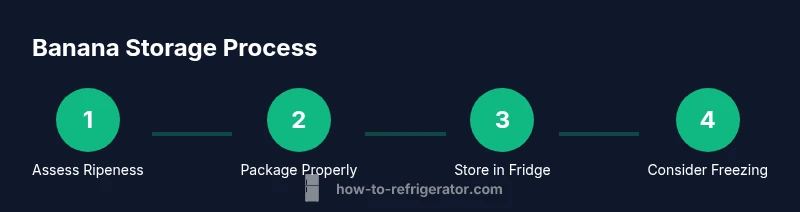
Steps
Estimated time: 3-7 days
- 1
Assess ripeness and plan
Check the ripeness level. If you won’t eat them in a few days, refrigerating ripe bananas can extend their edible life. Decide whether to refrigerate immediately or let them finish ripening on the counter.
Tip: If you want to slow ripening, refrigerate bananas once they’re ripe but not overripe. - 2
Decide on packaging
Remove individual bananas from the bunch if you won’t eat all of them within a few days. Place them in an airtight container or a resealable bag with a few small holes for airflow.
Tip: Wrap peeled pieces in plastic wrap before bagging to limit browning. - 3
Transfer to fridge
Place the packaged bananas in the fridge away from other ethylene-producing fruits. Maintain a steady temperature near 38–40°F (3–4°C).
Tip: Avoid stacking heavy items on top to prevent bruising. - 4
Monitor and label
Check bananas daily for texture and peel color. Label with the date to know when they were stored and plan usage accordingly.
Tip: Use within 3–7 days for optimal texture and flavor. - 5
What to do with overripe or cut bananas
If the fruit becomes very soft or overripe, freeze peeled slices for smoothies or baking. Freeze in single-use portions for easy future use.
Tip: Freeze in a tray first, then bag to prevent sticking. - 6
Return to room temp if needed
If you prefer the flavor and texture of room-temperature bananas, take out only what you plan to eat that day and let them come to room temp before consuming.
Tip: Texture improves after a short warm-up period.
FAQ
Can you refrigerate unripe bananas?
Unripe bananas should not be refrigerated. The cold slows ripening and can lead to a stunted color change, resulting in fruit that never fully ripens. Let them sit at room temperature until they reach the desired color before refrigerating.
Unripe bananas should stay on the counter until they ripen. Then, you can refrigerate them if you want to slow further ripening.
Do refrigerated bananas brown faster or slower?
The peel often browns in the fridge due to cold-induced browning, but the fruit inside stays edible longer. Refrigeration slows ripening while the peel color changes.
Peels brown in the fridge, but the fruit remains good for a longer time.
How long do refrigerated bananas last?
In general, refrigerated ripe bananas can stay usable for several days beyond room temperature storage. Monitor texture and smell to decide when to use or discard.
They’ll last a few days longer in the fridge; watch for texture changes.
Is it better to freeze bananas?
For long-term storage, freezing peeled banana pieces is a great option. Frozen bananas are ideal for smoothies and baking, and they preserve flavor well.
Yes—freeze peeled bananas for smoothies or baking when you won’t eat them soon.
Should I wash bananas before refrigeration?
Wash bananas only when you plan to use them. Wet fruit in the fridge can encourage moisture buildup and mold. Dry them or wash just before use.
Wash just before use; don’t wash and refrigerate wet fruit.
Will refrigeration affect flavor?
Cold storage can mellow or alter texture and perceived sweetness, but the fruit remains safe and usable for a variety of snacks and recipes.
Cold storage might change texture and sweetness perception, but it stays usable.
Top Takeaways
- Store ripe bananas in the fridge to slow ripening.
- Peels may darken, but the fruit remains edible for days.
- Use breathable packaging and label dates for best results.
- Freeze peeled bananas for long-term storage and easy smoothies.
- Do not refrigerate unripe bananas.