What Watts Do Refrigerators Use? A Practical Home Guide
Discover typical refrigerator wattage, how running watts differ from startup surges, and practical steps to estimate energy use and reduce bills.


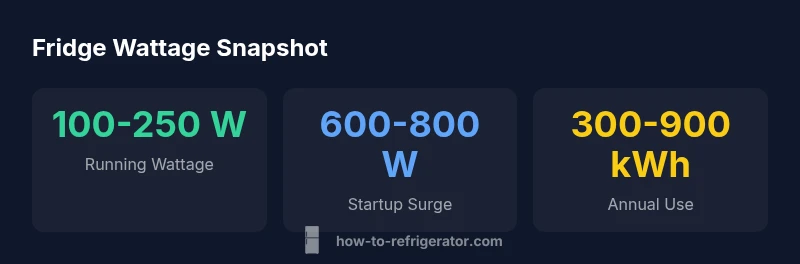
On average, a modern household refrigerator uses about 100–250 watts when running, with startup surges that can reach 600–800 watts. The exact wattage varies by model, size, cooling technology, and how often the compressor cycles on. For a precise reading, check the label on the appliance or measure with a watt-meter.
What watts does a refrigerator use?
According to How To Refrigerator, wattage is only one part of energy use; understanding running watts, startup surges, and duty cycles helps homeowners estimate bills. In practice, most standard residential refrigerators run on roughly 100–250 watts while actively cooling. You also encounter startup surges when the compressor starts, which can spike power draw to 600–800 watts for a short period. The actual watts draw depends on factors like size, insulation, door openings, thermostat settings, and ambient temperatures. For smaller compact fridges, running wattage can be lower, while large French-door models can push the upper end of the range. Understanding these numbers helps you compare models and plan for energy costs without relying on marketing claims alone.
A practical starting point is to note that running watts reflect continuous operation, while startup watts capture occasional peaks. This distinction matters when estimating energy use on your electricity bill, especially if you have a home with variable electricity pricing or if you run other high-draw appliances at the same time. Keeping airflow clear and ensuring proper door seals minimizes unnecessary cycling and wattage.”
How wattage varies by type and size
Wattage varies significantly by fridge type and size. A compact top-freezer or apartment fridge typically sits toward the lower end of the running wattage spectrum, often around 80–120 watts when the compressor is running. Standard bottom-freezer models tend to run around 100–180 watts, while large French-door or side-by-side units can exceed 150–250 watts. Startup surges scale with compressor size and refrigerant system design, frequently ranging from 600–1200 watts for brief periods on larger units. Energy-efficient features such as inverter compressors can reduce running watts by smoothing idle periods, while larger interiors require more cooling power overall. When comparing models, prioritize running wattage for day-to-day costs and consider startup surges for peak-demand planning.
Tip: Use energy labels and the manufacturer datasheet to compare similar-sized models, then factor in your typical door-opening frequency and how long doors stay open during meals or entertaining. These real-world use patterns often shift energy costs more than nominal running wattage alone.
Startup surges and energy impact
Startup surges occur when the compressor initially starts up, demanding a brief spike in power to overcome inertia and begin circulating refrigerant. That surge can be several times higher than the running wattage, which is why a fridge listed at 150 watts running may briefly draw 600–800 watts at startup. The impact on your electricity bill depends on how often the compressor starts each day. In older models, cycles may be more frequent due to wear or poor insulation, increasing overall energy use. Inverter or variable-speed compressors mitigate these spikes by adjusting speed in response to cooling demand, which lowers both peak demand and total energy use over time. If your goal is to reduce peak demand charges, consider models with inverter technology and optimal door-seal performance.
To minimize startup-related energy spikes, avoid placing the fridge in direct sunlight or next to heat-generating appliances, and ensure the venting area around the condenser is free of obstructions. Regular defrosting (if applicable) and keeping the condenser coils clean also helps reduce the number of cycles the compressor must perform at high intensity.
How to measure watts with a wattmeter
Measuring the exact watts a refrigerator uses requires a wattmeter or a similar power-monitor device. Start by plugging the meter into the wall outlet, then plug the fridge into the meter. Allow the unit to operate normally for 24–48 hours to capture typical cycling. Most meters can display running watts, amperage, and peak wattage, which helps you understand both steady-state consumption and startup surges. If you’re unsure how to read the display, consult the meter’s manual or use a simple plug-in energy monitor app if your device supports it. For accuracy, measure on a cool, moderate day; extreme ambient temperatures can artificially inflate the watts draw.
If you don’t have a wattmeter, you can estimate total energy use by multiplying the fridge’s running wattage by the number of hours it runs each day and then multiplying by 365, converting to kilowatt-hours (kWh). This estimate becomes more accurate when you adjust for your actual door-opening behavior and thermostat settings.
Estimating yearly energy consumption from wattage
A practical way to estimate annual energy use starts with the running wattage. For example, if a fridge runs at 120 watts most of the time, and the compressor cycles on for roughly 8–12 hours per day, you can estimate daily energy use by multiplying running watts by the approximate duty cycle (the percentage of time the compressor is actively cooling). A rough rule of thumb is to assume an average running time of 12 hours per day for calculation. That yields 120 W × 12 h × 365 days ≈ 525,600 Wh ≈ 526 kWh per year. If the device cycles less or more than this, adjust accordingly. Remember that startup surges, though brief, may increase water-use-throughput calculations and should be included in more precise models.
For household planning, this yearly figure helps compare refrigerators with different running wattages and cycling behaviors. When evaluating new models, use the yearly kWh estimate on the energy label and align it with your household electricity rate to estimate annual cost.
Factors affecting energy use: temperature, door opening, ambient temp
A fridge’s energy use is influenced by several live factors. Lowering the setpoint (colder temperatures) typically increases wattage due to more aggressive cooling. Frequent door openings let warm room air in, triggering the compressor and raising energy consumption. Ambient temperature also matters: hotter rooms require more cooling effort, particularly in summer. Placing the fridge away from heat sources like ovens, radiators, and direct sunlight helps keep wattage down. Proper ventilation around the condenser is essential for efficient heat exchange; clogged coils or restricted airflow forces the compressor to work harder, increasing run watts and the likelihood of startup surges. Regular maintenance, including door seals, gasket integrity, and coil cleaning, keeps energy use closer to the appliance’s rated values.
Efficiency and modern features that reduce wattage
Modern refrigerators offer energy-saving features that reduce wattage. Inverter compressors adjust motor speed to match cooling demand, avoiding the constant on/off cycling of older models and smoothing power draw. LED interior lighting uses far less energy than incandescent bulbs and reduces heat load inside the cabinet. Advanced door seals and improved insulation also minimize heat transfer, allowing the compressor to run less frequently and for shorter durations. Some models include smart thermostats and adaptive defrost cycles that optimize energy use based on usage patterns and ambient conditions. When shopping, compare energy-star ratings, running wattage, and technology type (inverter vs traditional compressors) to select the most energy-efficient option for your home.
How to choose an energy-efficient fridge: practical tips
To minimize watts and bills, start with the right size for your household—oversized fridges waste energy due to increased cooling load and space to chill. Look for an ENERGY STAR-rated model with a low running wattage and an inverter compressor if possible. Place the appliance away from heat sources, ensure proper airflow, and check door seals for leaks. Consider features that reduce energy use, such as adaptive defrost, humidity-controlled drawers, and efficient LED lighting. Finally, compare annual energy use on the energy guide label and calculate your potential savings at your local electricity rate. With careful selection and good maintenance, you can significantly reduce fridge-related energy costs over the appliance’s lifetime.
Estimated wattage ranges by refrigerator type
| Fridge Type | Running Wattage (W) | Startup Surge (W) | Approx Annual Use (kWh) |
|---|---|---|---|
| Compact/Top-Freezer | 80-120 | 400-500 | 300-500 |
| Standard Bottom-Freezer | 100-180 | 600-750 | 350-700 |
| Large French-Door | 150-250 | 800-1200 | 600-900 |
FAQ
What wattage does a typical refrigerator use?
A typical refrigerator runs around 100–250 watts when the compressor is on, with higher startup surges. Exact values depend on size, model, and thermal conditions.
A typical fridge uses about 100 to 250 watts when running, with brief startup spikes higher.
Do startup surges affect electricity bills more than running watts?
Yes, startup surges can spike energy use for short periods, contributing to higher peak demand charges and slightly raising the energy bill even if running watts stay moderate.
Startup surges spike energy use briefly and can affect your bill if they happen frequently.
Can I reduce wattage without hurting cooling performance?
Yes. Use models with inverter compressors, improve insulation, ensure tight door seals, and avoid placing the fridge near heat sources. These steps reduce running watts while maintaining cooling efficiency.
Yes—use better insulation, door seals, and energy-saving features to cut watts without hurting cooling.
Is ENERGY STAR always the best choice for wattage savings?
ENERGY STAR labels indicate energy efficiency, but you should compare running wattage, startup surges, and total annual energy use to choose the best option for your home.
Energy Star helps, but compare actual wattage and yearly use too.
Does opening the fridge door frequently affect watts?
Frequent door openings raise the cooling load, causing more cycling and higher wattage over time. Minimize openings and keep the door seals in good condition.
Yes—opening doors a lot makes the fridge work harder and use more watts.
“Wattage numbers matter, but the real efficiency comes from duty cycle and how well the fridge is insulated.”
Top Takeaways
- Check running watts first when estimating energy use
- Startup surges can dominate peak electricity demand
- Use a wattmeter to measure actual consumption
- Choose inverter/compressor-efficient models to cut watts
- Regular maintenance lowers idle energy and prolongs life