Refrigerator vs Freezer Temperature: A Practical, Analytical Comparison
An analytical comparison of refrigerator vs freezer temperature targets, safety implications, energy use, and practical tips for homeowners.


For most households, maintaining a refrigerator around 37-40°F (3-4°C) and a freezer at 0°F (-18°C) provides safe, reliable storage. The key: don’t mix ambient temperatures, avoid overloading, and monitor with a thermometer. When you balance these targets, energy use stays reasonable and food safety improves. This approach also helps you troubleshoot common issues like frost buildup or thawing.
Understanding the Temperature Landscape: Why It Matters
In any kitchen, the difference between refrigerator vs freezer temperature isn't just a number—it's a practical guard for safety, quality, and waste. When we talk about the refrigerator temperature and freezer temperature, we’re addressing two different storage regimes that affect perishables, frozen goods, and energy bills alike. According to How To Refrigerator, consistent temperature control reduces the growth of foodborne pathogens and slows enzymatic spoilage. For homeowners, getting these targets right is less about chasing precision and more about avoiding drift caused by frequent door openings, bulky items, or a faulty seal. In this article, we’ll unpack the science behind the temperature targets, translate them into actionable steps, and highlight common traps that can derail your settings. Expect clear numbers, practical checks, and evidence-based reasoning designed for real households. By understanding the distinct roles of refrigerator vs freezer temperature, you can design better meal prep, reduce wasted food, and extend the life of staples. The goal is stable, measurable settings, not perfect lab-style constancy. This approach also makes it easier to troubleshoot issues when the fridge seems to be cooling too slowly or the freezer develops frost. According to How To Refrigerator, small changes in how you store items can have outsized effects on both safety and energy efficiency.
How Household Habits Shape the Right Targets
Your daily routines profoundly influence where you set and how you maintain temperatures. If you frequently open the fridge door while cooking, or store hot containers directly on shelves, you’ll see more temperature drift that undermines the refrigerator temperature. The same logic applies to the freezer; bulk freezing, stacking, or long delays in organizing frozen bags can create frost and uneven cooling. The refrigerator vs freezer temperature discussion becomes practical when you map habits to targets. For instance:
- Frequent grocery trips with large items may push the fridge toward the upper end of its safe range, while ensuring the freezer remains stable if you plan long-term storage.
- Household members who keep raw meat in the front of the fridge should ensure a consistent cold environment to minimize cross-contamination risks.
- Energy-conscious households benefit from a calm, orderly storage layout that minimizes door openings and reduces cold-air escape.
In short, targets aren’t just numbers; they reflect how you live in and around your appliances. How To Refrigerator’s analysis suggests coupling thermometer checks with simple habit adjustments to keep both compartments within safe bounds while preserving food quality.
Core Temperature Targets for Everyday Food Safety
The backbone of any refrigerator vs freezer temperature strategy is clear, consistently applied targets. The commonly recommended ranges are easy to remember and translate well into day-to-day practice:
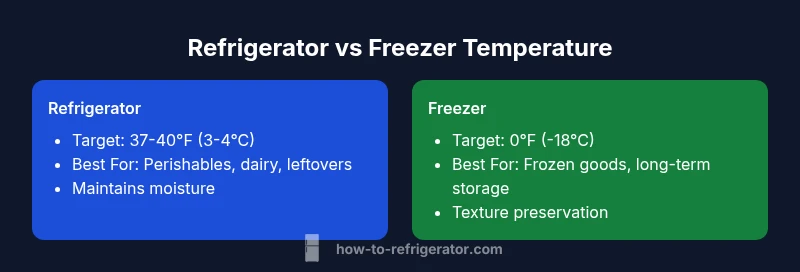
- Refrigerator: 37-40°F (3-4°C). This range minimizes bacterial growth on perishable foods while preserving texture and moisture. The Celsius equivalent ensures you can reference both scales when using metric kitchen tools.
- Freezer: 0°F (-18°C). This temperature halts the growth of most microbes and slows chemical reactions that degrade quality. It isn’t about achieving perfect dryness but about keeping water in frozen foods from forming large ice crystals that ruin texture.
For households with variable climates or older appliances, slight deviations won’t instantly ruin safety, but consistency matters. If your fridge runs noticeably cooler or warmer than these targets, small adjustments can yield meaningful gains in safety and efficiency. In practice, many households find that aiming a touch toward the midpoints (e.g., 38°F for the fridge) minimizes both spoilage risk and energy strain. Remember to verify both compartments with a reliable thermometer and re-check after changes.
How Temperature Affects Food Quality and Safety
Temperature control is the central guardrail for food safety and quality. The refrigerator temperature governs how quickly perishable items like dairy, fresh produce, and ready-to-eat foods deteriorate, while the freezer temperature determines how long raw and prepared foods retain their texture, flavor, and nutritional value. When the refrigerator temperature is too high, dairy can curdle, produce wilts, and leftovers become unsafe sooner. If the freezer temperature drifts above the target, ice crystals can form unevenly, leading to freezer burn and slower thawing. On the flip side, overly aggressive cooling can desiccate produce and mask the true freshness of foods by rapidly driving out moisture.
The two-temperature reality also affects the overall cold-chain integrity. A well-maintained fridge-to-freezer temperature relationship minimizes dangerous thaw cycles during door openings and power interruptions. In practice, keeping the two compartments aligned with their respective targets supports a robust food-safety posture while preserving sensory quality across a range of items.
Energy and Efficiency: Do Temperature Settings Save Power?
Temperature targets influence energy consumption, but the relationship is nuanced. A fridge that sits near the upper end of its safe range may draw less energy than one kept at the coldest setting, but you risk faster spoilage and more frequent door openings as items become unsafe. Conversely, pushing the freezer to a deeper chill than 0°F rarely yields better long-term energy savings and can increase compressor run times if you’re defrosting too aggressively or packing the freezer inefficiently. The practical takeaway is balance: avoid overcooling in pursuit of a marginal safety margin, and avoid warming the compartments just to sip a few degrees from the target. Well-designed modern appliances, combined with sensible storage habits, keep both safety and energy use in acceptable ranges. How To Refrigerator notes that a stable temperature profile, achieved through proper settings and regular checks, tends to minimize energy waste and maximize food safety.
Common Mistakes That Undercut Temperature Control
Even with good intentions, households regularly undermine temperature targets. Common missteps include:
- Placing hot or warm items directly in the fridge or freezer, which triggers temperature swing as the compressor compensates.
- Overpacking shelves, reducing air circulation and creating cold spots or temperature stratification.
- Relying on the appliance’s built-in display without verifying real temperatures with a dedicated thermometer.
- Forgetting to check door seals, which can leak cold air and push temperatures out of spec.
- Not accounting for climate and door usage; hot kitchens or frequent entry can alter cooling load.
Addressing these issues is often as simple as letting items cool before storage, reorganizing shelves for airflow, investing in a dedicated thermometer for each compartment, and routinely inspecting gaskets.
Temperature Testing and Calibration: Tools and Steps
Calibration is the quiet workhorse of reliable refrigerator vs freezer temperature management. Start with one thermometer in the fridge and one in the freezer to monitor real temperatures away from direct airflow. Here are practical steps:
- Place thermometers away from vents and door shelves to avoid skewed readings.
- Record temperatures at different times—morning, afternoon, and after repeated door openings.
- Compare readings against the targets (37-40°F for the fridge, 0°F for the freezer).
- If readings drift, adjust the thermostat incrementally by 1–2 degrees and re-test after 24 hours.
- Schedule a seasonal check, and consider professional service if readings remain inconsistent.
Regular calibration reinforces the habit of keeping the refrigerator vs freezer temperature in a valid range and helps you catch problems like door seals, fan issues, or thermostat failures early.
Special Cases: Small Kitchens, Hot Climates, and Busy Lifestyles
Environment and usage patterns influence how you manage the two-temperature system in your home. In small kitchens, airflow can be more restricted, so maintaining air gaps around vents and avoiding clutter helps sustain target temperatures. In hot climates or crowded households, you might see higher cooling loads, especially in summer; in such cases, slight tightening within the safe range can compensate for extra heat. For households with irregular schedules, discrete crisper zones or labeled storage compartments can reduce door openings and stabilize temperatures. The refrigerator vs freezer temperature strategy remains consistent, but your calibration and monitoring cadence may be more frequent to account for environmental pressure.
Storage Scenarios: Dairy, Meat, Produce, and Frozen Goods
Different foods have different sensitivities to temperature and moisture. Dairy items like milk and yogurt are best kept near the middle of the fridge shelf where temperatures are most stable. Fresh meat should be stored in the bottom shelf or dedicated meat drawer at safe cold temperatures, away from ready-to-eat foods. Produce benefits from sweater-like humidity controls in crisper drawers but still desires a cool, steady environment to stay fresh longer. Frozen goods—including meats, vegetables, and prepared meals—should be tightly wrapped, labeled, and arranged to avoid thawing and refreezing cycles that degrade texture. The fridge vs freezer temperature targets are not a one-size-fits-all prescription, but following the standard ranges will guide even novice cooks toward safer and higher-quality storage.
Case Studies: Real-World Scenarios
- Family of four, frequent meal-prep: The family keeps the fridge around 38°F and the freezer at 0°F. They monitor with two thermometers and reorganize weekly. The result is reliable safety for dairy and leftovers, with preserved ice quality in the freezer.
- Single occupant with a busy schedule: The fridge hovers near 37-38°F, and the freezer remains at 0°F. Energy usage stays reasonable without frequent waste.
- House with hot summers and a compact kitchen: Temperature checks are more frequent; minor adjustments to the fridge are made to prevent heat bleed, while the freezer is kept stable to avoid freezer burn on frozen staples.
Making Adjustments When You Upgrade or Change Habits
Upgrading appliances often improves temperature stability, but the governing targets remain the same. After a move or remodel, re-check temperatures in both compartments and re-calibrate. Changing dietary habits—more fresh produce, more meat, or more frozen meals—may justify minor tweaks within safe ranges. The key is to monitor, not guess, and to maintain a written log of thermometer readings and any adjustments. This practice keeps your refrigerator vs freezer temperature management effective, even as your kitchen evolves.
Side-by-Side Comparison: Refrigerator vs Freezer Temperature at a Glance
- Temperature Target: Refrigerator 37-40°F (3-4°C); Freezer 0°F (-18°C).
- Best For: Refrigerator for perishables; Freezer for long-term storage of frozen goods.
- Safety Focus: Refrigerator prioritizes perishable safety and moisture; Freezer prioritizes pathogen inhibition and texture retention.
- Energy Implications: Balance improves energy efficiency; overcooling can waste energy.
- Monitoring Needs: Thermometers recommended for both compartments; verify periodically.
Key Considerations for Long-Term Maintenance
Sustained success depends on routine checks, clean gaskets, stable storage organization, and mindful loading practices. Set and forget is rarely enough in the long term; instead, adopt a light-touch monitoring routine that aligns with your daily rhythms. By tying the refrigerator vs freezer temperature targets to real-world habits and thermometer readings, you minimize waste, maximize safety, and preserve the quality of both fresh and frozen foods.
Comparison
| Feature | Refrigerator | Freezer |
|---|---|---|
| Temperature Target | 37-40°F (3-4°C) | 0°F (-18°C) |
| Best For | Dairy, dairy-based meals, fresh produce, leftovers | Long-term storage of frozen foods |
| Quality/Safety Focus | Perishable safety and moisture management | Long-term pathogen inhibition and texture preservation |
| Energy Considerations | Typically lower energy draw per unit, depends on size | Can incur higher energy use due to lower temperature target |
| Maintenance Needs | Check seals, shelves, and vents; verify with thermometer | Frost management and defrost cycles in some models |
| Monitoring Needs | Regular thermometer checks recommended | Regular thermometer checks recommended |
Strengths
- Improved food safety through stable, well-monitored temps
- Reduced food waste with consistent storage conditions
- Clear, verifiable targets you can check with thermometers
- Potential energy savings through mindful temperature management
Cons
- Requires regular monitoring and occasional calibration
- May necessitate additional thermometers or sensors
- Temperature drift due to door usage or seal wear can still occur
Maintain fridge at 37-40°F and freezer at 0°F with regular thermometer checks.
The recommended targets provide a reliable baseline for safety and quality. Regular monitoring and calibration help detect drift early, allowing you to adjust before problems arise. This approach balances safety, energy use, and ease of maintenance.
FAQ
What is the ideal refrigerator temperature for safety and quality?
The standard guideline is 37-40°F (3-4°C) for the refrigerator. This range minimizes bacterial growth and helps preserve texture in perishables like dairy and meats. Regular checks with a thermometer ensure you stay within this band.
Keep the fridge around 37-40 degrees to stay safe and fresh; use a thermometer to verify.
Can I store frozen foods in the fridge to save time?
Storing frozen foods in the fridge is not recommended for long-term quality. Refrigeration is for short-term cooling; freezing is needed for long-term preservation. If you accidentally move a frozen item, return it to the freezer promptly to avoid thawing and bacterial growth.
Don’t rely on the fridge for frozen storage; it’s meant for short-term cooling only.
Why does my fridge seem to run all the time?
Constant running often signals temperature drift from door openings, a seal problem, overloading, or a faulty thermostat. Check the door seals, reduce overcrowding to improve air flow, and verify temperatures with a separate thermometer.
If it won’t stop running, check seals and airflow, then verify with a thermometer.
How do I calibrate a refrigerator thermometer?
Place a thermometer in the fridge away from vents and doors, take a reading after 24 hours, and compare to the target. If it’s off, adjust the fridge’s thermostat by small increments and re-check for 24 hours.
Put a thermometer inside, wait a day, and adjust a little if needed.
Do all refrigerators require two thermometers?
Not always, but using separate thermometers for the fridge and freezer helps you spot drift quickly and accurately. It’s a simple safeguard for ensuring both compartments stay within recommended ranges.
Two thermometers make spotting drift easier.
How do I manage temperature in hot climates or small kitchens?
In hot environments or compact spaces, check temps more frequently and keep optimal airflow around vents. Slightly closer supervision reduces the risk of drift due to ambient heat and door use.
Check temps more often in hot or crowded spaces.
Top Takeaways
- Set fridge to 37-40°F and freezer to 0°F
- Use dedicated thermometers for each compartment
- Avoid frequent door openings to reduce temperature drift
- Recalibrate after any appliance move or habit change