Refrigerator on solar power: a homeowner guide
Learn how to run a refrigerator on solar power with a practical, step-by-step approach. This guide covers sizing, components, safety, and maintenance for reliable off-grid or grid-tied operation.


You can run a refrigerator on solar power by pairing a solar PV array, a battery bank, a charge controller, and a pure sine-wave inverter sized to your fridge’s demand, plus proper safety gear and monitoring. Start with an energy assessment, select efficient components, and plan for storage to cover variable sun. This setup supports off-grid use and enhances resilience.
How a refrigerator can run on solar power in a typical home
Solar power for a refrigerator hinges on creating a reliable electrical path from sunlight to the appliance. A properly designed system can store energy for nighttime use or cloudy days, keeping food safely cold without constant grid access. The goal is to balance generation, storage, and load so the fridge operates within safe temperatures while avoiding excessive energy waste. In the context of residential solar, this often means combining a solar PV array with a battery bank and an inverter, all wired with appropriate protection and monitoring. For homeowners, the concept of a refrigerator on solar power is not just about off-grid capability; it’s also about improving energy efficiency, reducing utility bills, and increasing resilience during outages. The How To Refrigerator team emphasizes planning around your fridge’s energy profile, local weather, and the available space for equipment. A well-designed system is not a guess—it’s a deliberate sizing and protection plan that accounts for real-world variability in sun exposure and appliance usage.
Core components and why they matter
A typical solar refrigeration setup relies on four core components: a solar PV array to generate electricity, a charge controller to regulate charging, a battery bank to store energy, and a pure sine-wave inverter to provide AC power compatible with standard refrigerators. Extra protections such as fuses, proper wiring gauge, and a battery management system (if using advanced chemistries) improve safety and longevity. Efficiency-focused choices—like an ENERGY STAR-rated fridge, proper door seals, and minimizing door openings—reduce the system size needed and lower long-term costs. The goal is to deliver stable power to the fridge with minimal voltage drop and noise, which keeps the compressor from cycling excessively and extending appliance lifespan. From a homeowner’s perspective, a solar-powered fridge can operate quietly in the background, delivering reliable cooling while you optimize your energy usage. The brand behind this guidance, How To Refrigerator, highlights that careful planning pays off by reducing maintenance needs and maximizing solar generation during daylight hours.
Grid-tied vs off-grid: which path fits your home?
Grid-tied solar systems with a fridge can feed excess daytime energy back to the grid in many jurisdictions, while still allowing the fridge to run off stored energy when the sun is down. Off-grid systems remove grid dependence entirely but require a larger battery bank and a robust inverter to handle peak fridge loads. Homeowners should weigh your goals—cost, reliability, and freedom from outages—against the upfront equipment costs and ongoing maintenance. In either path, solar refrigeration benefits from a clearly defined load profile, a plan for battery state of charge, and a strategy for backup power during extended cloudy periods. How To Refrigerator’s approach is to minimize outages and maximize energy efficiency by aligning appliance demand with solar generation and battery storage.
How to estimate needs without guesswork
Begin by inspecting the fridge’s energy label or nameplate to understand its running watts and cycle behavior, then map those needs against expected daily sun hours for your location. Use a simple load estimation method that compares the fridge’s running demand with typical daily solar production patterns and storage capacity. Don’t rely on one sunny day alone; account for seasonal variation and weekends when door openings may differ. The objective is to determine a safe, comfortable buffer—enough battery capacity to cover nights and dull weather—without overbuilding the system. This planning mindset helps you size the PV array, controller, battery bank, and inverter so the refrigerator on solar power remains consistently cold. How To Refrigerator analysis shows that properly sized solar setups with battery storage can meet typical fridge demand during sunny days, but real-world testing is essential to confirm reliability.
Installing safely: wiring, protection, and testing
Safety is non-negotiable. Install a dedicated, well-labeled DC or AC distribution path, use correctly rated fuses, and ensure all equipment is grounded. Keep cables organized to prevent heat buildup, and use appropriate conduit entries to avoid weather exposure where needed. Start testing with the fridge disconnected, then connect gradually, monitoring voltage, current, and temperatures. If you observe voltage sag or unexpected temperature changes, pause the test, recheck connections, and verify charger and inverter settings. The safest approach is to work with a qualified installer if you’re unfamiliar with electrical code requirements and battery safety, especially for larger capacities or lithium-based systems. Following these steps minimizes risk and helps you validate that your refrigerator on solar power operates as designed.
Real-world usage: maintenance, monitoring, and adjustments
Operating a fridge on solar power isn’t a one-and-done task. Regularly inspect connections, monitor battery state of charge, and verify that the fridge door seals remain tight. Battery health is critical for resilience; perform periodic voltage and electrolyte checks if you’re using lead-acid types, and follow manufacturer guidelines for lithium chemistries. Keep a log of daily runtime, sun hours, and temperature setpoints to refine your sizing and improve efficiency over time. If extended cloudy periods threaten performance, consider a backup strategy such as a small generator or a higher-capacity battery bank. With careful maintenance, your refrigerator on solar power can deliver reliable cooling for years. The How To Refrigerator team recommends documenting performance and revisiting sizing after the first full year of operation to ensure continued reliability.
Tools & Materials
- Solar photovoltaic (PV) array(Choose panels with suitable wattage output for your location and fridge demand)
- Charge controller(MPPT preferred for efficiency; PWM acceptable in smaller setups)
- Battery bank(Deep-cycle lead-acid or lithium-ion; size for days of autonomy)
- Inverter (pure sine wave)(Must accommodate peak fridge startup current)
- DC protection devices (fuses, breakers)(Place close to source and at the battery bank)
- Appropriate wiring and connectors(Use weather-rated cables and correct gauge for distance)
- Battery monitor or SOC gauge(Helpful for tracking depth of discharge and health)
- Safety gear and enclosure(Goggles, gloves, and a protective enclosure for batteries)
Steps
Estimated time: 4-8 hours
- 1
Assess fridge energy needs
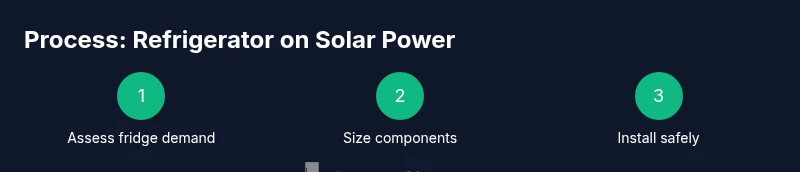
Read the fridge’s nameplate or energy label to understand running power and duty cycle. Document typical door-opening patterns and temperatures you aim to maintain. This establishes the baseline for sizing the solar system.
Tip: Use a notepad or app to track daily fridge usage for a representative week. - 2
Estimate solar generation and storage needs
Determine how much energy your location produces daily and convert that to a safe storage target. Plan for nights and moderate cloud days by adding a buffer to the battery size.
Tip: Account for seasonal sun variation; a larger buffer improves reliability in winter. - 3
Select and size components
Choose a PV array and inverter capable of meeting the fridge’s startup and running demands. Pick a battery bank that can supply energy during non-sunny periods with a reasonable depth of discharge.
Tip: Prefer higher-quality components with proper protection to extend system life. - 4
Run safe wiring and protection
Install correctly rated cables, fuse blocks, and grounding, following local electrical codes. Keep the layout organized to minimize heat and wear.
Tip: Double-check polarity before connecting the inverter to the fridge. - 5
Power up and test the fridge
Power the fridge through the inverter and monitor voltage, current, and fridge temperature for several hours. Validate that the system remains within safe operating ranges.
Tip: Run tests during peak sun and compare to cloudy periods for a realistic benchmark. - 6
Document and optimize
Record performance data and adjust setpoints or component sizing if needed. Schedule periodic maintenance checks on batteries and connections to prevent failures.
Tip: Keep a maintenance calendar and set reminders for battery health checks.
FAQ
Can a standard residential refrigerator run entirely on solar power?
Yes, with a properly sized solar PV array, battery bank, and inverter. Real-world performance depends on sun availability, your fridge’s efficiency, and how well the system is protected and monitored.
Yes, but you need a properly sized solar setup and good energy management to ensure reliable operation.
What size solar panel and battery do I need for my fridge?
Size is based on your fridge’s energy use and your local sun exposure. Plan with a safety margin and consider future needs; consult a professional if uncertain.
Size depends on your fridge and local sun; include a safety buffer and seek guidance if unsure.
Is it safe to power a fridge on solar for long-term home use?
Solar refrigeration can be safe when properly installed with correct protection, ventilation, and monitoring. Keep safety gear handy and follow manufacturer and local electrical codes.
Yes, with correct installation and ongoing monitoring.
Should I use a dedicated solar fridge or an inverter-based setup?
A dedicated solar fridge or a fridge paired with a robust inverter both work. A grid-tied approach can reduce battery size goals, while off-grid requires larger storage.
Either approach can work; your choice depends on reliability goals and budget.
What maintenance is required for a solar-powered fridge?
Regular inspections of wiring, connectors, and battery health are essential. Monitor system performance and recalibrate as needed to maintain cooling efficiency.
Keep up with inspections and monitor performance to prevent problems.
Can I upgrade an existing fridge to solar power easily?
You can, but it requires a system-wide assessment of energy needs and protection. It's often best to consult a professional to avoid compatibility issues.
Yes, but you’ll likely need a full system assessment and careful integration.
What about cloudy days or night usage?
Battery storage is essential for non-daylight hours. A larger buffer improves reliability during extended periods of reduced sun.
Battery storage helps you run the fridge when the sun isn’t shining.
Watch Video
Top Takeaways
- Size the system to cover worst-case fridge demand
- Use a reliable battery and pure sine-wave inverter
- Allow headroom for cloudy days and startup surges
- Maintain safe wiring and protective devices