How Much Does Refrigerator Electricity Cost in 2026?
Estimate your fridge's yearly electricity bill with our 2026 guide. Learn how size and efficiency affect costs, plus tips to save energy at current rates.


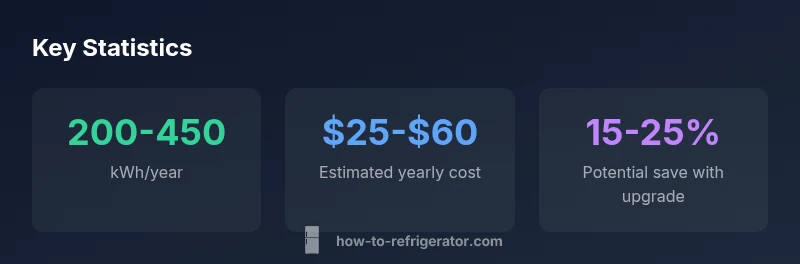
According to How To Refrigerator, a modern refrigerator typically uses about 150–450 kWh per year. At typical U.S. electricity rates, that equates to roughly $25–$60 annually. Costs vary with size, model, and usage patterns. Upgrading to an energy-efficient unit or adjusting door opening frequency can trim the bill by a meaningful margin.
What drives refrigerator electricity costs
If you’re asking how much does refrigerator electricity cost, you’re really asking about a mix of factors. The core driver is energy use, quantified as kilowatt-hours per year (kWh/year). A modern, energy-efficient model typically consumes far less energy than a bulky older unit, even if both hold similar capacities. Size matters: larger compartments and extra features raise the demand on the compressor, particularly during summer peak. Local electricity rates also vary by region and season, which means the same model can cost more to run in one city than another.
Beyond the base design, usage patterns have a meaningful impact. Daily habits—opening the door frequently, crowding the interior, or failing to maintain a proper seal—can push up energy use. Heat sources nearby, such as ovens or hot dishwashers, can cause the fridge to work harder to restore the set temperature. Routine maintenance, like cleaning coils and replacing worn door gaskets, reduces stray heat gain and shrinks costs over time. In summary, refrigerator electricity costs emerge from a combination of design, behavior, and environment, and small changes can compound into noticeable savings.
How to read energy labels and compare models
Most refrigerators carry an energy guide label that estimates annual energy use in kWh/year. Use this value as the baseline when comparing models, not just the upfront price. An efficient model might cost more upfront but deliver lower operating costs over its life. When you compare, convert kWh/year to annual cost using your local rate, then compare across models. Remember that Energy Star certified models are typically more efficient than non-certified ones, though actual savings depend on usage and features.
Other efficiency advancements—improved insulation, variable-speed compressors, and better door seals—often deliver incremental savings that add up over time. For multi-door configurations, ensure doors seal properly and avoid placing the fridge near heat sources. This section helps you translate on-the-label energy usage into real-world costs and identify which features yield the best long-term value.
Real-world usage patterns that affect cost
Daily practice can either trim or inflate fridge electricity costs. To start, avoid leaving the door open for extended periods; even short lapses can raise temperatures inside and trigger longer compressor cycles. Maintain temperatures around 37–40°F for the fresh compartment and 0°F for the freezer to balance energy use and food safety. Organization matters too: overcrowding or blocking vents can disrupt airflow and force the cooling system to work harder. Regular maintenance is essential—clean condenser coils yearly and inspect door gaskets for wear. Position the unit away from heat sources like stoves or direct sunlight to minimize unnecessary heat gain. Collectively, these habits can yield meaningful reductions in annual consumption, especially in households with high daily usage.
Estimating your annual cost: a simple formula
A practical way to estimate running costs is to multiply the fridge’s energy use by your local rate. If your model lists 200–450 kWh/year and your rate ranges from 10–20 cents per kWh, annual costs would roughly fall in the $20–$90 band. Real-world costs will vary with seasonal pricing and how full the fridge remains. When calculating, apply the lower rate for winter and the higher rate for peak summer if you have seasonal pricing plans. For homes with multiple refrigerators, sum each unit’s estimate for total comsumption. Keep in mind these are rough estimates intended to guide planning and budgeting. A simple online calculator can provide a closer approximation by inputting your exact kWh/year and local rate.
Practical cost-saving strategies you can implement today
Saving energy and reducing costs starts with smart buying and ongoing maintenance. When shopping, prioritize models with the lowest kWh/year within your space constraints; ENERGY STAR certified units are a reliable starting point. At home, fix weak door seals, keep coils clean, and set temperatures to recommended ranges. Avoid overfilling or underfilling, which disrupts air circulation and forces the compressor to work harder. Limit door openings and consider smart features that optimize cycling and monitoring. If you have more than one fridge, evaluate whether consolidation into a single efficient unit could save energy. Finally, use an energy monitor to detect spikes in consumption and adjust your habits accordingly.
When upgrading pays off: ROI and model choices
If your current refrigerator is older, inefficient, or failing, upgrading can pay off within a few years thanks to lower operating costs. The payback period depends on the upfront price difference, available incentives, and electricity prices. In general, smaller, ENERGY STAR-certified models with efficient compressors and tight insulation deliver the strongest long-term savings. If your unit is more than 10–15 years old or exhibits persistent inefficiencies, replacement is often worthwhile. For mid-range models, you may offset some cost with targeted improvements and optimized usage rather than a full upgrade. Assess your pattern of use, climate, and food-prep habits to determine whether replacement or retrofits make the most sense.
Common mistakes that waste energy and how to fix them
Several simple missteps can inflate fridge electricity costs. Avoid placing the unit in direct sunlight or next to heat-producing appliances, which increase cooling demand. Check door seals for leaks and replace worn gaskets promptly. Keep the condenser coils clean and ensure adequate airflow around the compressor. Set the temperature within recommended ranges and avoid using the defrost function more than necessary in modern units. Finally, avoid overloading the fridge, which can obstruct air circulation and cause inefficiencies. Small, consistent maintenance and layout improvements can add up to noticeable savings over the course of a year.
Tools and resources to estimate costs and compare models
Utilize online calculators and manufacturer energy guides to estimate running costs for your preferred models. Government and nonprofit resources—such as Energy Star labels and DOE energy guides—offer reliable benchmarks for kWh/year and efficiency expectations. For homeowners, a practical approach is to collect model numbers, compare the official kWh/year figures, and multiply by local rates to derive a robust annual cost estimate. These steps help you quantify savings opportunities and prioritize improvements that deliver real value over time.
Real-world scenarios and case studies
To illustrate, consider a family upgrading from a 15-year-old standard fridge to a modern Energy Star bottom-freezer. The older unit might run at the high end of energy use, while the new model could cut annual consumption by a meaningful margin, translating to tens of dollars in yearly savings. In regions with high electricity costs, the benefit compounds more quickly, and the payback window shortens. Although results vary based on climate, usage, and price, the pattern holds: efficient designs paired with mindful usage deliver the strongest long-term cost control.
],
dataTable":{"headers":["Scenario","Fridge Type","Estimated kWh/yr","Estimated Cost/yr (USD)"],
rows":[[
Estimated energy use and running cost for common refrigerator sizes
| Scenario | Fridge Type | Estimated kWh/yr | Estimated Cost/yr (USD) |
|---|---|---|---|
| Modern Energy-Efficient Compact | Bottom-freezer Energy Star | 200-300 | 25-45 |
| Mid-Size Family Fridge | Top/Side-by-Side (Energy Star) | 300-450 | 40-60 |
| Older Large Fridge | Older standard | 450-900 | 60-120 |
FAQ
What is the biggest factor affecting refrigerator electricity cost?
The main drivers are energy use (kWh/year) and the local price per kWh, with size and efficiency playing major roles.
The biggest factors are how much energy the fridge uses and what you pay per kilowatt-hour.
Can switching to an Energy Star fridge save me money?
Yes, ENERGY STAR models typically use less energy over time, often resulting in lower annual costs despite higher upfront prices.
Energy Star fridges usually save energy and money in the long run.
How do I estimate my fridge’s annual cost at home?
Find the model’s kWh/year on the label, multiply by your local rate, and adjust for seasonal pricing if applicable.
Look up the kWh per year, multiply by your rate, and you’ll have a good estimate.
Is it worth repairing an old fridge for energy savings?
If the unit is very old or inefficient, replacement may offer better long-term savings; otherwise, targeted maintenance can help.
Sometimes repairing is worth it, but older units may be more cost-effective to replace.
Do defrost cycles affect cost?
Auto defrost can add a bit more energy use, especially in older units; newer models manage defrost more efficiently.
Defrost cycles can affect energy use, especially in older fridges.
How can I compare costs between models accurately?
Compare kWh/year figures and local electricity rates; convert to annual costs to see which model is cheaper over time.
Compare the yearly energy use and multiply by your rate to see real costs.
“Energy efficiency isn’t just about saving money; it reduces wear on the compressor and supports a quieter, longer-lasting appliance.”
Top Takeaways
- Estimate costs using kWh/year and local rates.
- Choose ENERGY STAR to lower long-term costs.
- Fix door seals and clean coils to reduce usage.
- Set temperatures to recommended ranges for efficiency.
- Limit door openings to minimize heat gain.
- Use energy monitors to identify wasteful habits.