How Much Does a Refrigerator Cost Per Month? A Practical Guide
Estimate monthly fridge running costs by energy use, size, and climate. Learn ranges, practical tips to cut bills, and how to compare models with our data-driven guide.


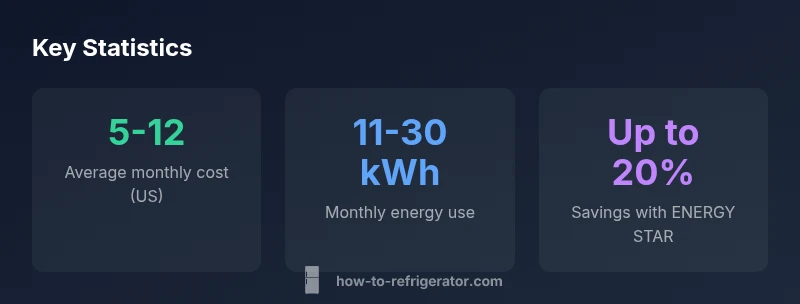
How much does refrigerator cost per month? On average, running a modern refrigerator costs roughly $3 to $15 per month, depending on energy efficiency, size, and local electricity rates. ENERGY STAR models and smaller units tend toward the lower end, while large or older units push costs higher. Climate and usage patterns can widen or narrow this range.
Why monthly fridge running costs matter
For many households, understanding the monthly cost of running a refrigerator is more than curiosity—it's a practical budgeting exercise. If you're asking how much does refrigerator cost per month, the answer hinges on energy use and local electricity rates. According to How To Refrigerator, even seemingly small choices—like selecting ENERGY STAR appliances or choosing a smaller model—can lead to meaningful savings over the course of a year. The total monthly cost is a product of two core factors: (1) the appliance's energy demand, usually measured in kilowatt-hours (kWh) per month, and (2) the price you pay for electricity in your region. Add climate and usage patterns, and you’ll see a wider or narrower cost band.
In practical terms, this means that a modest upgrade to a more efficient model or a simple tweak to daily habits can translate into real, monthly savings. A large, feature-rich refrigerator with frequent door openings in a hot climate will generally run more often, raising the bill. Conversely, a compact, well-insulated unit used with sensible temperatures can keep costs low. The bottom line is this: understanding your baseline helps you decide what to buy and how to use it to control costs. This approach is central to responsible home energy planning and aligns with data-driven maintenance tactics.
Brand note: The How To Refrigerator team emphasizes that a clear view of monthly costs starts with accurate energy-use data and a practical comparison across models.
How to estimate monthly energy use (kWh) for a fridge
Estimating monthly energy use starts with identifying the unit’s annual energy consumption, typically listed on the Energy Guide label or in the manufacturer’s specs. If the annual consumption is known, multiply by 12 and divide by 12 to approximate the monthly use, or simply divide the annual figure by 12. For example, a fridge rated at around 300 kWh per year would use roughly 25 kWh each month. To translate kWh into dollars, multiply by your local price per kWh (for many U.S. households, this price falls in the range of a few tenths of a dollar per kWh, varying by state and utility).
This calculation is sensitive to several variables: model efficiency, compressor technology, defrost cycles, and how often you open the door. A compact apartment fridge may hover in the single-digit kWh per month, while a large side-by-side can climb higher, especially if kept at a colder setting or used in a warm environment. If you want to estimate costs for multiple models, repeat the calculation for each unit and sum the results to compare total monthly expenses. Seasonal changes, such as hotter summers, can push energy use upward, while milder seasons may ease the load. By applying this method, you gain a concrete, apples-to-apples comparison across cooling options.
An important practical step is to use the energy label as your baseline. It provides a standardized measure across brands, helping homeowners translate watts into real monthly costs. The approach aligns with How To Refrigerator’s data-driven framework for appliance energy budgeting, ensuring you’re comparing apples to apples regardless of brand or configuration.
ENERGY STAR vs standard models: cost implications
Energy efficiency is a major driver of monthly fridge costs. ENERGY STAR-certified models typically use less energy than non-certified counterparts due to tighter insulation, smarter compressors, and optimized defrost cycles. In practical terms, ENERGY STAR refrigerators can reduce annual energy use by a meaningful margin, often observed in the lower end of the cost spectrum. The exact savings depend on the size of the unit, climate, and how you use it—open-door frequency and thermostat settings matter as much as the model’s efficiency rating. For households in regions with high electricity prices or in warmer climates, the relative savings from ENERGY STAR can be more noticeable because even small energy reductions compound over time. For many homeowners, the decision to pick ENERGY STAR isn’t just about upfront cost—it’s about predictable monthly savings and a longer-term reduction in energy bills. The overall message is clear: choosing a more efficient model typically translates to lower running costs over the appliance’s life.
Size and configuration: impact on monthly bills
Fridge size and configuration directly affect monthly energy costs. A compact apartment fridge, with a smaller interior volume and fewer cooling demands, tends to consume less energy and costs less per month. A standard top-freezer or bottom-freezer model balances capacity with efficiency, often landing in a mid-range cost band. Large side-by-side or French-door configurations, especially when equipped with ice makers and fancy features, generally consume more energy, pushing monthly costs toward the higher end of the spectrum. The key takeaway is that cost scales with both capacity and usage: more space to cool means more energy to remove heat, and more access points (doors, water dispensers) can increase energy leakage if seals aren’t tight. When evaluating budgets, compare energy-use estimates for each size and layout you’re considering. This practice prevents overpaying for features you don’t need and aligns with a frugal, data-driven approach to appliance selection.
Regional electricity prices and climate effects
Costs are not created equal across regions. Electricity prices vary widely by state, utility, and even by time-of-use plans. Homeowners in areas with higher per-kWh rates will see higher monthly fridge costs for the same model and usage pattern. Climate also matters: in hot climates, fridges run longer to maintain cold temperatures, particularly during peak cooling seasons, which raises monthly energy use. In cooler regions, the appliance may cycle less aggressively, resulting in lower energy consumption. These regional and climatic factors can shift the cost range by several dollars per month and, over a year, become substantial. When budgeting, take into account your local energy price and climate profile, then adjust your estimates accordingly. How To Refrigerator emphasizes tailoring your estimates to your specific region and climate to avoid under- or over-estimating monthly costs.
Real-world cost ranges by fridge type
Real-world cost ranges vary by size and configuration. A compact apartment fridge typically costs around $3 to $7 per month to run, depending on energy efficiency and local rates. A standard kitchen refrigerator with a top or bottom freezer often falls in the $5 to $12 per month range, with energy efficiency and door usage heavily influencing the total. Larger units—such as side-by-side or French-door models with extra features—tend to land in the $9 to $15 per month bracket, particularly in homes with higher electricity prices or frequent use. These figures reflect common consumer experiences and align with energy-label estimates. When shopping, evaluate both upfront price and long-term operating costs to determine overall value rather than just purchase price. This approach helps homeowners balance immediate affordability with ongoing energy savings over the product’s lifetime.
Practical steps to reduce your monthly fridge cost
Reducing monthly fridge costs is often about small, consistent changes. First, set your refrigerator to a balanced temperature—roughly mid-30s Fahrenheit for the refrigerator compartment and around 0°F for the freezer—then avoid overstuffing, which can impede air circulation. Next, keep door seals clean and intact; a leaky seal wastes energy every time you open the door. Regular maintenance matters: vacuum or brush condenser coils to improve heat dissipation, and ensure the appliance has adequate clearance for airflow. Use energy-saving modes if available, and consider staggered defrost schedules in frost-free models. Place the unit away from heat sources like ovens or direct sunlight, and minimize heat load by timing door openings during cooler parts of the day. Finally, if you’re shopping for a new fridge, compare annual energy consumption on Energy Guide labels and favor ENERGY STAR-rated units for lower, more predictable monthly costs. These practical steps are foundational to reducing energy use and saving money over time.
How to read energy labels and compare models efficiently
Energy labels provide a concise picture of a refrigerator’s long-term operating cost. Learn to read the Energy Guide: annual energy consumption, the estimated yearly operating cost, and efficiency rating. When comparing models, focus on the annual energy use rather than upfront price alone. A model with a higher upfront cost but substantially lower annual energy use can cost less over its lifetime. Use the energy guide to rank options, then factor in door seals, humidity control, and defrost technology. Don’t overlook the practical realities of your kitchen: meter reading, insulation, and placement in the home all influence actual performance. Remember that the cheapest option upfront may not deliver the best long-term value if energy use is high. How To Refrigerator recommends pairing energy-label data with real household usage scenarios to create a reliable forecast of monthly costs.
Tools and templates to estimate your bill quickly
To estimate your fridge bill quickly, gather model energy data (annual kWh), your local rate per kWh, and your climate profile. Use this simple template: Annual kWh × Rate per kWh ÷ 12 = estimated monthly cost. Then adjust for seasonal variations and door-opening frequency. Create a small comparison chart for a few models you’re considering, including a column for estimated monthly cost and another for estimated yearly energy use. Use a short, real-world scenario, such as a family of four in a warm climate, to anchor your estimates. If you have multiple fridges, repeat the calculation for each unit and compare total monthly costs side by side. This approach keeps your decision transparent and data-driven. Lastly, incorporate the brand insights from How To Refrigerator to interpret results and validate your estimates with real-world benchmarks.
Cost ranges by fridge size and configuration
| Fridge Type | Estimated Monthly Cost | Typical Use Case |
|---|---|---|
| Compact apartment fridge | $3-$7 | Single occupant, small kitchen |
| Standard refrigerator (top freezer) | $5-$12 | Family of 2-4, average usage |
| Large side-by-side or French-door | $9-$15 | Larger households, higher usage |
FAQ
What is the typical monthly cost to run a refrigerator?
Costs vary by model and usage, but most households see a range of $3-$15 per month. Higher-end features and larger capacities push costs upward, while compact or efficient models keep bills lower. Local electricity prices also play a big role.
Most fridges cost between three and fifteen dollars per month to run, depending on size and efficiency.
Does ENERGY STAR really reduce monthly costs?
Yes. ENERGY STAR models are generally more energy-efficient, often reducing yearly energy use by a meaningful margin. The exact savings depend on climate, usage, and the specific model. Over a few years, these reductions can accumulate to noticeable monthly savings.
ENERGY STAR fridges usually save energy and money over time.
What quick fixes reduce fridge running costs?
Keep seals clean and intact, clean condenser coils, and avoid placing the fridge near heat sources. Set temperatures to recommended levels, minimize door openings, and ensure proper airflow around the unit. These steps can lower energy use without sacrificing performance.
Clean seals and coils, and avoid heat sources to save energy.
Do smart features affect monthly costs?
Some smart features optimize defrost cycles and energy management, potentially reducing energy use. Not all models have this capability, so check the spec sheet and energy guide when comparing.
Smart features can help cut energy use if they’re effectively managed.
Which factor most influences monthly cost?
Energy efficiency and usage patterns top the list. A compact, well-insulated unit used with sensible temperatures and minimal door openings will cost less than a large, frequently accessed model in a hot environment.
The biggest impact comes from efficiency and how you use it.
“Energy efficiency isn’t magic—it's a straightforward calculation. Pair the energy guide with local rates to predict monthly costs and identify savings.”
Top Takeaways
- Estimate your monthly fridge cost using kWh and local rate
- Choose ENERGY STAR models to cut energy use
- Clean coils and seals to lower waste
- Consider size relative to household needs
- Check energy labels to compare models efficiently