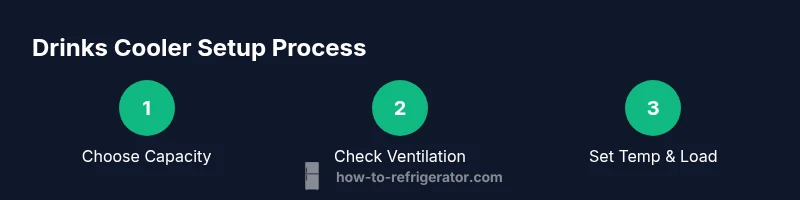
Drinks Cooler Guide: Choose, Install, and Maintain for Home Kitchens
Learn how to choose, install, and maintain a drinks cooler with expert, practical guidance. This step-by-step guide covers space, energy efficiency, placement, and maintenance for reliable beverage cooling.


You will learn how to choose, install, and maintain a drinks cooler, including assessing space, selecting an energy-efficient model, and setting up proper ventilation and temperature controls. The guide covers safety, wiring, placement, and routine maintenance to extend life and keep beverages at optimal chill.
What is a drinks cooler and why you might want one
A drinks cooler is a compact refrigeration appliance designed to keep beverages like soda, beer, and wine at a suitable chill. Unlike a full-size refrigerator, it concentrates cooling power in a smaller footprint and often provides adjustable shelves, front ventilation, and streamlined access for entertaining. For homeowners, a dedicated drinks cooler keeps beverages within easy reach without crowding your main fridge, and it makes self-serve stations more organized during gatherings. According to How To Refrigerator, the right model starts with how you’ll use it, the space you have, and your tolerance for noise and energy use. The How To Refrigerator team emphasizes that getting this decision right reduces energy waste and makes hosting simpler. In this section we’ll set the stage by clarifying what a drinks cooler is, who benefits, and how it differs from standard kitchen refrigeration.
Types and placement considerations
Drink coolers come in several practical forms: countertop mini-coolers for tight spaces, freestanding units that can be placed along walls, and built-in or under-counter models designed to blend with cabinetry. When selecting a type, consider how many beverages you plan to store, whether you want adjustable shelves, and how you’ll access the unit during busy hosting moments. Placement matters too: keep the cooler away from heat sources like ovens or direct sunlight, allow for ventilation around the back and sides, and ensure a level, sturdy floor. Extension cords should be avoided, and you should verify that the nearby outlet can handle the load. How To Refrigerator analysis shows that proper venting and a stable power supply contribute to consistent cooling and lower energy consumption.
Features to look for when buying a drinks cooler
Prioritize models with a reliable thermostat, accurate temperature display, and adjustable shelves to accommodate bottles and cans of different sizes. Look for door seals that compress evenly and shelves with reinforced supports if you plan to load heavy bottles. Noise level is important in open-plan kitchens or living spaces; seek units listed as quiet or with low decibel ratings. Energy efficiency is a practical concern; Energy Star-rated coolers typically use less energy for comparable capacity, and better insulation reduces run time. Also consider humidity control for wine storage or fruit juices, front-venting designs for built-in installations, and lighting options that don’t heat the interior. How To Refrigerator analysis shows that seemingly small features—tight seals, vent clearance, and stable shelves—have a big impact on efficiency and reliability.
Installation considerations: space, ventilation, outlets, and safety
Before installing, measure the intended location to confirm fit, door swing clearance, and vent space. Ensure there is a nearby grounded outlet and, if the unit is built-in, check mounting requirements and ventilation paths behind panels. Level the cooler using a spirit level or adjustable feet, and secure it if you expect movement on a hard floor. Clear the area of dust, debris, and packaging that could block vents. If your cabinet requires mounting brackets, follow the manufacturer’s installation guide and use proper fasteners. Always unplug the unit before wiring changes or drilling, and keep liquids away from electrical components.
Quick-start setup checklist
- Verify you have a dedicated, accessible outlet and the space is clean and level.
- Unbox carefully and inspect for shipping damage.
- Set the thermostat to the recommended startup range and allow the unit to stabilize before loading.
- Place beverages in an organized grid, starting with the most frequently used ones near the door.
- Check door seals and ventilation after the first 24 hours.
- Schedule routine maintenance and cleaning to extend life. Informed planning and careful installation save energy and improve cooling consistency.
Maintenance and troubleshooting for a drinks cooler
Regular maintenance is simple and can prevent many issues. Wipe spills promptly with a mild cleaner and dry thoroughly. Clean gaskets monthly to maintain a tight seal. If you notice excessive noise, unusual warm spots, or door leaks, inspect door seals, vents, and the area behind and under the unit. Defrost manually if your model is not frost-free, following the manual’s defrost procedure. For electrical concerns, use a door-release to prevent forced openings and consult a qualified technician if outlets or cords feel warm. A small amount of routine care goes a long way toward reliability.
Authority sources and further reading
For energy guidance and appliance reliability, see credible sources and standards. How To Refrigerator references energy-efficiency best practices and safety considerations from recognized authorities. The following links provide further context on reliable appliance performance and safe handling:
- https://www.energy.gov/eere/buildings/articles/how-energy-star-appliances-save-energy
- https://www.energy.gov/energysaver/articles/energy-efficient-appliances
- https://www.epa.gov/energy/star
Tools & Materials
- Measuring tape(To verify space, clearance, and door swing)
- Level(Ensure the unit sits perfectly flat on the floor)
- Screwdriver set (Phillips and flathead)(For mounting brackets or panel screws)
- Power drill and bits(If mounting or securing to surfaces (where allowed))
- Stud finder(Locate solid backing for mounting or extra support)
- Outlet tester(Verify outlet is live and properly grounded)
- Non-slip mat or padding(Protect floor and reduce movement)
- Safety gloves(Protect hands during installation)
- Flashlight(See under cabinets or in dim corners)
- Extension cord (heavy-duty)(Only if no nearby outlet; do not use long-term)
Steps
Estimated time: 60-90 minutes
- 1
Assess space and electrical readiness
Measure the intended location, confirm door swing clearance, and verify there is a grounded outlet nearby. Check that the floor is level and capable of supporting the unit’s weight. This step prevents fit issues and unsafe placement.
Tip: Use a level and a tape measure to confirm fit before you proceed. - 2
Choose the right drinks cooler model
Based on your space and beverage load, pick a model with appropriate capacity and shelves that can adjust. Prioritize an energy-efficient thermostat and a reliable temperature display for easy monitoring.
Tip: Opt for a unit with adjustable shelves and a sealed door for better efficiency. - 3
Prepare the installation area and tools
Clear the space, remove packaging, and arrange tools within easy reach. Check that the outlet is accessible and that cords won’t be pinched when the door opens.
Tip: Keep a clear workspace and protect the floor with a mat. - 4
Position and level the cooler
Place the cooler in the chosen spot and adjust feet or use shims to achieve level alignment. Leveling prevents door misalignment and ensures even cooling.
Tip: Recheck level after loading the first shelf of beverages. - 5
Connect power and configure temperature
Plug in the unit and set the thermostat to a mid-range startup. Allow the internal environment to stabilize before loading beverages so you don’t overload the compressor.
Tip: Avoid rapid changes in temperature during initial startup. - 6
Load beverages and organize for access
Arrange cans and bottles logically, with the most-used items near the door for quick access. Use the shelves as a grid to keep beverages stable during movement.
Tip: Distribute weight evenly to avoid stressing shelves. - 7
Verify seals and finalize setup
Close the door and check that the seals compress evenly all around. Listen for air leaks and observe 24-hour performance readings to confirm stability.
Tip: Wipe gaskets clean to maintain a tight seal. - 8
Schedule maintenance and checks
Create a simple calendar reminder for quarterly cleaning, gasket inspections, and vent clearance checks. Regular upkeep prevents performance drops and extends service life.
Tip: Document any issues with dates and actions taken.
FAQ
What is a drinks cooler and how does it differ from a standard refrigerator?
A drinks cooler is a compact refrigerator designed for beverages, with adjustable shelves and front access. It focuses on ease of use, energy efficiency, and space efficiency compared to full-size fridges.
A drinks cooler is a small fridge for drinks with adjustable shelves and front access, designed to save space and energy.
What size drinks cooler do I need?
Choose based on your expected beverage count and available space. Do not overfill; leave room for air circulation to keep cooling consistent.
Pick a size that fits your space and beverage load, and leave room for air flow.
Can I install a drinks cooler built-in or under counters?
Some models are designed for built-in or under-counter installation with proper ventilation. Always follow the manufacturer’s guidelines to maintain clearance and airflow.
Some models can be built-in or under-counter with proper ventilation. Follow the manual.
What temperatures should a drinks cooler maintain?
Most beverages chill well in a dedicated cooler when kept in a stable, cold environment. Use a thermometer to verify and adjust thermostat to maintain consistent cooling.
Keep beverages in a consistently cold range and check with a thermometer.
Is a drinks cooler energy efficient?
Energy-efficient models and proper sealing reduce running costs. Look for Energy Star ratings and good insulation to maximize efficiency.
Yes, choose Energy Star models and ensure doors seal well.
What maintenance tasks are essential?
Regular cleaning of shelves and gaskets, timely defrosting (if not frost-free), and vent clearance checks keep the cooler performing reliably.
Keep it clean, defrost if needed, and check the vents regularly.
Watch Video
Top Takeaways
- Measure space before buying and choose compatible capacity
- Prioritize energy efficiency and door seals
- Ventilation and level surface matter for performance
- Perform regular maintenance to maximize life