Difference Between Refrigerator and AC: A Comprehensive Comparison
Explore the difference between refrigerator and ac, covering purpose, design, energy use, maintenance, and buying considerations to help homeowners choose wisely.


Refrigerators and air conditioners both move heat, but they serve different jobs. A refrigerator preserves food inside a sealed cabinet by maintaining a cold interior, while an air conditioner cools living spaces by removing heat from rooms. Their components, energy use, and maintenance needs differ, so treat them as separate appliances when deciding on repair, replacement, or upgrades.
Understanding the difference between refrigerator and ac: the homeowner's guide
According to How To Refrigerator, understanding the difference between refrigerator and ac helps homeowners avoid confusion when troubleshooting and budgeting. A refrigerator is designed to keep perishable food safe by maintaining a cold interior inside a sealed cabinet. An air conditioner, in contrast, is built to lower the temperature of indoor spaces by circulating conditioned air through ducts or room-mounted units. The distinction matters because it shapes maintenance routines, energy expectations, and how you plan replacement or upgrades. By recognizing their distinct purposes, homeowners can diagnose issues more accurately, choose energy-efficiency options, and allocate space more effectively. This article uses clear criteria and real-world examples to help you navigate choices without conflating these two essential appliances.
Core Roles: Purpose and scope of each device
Refrigerators and air conditioners occupy different corners of the home comfort and food safety ecosystem. A refrigerator's core role is to preserve perishables by removing heat from a cooled interior and controlling humidity to maintain texture and freshness. An air conditioner is aimed at removing heat from indoor spaces, improving comfort during warm months, and sometimes managing humidity across living areas. This core distinction drives every design decision, from compressor size and refrigerant circuit to insulation levels and airflow strategies. When homeowners consider repairs or upgrades, it helps to ask: am I trying to protect food safety and extend shelf life, or am I trying to create a stable, comfortable climate? Keeping these goals clear reduces misdiagnosis and sets expectations for energy use, noise, and replacement timing.
How each device achieves cooling: fundamental principles
Both devices rely on a refrigeration cycle, but the goals and wiring differ. A refrigerator uses a closed-loop system to extract heat from a compact interior, transferring it to a condenser outside the cabinet. The air conditioner, meanwhile, moves heat from indoor air to the outside environment, often via a ducted or window-mounted setup. While both systems use a compressor, evaporator coils, and refrigerant, the scale, airflow, and controls differ significantly. Refrigerators prioritize insulation, door seals, and temperature stability within a small volume; air conditioners emphasize room distribution, thermostat control, and outdoor unit coordination. The result is two machines that look similar on the outside but behave very differently in energy patterns and maintenance needs.
Temperature control, humidity, and user experience
The user experience diverges as soon as you start adjusting settings. Refrigerators keep a narrow, stable interior temperature to minimize bacterial growth and preserve texture, while maintaining a relatively dry environment that helps preserve produce and dairy. An air conditioner focuses on achieving and maintaining a comfortable ambient temperature, often dealing with humidity through dehumidification or, in some cases, humidity control modes. Elevating the fridge's temperature slightly or opening the door affects energy consumption differently than increasing the room temperature on an AC. Based on How To Refrigerator research, refrigerators cycle on and off to maintain their internal setpoints, whereas room ACs may run for longer continuous periods during hot spells. This distinction matters for energy bills and for choosing energy-efficient models.
Energy use patterns and efficiency considerations
Energy efficiency is a central concern for both appliances, but the patterns differ. A refrigerator generally uses energy in short bursts, with a compressor turning on as needed to hold a cold interior, and with fans circulating air inside the cabinet. Air conditioners tend to consume more energy overall when cooling a larger space, especially in hot climates or poorly insulated rooms. Efficiency labels like ENERGY STAR can help compare models, but it's important to consider how you live: the fridge sees frequent door openings, while an AC's energy profile is driven by room occupancy and external heat loads. These differences translate into long-term costs, so homeowners should align expected usage with efficiency ratings and maintenance practices to maximize savings.
Components, operation, and service considerations
Refrigerators and air conditioners share core components—compressor, condenser, evaporator, and refrigerant—yet their arrangement reflects their purposes. A fridge often emphasizes insulation, door seals, and humidity control, with a compact evaporator inside the cabinet and a condenser outside the unit. An AC system integrates indoor air handling, refrigeration coils, outdoor condenser, and a thermostat network that coordinates multiple components for whole-room or whole-house cooling. Service considerations differ: fridge faults commonly involve seals, defrost timers, or compressor wear, while AC issues often involve refrigerant leaks, clogged filters, or outdoor unit problems. Understanding these distinctions helps homeowners communicate with technicians clearly and avoid misdiagnosis.
Maintenance needs, durability, and typical lifespans
Maintenance frequency differs, and so does expected lifespan. Refrigerators require regular cleaning of coils (where accessible), door gasket inspection, and periodic defrosting in older models, along with filter cleanouts in some models. Air conditioners demand filter changes, duct or vent cleaning, and periodic refrigerant checks on certain systems. Lifespans vary by build quality, usage, and climate, but both appliances reward proactive maintenance. A proactive homeowner schedules inspections, replaces worn seals, cleans coils, and keeps condensate drains clear to prevent mold or moisture buildup. This proactive approach reduces the risk of energy waste and unexpected breakdowns.
Space, placement, and installation considerations
Placement decisions influence performance and energy costs for both devices. A refrigerator benefits from an unobstructed sub-freezer area, adequate clearance around the back and sides for airflow, and minimal heat sources nearby; this ensures the compressor runs efficiently and food stays cold evenly. An air conditioner requires proper clearance around the outdoor unit (for split systems) or an appropriately sized window opening, plus considerations for ductwork in central systems and insulation in the home. Correct sizing matters: a fridge that is too large for a family wastes energy; an undersized AC struggles to keep up in heat waves. Both scenarios benefit from professional installation and regular seal checks.
Cost considerations and long-term ownership
Initial purchase price often reflects complexity and scope. Refrigerators typically cost less upfront than central AC systems but still represent a significant investment, especially in models with advanced ice-makers or smart features. Air conditioners—especially central systems or high-seer units—tend to have higher upfront and installation costs, but they can offer broader comfort, improved humidity control, and better integration with home automation. Over time, electricity usage, maintenance, and repair costs shape total ownership. Reading energy labels, comparing efficiency ratings, and planning for periodic maintenance can help homeowners estimate long-term costs without guessing.
When to repair, replace, or upgrade
A practical decision framework helps avoid waste. If a fridge develops a minor seal leak or a minor compressor issue, a seasoned technician can often extend its life with a targeted repair; if the repair cost approaches the cost of a new model with better energy efficiency, replacement may be wiser. For AC systems, consider the efficiency gains of modern units, humidity control features, and extended warranties when deciding to upgrade. In both cases, keep an eye on energy consumption trends to detect performance declines early. A repair-first mindset can save money, while a modernization plan can yield long-term energy savings and improved comfort.
Practical scenarios and checklists for homeowners
To put theory into practice, use scenario-based checklists. Scenario A: you have a well-functioning fridge but an aging window AC that struggles on hot days. Check door seals, clean coils, and verify the thermostat; when needed, research energy-efficient replacements. Scenario B: you want a quiet, climate-controlled kitchen and a reliable fridge. Prioritize models with strong insulation, efficient compressors, and a compact footprint. Scenario C: you live in a warmer climate and want a whole-house solution. Compare central AC options with room-by-room cooling strategies and confirm compatibility with smart home ecosystems. These steps help reduce energy waste and improve comfort.
Myths, caveats, and final takeaways
Not all home cooling needs fit the same pattern. Some homeowners assume refrigerators double as refrigeration for room cooling or that a single appliance can meet every seasonal demand. Reality: the difference between refrigerator and ac is fundamental; each serves a dedicated purpose with distinct maintenance schedules, energy profiles, and replacement timelines. The How To Refrigerator team recommends focusing on your primary need, then evaluating cost, space, and energy implications before making a choice. By separating the two roles, you can optimize both food safety and indoor comfort while controlling costs in 2026.
Comparison
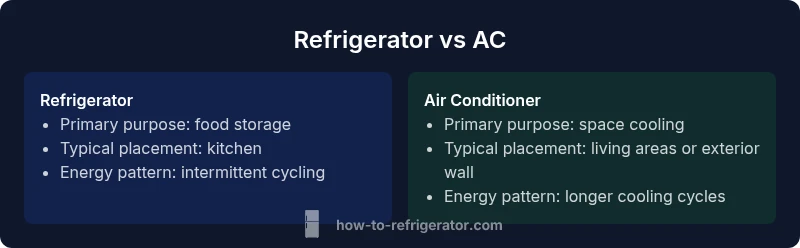
| Feature | Refrigerator | Air Conditioner |
|---|---|---|
| Primary purpose | Food storage and safe cooling inside a sealed cabinet | Cool indoor spaces and control ambient climate |
| Typical placement | Kitchen or dedicated storage area; near food prep zones | Living areas or exterior wall (window/through-wall) or central systems |
| Energy-use pattern | Intermittent cycling to maintain a small interior | Depends on climate; often on longer cycles during hot days |
| Maintenance focus | Door seals, defrost timers, condenser coils cleanliness | Filters, outdoor unit health, condensate management |
| Common issues | Frost buildup, worn seals, compressor noise | Filter clogs, refrigerant leaks, noisy outdoor unit |
| Lifespan considerations | Typically 10-15 years with proper care | Often 12-15+ years for quality central or split systems |
| Cost considerations | Lower upfront cost for standard models | Higher upfront and installation costs for central/high-efficiency units |
| Replacement timing | Energy efficiency declines and door seal wear prompt replacement | Humidity control or efficiency gains justify upgrade |
Strengths
- Clear, distinct roles help avoid buying mistakes
- Easier troubleshooting when problems are localized to one device
- Energy planning becomes straightforward with separate appliances
- Improved space planning for dedicated appliances
- Typically easier to compare models using standard labels
Cons
- Can be confusing if models merge features (fridge-freezers or combo units)
- Two devices may mean higher upfront total cost if both require upgrades
- Maintenance schedules are separate and require more management
Treat refrigerator and AC as separate tools for distinct needs
Refrigerators excel at food preservation; ACs excel at space cooling. For most homes, buy or repair each based on its primary role and energy profile, then compare efficiency and installation costs to optimize total ownership.
FAQ
What is the primary difference between refrigerator and ac?
The refrigerator is designed to preserve food by maintaining a cold interior inside a sealed cabinet, while an air conditioner is designed to cool indoor spaces by removing heat from rooms. They use similar cooling cycles but are optimized for very different tasks. Understanding this helps avoid confusing maintenance needs and energy costs.
Refrigerators keep food cold inside a cabinet, while air conditioners cool rooms. They are built for different jobs, so think of them as separate tools for different needs.
Can you use a refrigerator to cool a room?
No. A refrigerator is not designed to cool an entire room and doing so wastes energy and can compromise food safety. It will run inefficiently and may cause unnecessary wear on the compressor. Rely on an appropriately sized air conditioner for room cooling.
No—use a fridge for food, not for cooling a room.
What maintenance tasks are common to both appliances?
Both appliances benefit from keeping filters and coils clean, seals tight, and vents unobstructed. Regular inspections for wear and proper condensation drainage help prevent energy waste and unexpected breakdowns.
Keep filters clean and seals tight on both; regular checks save energy.
How do energy costs compare between refrigerators and ACs?
Air conditioners generally consume more energy than refrigerators when cooling a space, especially in hot climates or with poor insulation. Refrigerators operate in shorter cycles and largely rely on their insulation and door seals to minimize energy use.
ACs usually use more energy than fridges, especially in hot weather.
When should I repair vs replace a fridge or AC?
If a repair restores efficiency and expected lifespan with reasonable cost, repair is sensible. If the repair cost approaches or exceeds a replacement with better efficiency, replacement is often wiser, particularly for energy savings.
Repair if affordable and effective; replace if it saves energy.
Do ENERGY STAR labels apply to both appliances?
ENERGY STAR labeling helps compare efficiency across refrigerators and air conditioners. Look for high SEER or EER in ACs and high energy efficiency ratings in fridges to maximize long-term savings.
ENERGY STAR helps you compare efficiency on both fridges and ACs.
Top Takeaways
- Identify your primary cooling need before buying
- Expect higher energy use from ACs than fridges in hot climates
- Regular maintenance saves energy for both appliances
- Use energy labels to compare efficiency, not just price
- Plan placement and sizing to maximize efficiency